
Google AI Studio is building a cloud agent manager
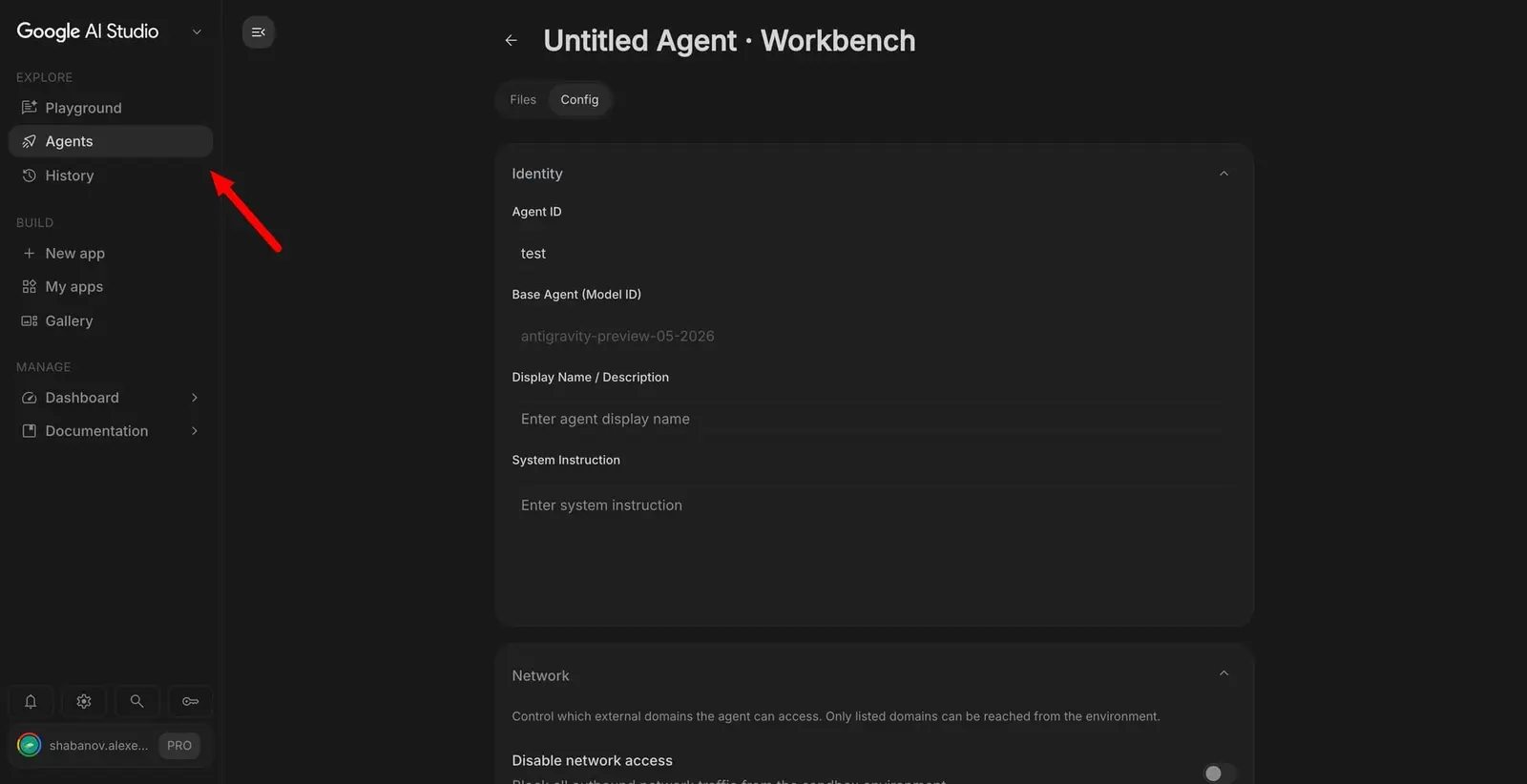
Google is building a dedicated Agents tab into AI Studio for the managed agents it introduced at I/O in May, TestingCatalog reported on August 13. The tab lists the available agents behind a project switcher, so each list is scoped to a specific Google Cloud project.
That switcher is the detail that matters most. In TestingCatalog’s reading, it means agent definitions are meant to sit against Cloud projects and billing rather than in a separate consumer-grade sandbox. The Cloud link has already started on the Antigravity side: at I/O Google said that Antigravity in Gemini Enterprise Agent Platform lets Cloud customers connect Antigravity directly to their Google Cloud projects, according to the company’s developer highlights post.
In the same post, Google described Managed Agents in the Gemini API like this: “With a single API call, you can now spin up an agent that reasons, uses tools and executes code in an isolated Linux environment.” The agents are reachable through the Interactions API and in AI Studio. Developers customise one by extending the base Antigravity agent with their own instructions and skills, written as markdown files. So an agent is essentially a bundle of instructions, skills and mounted sources, and until now you defined it with a JSON payload or a terminal command.
The new tab puts a graphical editor over that bundle. TestingCatalog describes a creation flow, a per-agent file directory in its own tab where files can be added and edited directly in the browser, and a configuration screen with name, description, a custom prompt and further settings. Artifact management sits in the same section, next to the editor. Users will be able to browse, create and configure managed agents across different GCP projects.
One setting is fixed. Per TestingCatalog, the background model is locked to the Antigravity harness, the agent runtime Google shipped at I/O, which now runs on Gemini 3.6 Flash. At launch Google called the harness co-optimized with Gemini 3.5 Flash, so the model under it has already moved up a version in three months. A selector surrounds the harness entry, but for now it holds exactly one option. That pattern usually means alternatives get wired in later, plausibly other harnesses or model tiers as they arrive.
AI Studio already has an agents toggle in its playground with pre-configured templates, so TestingCatalog sees this tab as the layer above it, where prototyping turns into hosting and lifecycle management. The outlet points out that Anthropic got there in April, when Claude Managed Agents entered public beta with configuration, sandboxes and session tracing exposed through its console.
No rollout date has been given, and the model roadmap doesn’t help pin one down. Gemini 3.5 Pro missed its June target. An analyst note claims it was quietly shelved in favor of Gemini 4, though Google has not confirmed this and still lists the model as coming. The agent stack runs on Flash-class models either way, so it is not obviously waiting on a Pro release.
Up next

Codex limits reset again, alongside an unconfirmed 15 million user claim
Codex usage limits were zeroed out on August 13, per trackers that monitor resets, and the post announcing it tied the reset to a 15 million user milestone. That figure isn’t confirmed anywhere else: OpenAI’s last public number was 5 million+ weekly users as of June 2.
Related stories
- Avatars and a Customize tab head to Gemini desktop
- Mistral Studio adds managed agents and one-command deploy
- Google donates gVisor, used by Anthropic and OpenAI, to CNCF
- Google opens Android Studio and CLI to Claude Code and Codex
- OpenAI gives its Open Responses API spec to the AAIF
- Google opens Gemini’s agent sandboxes to Cloud customers
Comments
No comments yet. Be the first.
Join the conversation
Sign in to leave a comment. It appears after moderation.