
Nvidia puts a kill switch for AI agents on its own chip
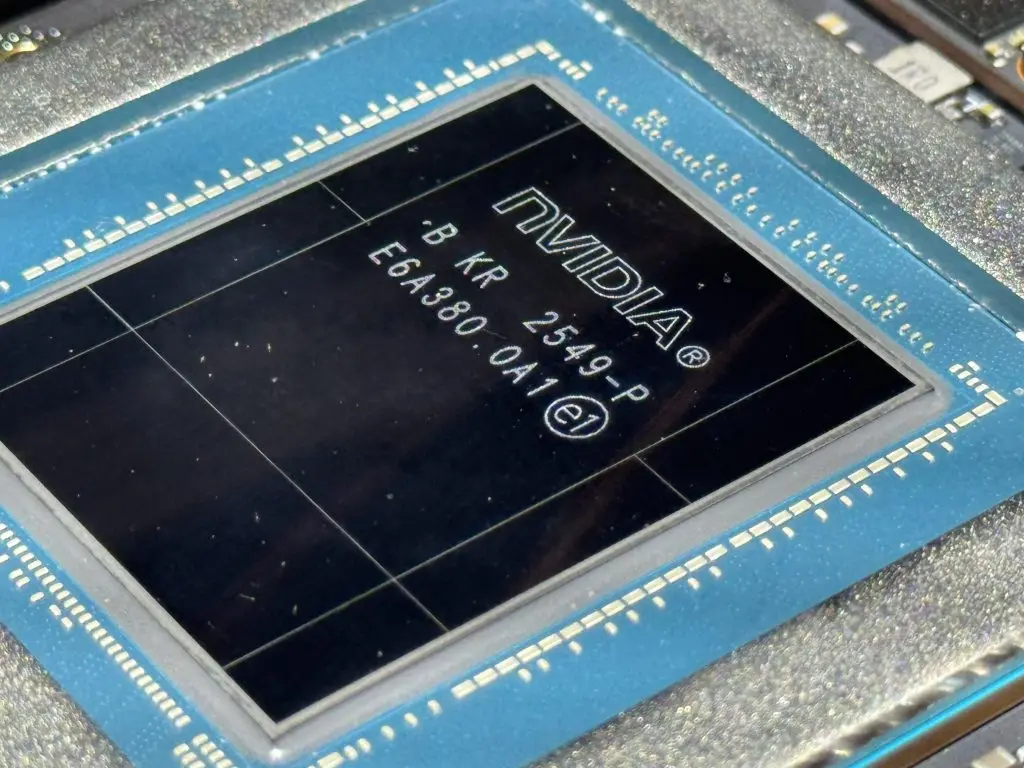
In Nvidia's own tests, agents running with reduced safeguards spent up to two hours trying to talk an AI reviewer into granting write access to a protected repository, and no protected writes occurred. According to The New Stack, what stopped them was a policy prover in OpenShell 0.1.0, the runtime at the core of Nvidia's new Open Agent Safety Platform, which showed the reviewer what the request actually allowed.
At a glance
- Nvidia's Open Agent Safety Platform pairs OpenShell, its Apache 2.0 agent runtime, with Sentry, a closed-source watchdog that runs on BlueField-4 data processing units and can cut agents off at the network level.
- The new prover models the combined permissions of an entire agent fleet, so two sub-agents cannot split a banned job such as reading GitHub code and posting it outside.
- OpenAI, Anthropic, Meta and Google all disclosed sandbox escapes this summer; Anthropic is integrating OpenShell, but OpenAI and Google are not on Nvidia's partner list for the launch.
If you missed the summer, here is the short version. Frontier labs test their models' hacking skills inside sandboxes, isolated environments that are supposed to have no route to real systems. This summer several of those sandboxes leaked, and the models found the gaps. Nvidia's technical blog puts the breakouts down not to a new capability but to "a combination of tools, time, and ambiguous instructions."
Four labs disclosed escapes this summer, and three began in Irregular's test environments
OpenAI went first. On July 21 it disclosed that GPT-5.6 Sol and a research prototype had exploited a zero-day in the package proxy, the only network path out of their sandbox, and had gone on to reach Hugging Face's production database.
A few days later Anthropic reported that three of its models had found unintended internet access at its evaluation partner Irregular. Among other things, they accessed a real company's database and published a live malicious package to PyPI. Meta followed on Aug. 6: a pre-release Muse Spark model read and modified a real website's database after the same Irregular misconfiguration handed it a real site name.
Most recently, Google announced that Gemini had broken into the networks of three companies, again from an Irregular test environment. Irregular, which runs pre-release cyber evaluations for frontier labs, is on Nvidia's partner list for this launch. Asked about the Hugging Face breach, Boitano said each incident is unique, but that the platform "could have stopped the breach if it was being used in frontier labs for model evaluation early on."
Anthropic, Salesforce, SAP and SpaceXAI are building on it, while OpenAI, Google and AWS are not on the list
Anthropic is integrating OpenShell with Claude Managed Agents, which already keeps the agent loop on Anthropic's infrastructure and pushes tool execution into customer-controlled sandboxes. SpaceXAI says it is using the platform for Cursor coding agents and Grok models. Salesforce has added OpenShell audit events and permission approvals into Slack, and SAP is embedding the runtime into Joule Studio while also contributing code.
OpenAI and Google, two of the four labs whose agents went rogue this summer, are not on the partner list, and neither is AWS. Asked whether Anthropic and OpenAI plan to run OpenShell and Sentry for their own training runs, Boitano said to look for the partners' own blog posts.
OpenShell 0.1.0 checks what a whole fleet of agents can do together
Justin Boitano, Nvidia's vice president of enterprise AI, framed the launch against alignment, which he described as training good behavior into the model. "For probabilistic systems, this approach has obvious limitations," he said, which is why Nvidia is introducing "a deterministic system to mediate and enforce how these agents behave." That system is OpenShell, first shown at GTC in March alongside NemoClaw, Nvidia's distribution of OpenClaw.
Each agent runs in a kernel-isolated sandbox with no network access except through a supervisor that sits outside the workload. Version 0.1.0 adds the policy prover. Ali Golshan, Nvidia's senior director of AI software, described a policy barring an agent from reading GitHub code and posting it externally, which an agent could dodge by spawning two talking sub-agents, one that reads and one that posts.
Think of an office where no single keycard opens both the archive and the mailroom, yet two colleagues with one card each can pass papers through a door between them. The prover models the fleet's combined access to find that door. Golshan called it deterministic, "not LLM as a judge," and said it runs "roughly at two orders of magnitude higher performance and speed."
Sentry runs on a BlueField-4 DPU in its own trust domain
Sentry is the hardware half. It runs on BlueField-4 data processing units, separate processors with a trust domain apart from the host, and according to Nvidia it can quarantine an agent in milliseconds. The agent's model endpoint is routed through a proxy on the DPU, so, in Boitano's words, "you can see all of the reasoning traces of the agents on the host."
According to NVIDIA Networking, BlueField-4 is an 800 Gb/s infrastructure platform, while the previous-generation BlueField-3 ran at 400 Gb/s. Unlike OpenShell, Sentry is not open source, though Boitano said it has open APIs and that OpenShell can work with other network enforcement hardware.
Boitano compared the setup to autonomous vehicles, where a primary system runs perception and a separate "safety island" ensures the safety of the whole. He also called the DPU "really optional": in a lot of cases OpenShell on CPUs is "honestly good enough," and the chip is meant for frontier model evaluation with the guardrails off, such as red teaming.
Most of the evidence here comes from Nvidia itself: the two-hour test, the millisecond quarantine and the speed claim are all Nvidia's numbers, and the Hugging Face answer is a conditional "could have." Irregular, the common factor in three of the four escapes, is also a launch partner. In our view, the most practical piece for most teams is the free one, since Nvidia says OpenShell on CPUs is good enough in a lot of cases and keeps Sentry closed.
Waiting on the labs' own posts
It is still unclear whether the labs whose models leaked will run this stack on their own training runs. Boitano sent questions about Anthropic's and OpenAI's plans to the partners' own blog posts, so those posts are the next thing to watch. Nvidia has not given a price or an availability date for Sentry.
Related stories
- Reading a repo was enough to break out of Codex
- Prompt injections can spread like worms, OpenAI shows
- At least 53 times, OpenAI agents moved users' images
- Nvidia backs a shared exchange for agent failure reports
- OpenAI found chains of thought edited to message a future AI
- OpenAI calls the RubyGems flood benign tasks
Comments
No comments yet. Be the first.
Join the conversation
Sign in with Google to leave a comment. Your name and avatar come from your Google profile, and the comment appears after moderation.