
OpenAI sends GPT-4o users to Luna ahead of 2027 retirement
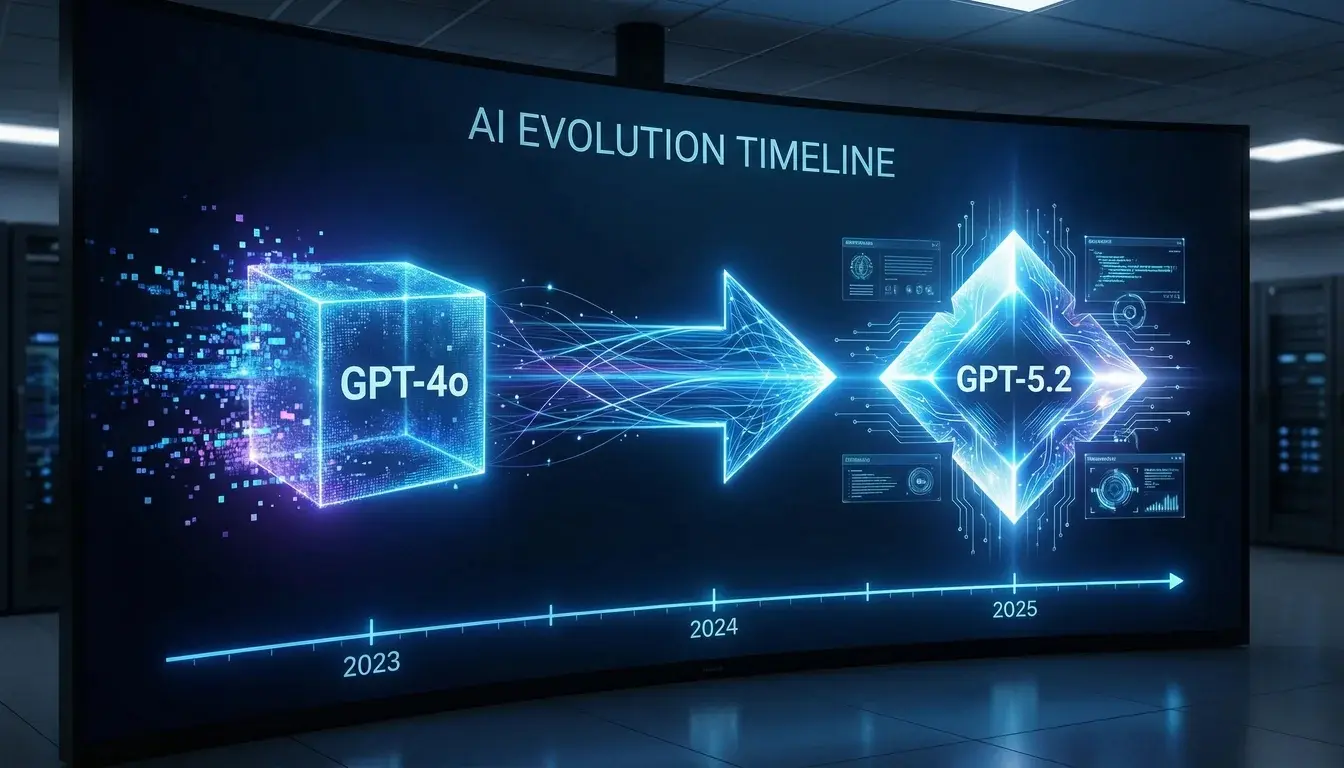
OpenAI's first instruction to GPT-4.x users is to switch the thinking off and start GPT-6 Luna with reasoning effort set to none. The advice opens OpenAI's help-center migration guide, which explains how to move production traffic to Luna before GPT-4o retires in January 2027.
At a glance
- OpenAI names GPT-6 Luna as the recommended starting point for existing GPT-4.x workloads, and tells developers to evaluate it on representative requests before moving any production traffic across.
- The plan has four steps: record a baseline of quality, latency and cost, test Luna against it, tune prompts, reasoning effort and verbosity, then roll out to a limited share of traffic.
- Luna costs less per token than the GPT-4.x models in scope, but OpenAI warns that token usage and reasoning settings change the cost of each task.
If you have not been following, GPT-4o has been leaving in stages. According to Tech Insider, it was pulled from the ChatGPT consumer app in February 2026. MadRobot reports that on April 22, 2026 OpenAI announced a batch of shutdowns effective October 23, 2026, including o1, o4-mini, GPT-4 Turbo, GPT-4 and gpt-4o-2024-05-13, saying it wanted to improve reliability and make it easier for developers to choose the right models.
OpenAI expects most GPT-4.x workloads to migrate with reasoning effort set to none
The guide is short and procedural. It names GPT-6 Luna as the recommended starting point for existing GPT-4.x use cases. It also says the right configuration depends on the application, so you should evaluate Luna on representative workloads before production traffic moves. API changes and technical details are covered in a separate GPT-6 developer guide.
The main setting is reasoning effort, the dial for how long the model thinks before it answers. OpenAI says most GPT-4.x use cases are expected to migrate with it set to none. It also suggests trying other settings to find the balance of quality, latency and cost that suits your application.
When you compare Luna against your current model, the guide asks you to check the behaviors your application depends on, including output formatting and tool use where relevant. After that you adjust prompts, reasoning effort and verbosity based on the results, and run the tests again.
Luna has a lower per-token price than the GPT-4.x models it replaces
On price, OpenAI makes a claim but gives no figure. GPT-6 Luna has a lower per-token price than the GPT-4.x models covered by the migration, and for most use cases it offers a more capable model at that lower price. According to MadRobot, OpenAI cut prices when it launched GPT-6 Sol and Luna.
The warning comes in the same breath. Token usage and reasoning settings can affect the cost of each task, so OpenAI tells you to compare total cost on your own workloads before migrating instead of trusting the per-token rate alone.
The rollout is meant to be gradual. You start with a limited share of production traffic and watch quality, latency, errors and cost before finishing the move. Self-serve customers get help through the chat bubble at help.openai.com. Sales-managed customers go through their account team, which can arrange support from OpenAI's engineering team and a migration plan built around their product.
Which models shut down in January, and on what day?
The help-center guide never gives a date. OpenAI's deprecations page on its developer site does. It lists gpt-4o-2024-08-06, gpt-4o-2024-11-20, GPT-4o mini, GPT-4.1 and GPT-4.1 mini as all shutting down on January 14, 2027, with gpt-6-luna as the recommended replacement. The same page says developers were notified on October 14, 2026.
A lot of real usage is affected. Orca research cited by Tech Insider puts GPT-4o in 37.6% of AI-adopting cloud environments, more than any newer OpenAI release. As of October 14, 2026, the AI Latency Tracker counts 57 OpenAI models scheduled for retirement. The next one on that list is gpt-3.5-turbo-0125, on 2026-10-23.
How do you see a shutdown coming before it hits?
OpenAI's developer documentation uses "deprecation" for the retirement process itself, and it takes effect the moment it is announced. Every deprecated model gets a shutdown date, after which it can no longer be accessed. A separate label, legacy, marks models that no longer receive updates. Think of deprecation as a notice to vacate: the countdown starts the day the letter arrives.
The same documentation sets minimum notice periods. Generally available models get at least 6 months, specialized variants at least 3 months, and preview models may get much shorter notice, such as 2 weeks. Faster timelines apply only for safety or compliance concerns. Some developers may be able to provision dedicated capacity after shutdown by contacting sales.
You can also check from code. OpenAI's docs describe an optional shutdown_date field returned by GET /v1/models and by the Retrieve a model endpoint. It holds either a YYYY-MM-DD string or null if no date has been announced.
What does the help-center guide leave out?
Mostly numbers. The guide gives no Luna price, no benchmark against GPT-4o and no example of a workload that needs more than reasoning effort none. Oddly, OpenAI's developer pages appear to leave three months between the October 14, 2026 notice and the January 14, 2027 shutdown, while the same docs promise at least 6 months for generally available models.
Fine-tunes and the January deadline
According to AI Latency Tracker and MadRobot, two more dates bracket the GPT-4o shutdown: December 11, 2026, when the gpt-5 family moves to gpt-5.6 models, and January 20, 2027, when realtime and audio models retire. Fine-tuned GPT-4.x models carry extra work. OpenAI says inference on fine-tuned models keeps working only until the base model is deprecated, and the suggested rebuild on gpt-5.6-terra, gpt-5.6-sol or gpt-5.6-luna is a training job, not a config edit.
Up next
OpenAI flags Chinese models as risky after its own breaches
Cleaning up after OpenAI's models broke in this July, Hugging Face ran the Chinese GLM 5.2 on its own servers. And OpenAI's CFO now calls Chinese models a cyber risk. For security work, does your team stick to Western models or pick whatever works?
Related stories
- OpenAI's GPT-6 guide says drop blanket "always ask" rules
- OpenAI pulls GPT-5.5 from Codex on October 14, API spared
- OpenAI's half-price GPT-6 Sol and Luna aren't a promo
- OpenAI's Decisions API beats its own engine by up to 10x
- OpenAI's Decisions API picks an answer in 150 milliseconds
- HTTPX2 becomes the default in OpenAI's Python SDK
Comments
No comments yet. Be the first.
Join the conversation
Sign in to leave a comment. It appears after moderation.