
Each coding session gets its own EC2 box
Vorflux has opened public sign-ups for a cloud platform that gives every coding session its own EC2 instance, with compute billed hourly from roughly 21 cents for a 2 vCPU box up to 3.39 dollars for 32 vCPUs. Sign-up is live on Vorflux's website, and the Vorflux team configures larger setups in collaboration with the customer, according to Testingcatalog.
At a glance
- A session starts from what the company describes as two links and a sentence, then runs through planning, building, testing, review and the merge, with the engineer who filed the task approving by exception.
- Vorflux trains no models of its own and routes each stage to a frontier model, covering Claude, GPT, Gemini and open-weight options, with planning given the largest token budget of any step.
- Billing splits three ways: customer provider keys paid directly, tokens bought through Vorflux at standard provider rates with no platform fee, or an existing Codex subscription routed in under an OpenAI partnership.
The design choice that carries the product is the machine rather than the model. Keeping a full stack alive on a snapshotted instance is what lets a test pass drive the real user flow instead of reasoning about code, and it appears to be the line Vorflux is drawing against sandbox-style coding agents. It also moves the cost of agent work into infrastructure metered by the hour, which likely turns automated engineering into a budget line teams can read directly.
Each session brings up frontend, backend, mobile services and databases on a dedicated EC2 instance
Each session clones repositories, installs libraries and brings up frontend, backend, mobile services and databases on a dedicated EC2 instance, with CI/CD, feature flags and environment variables wired in. Vorflux then snapshots the box with everything live, so later sessions resume on a computer that is already running.
Because the application genuinely runs, a testing pass can drive a browser through the real user flow, record it and attach that recording to the pull request as proof. A phone boots in the cloud for native tests, and every branch gets a live URL for review before the merge.
Planning gets the largest token budget, and a model from a separate lab critiques the draft
Vorflux trains none of its own models and routes each stage to whichever frontier model leads that job, covering Claude, GPT, Gemini and open-weight options. Planning receives the largest token budget, expanding the stated intent into a plan of sub-tasks, each with its own test cases.
A model from a separate lab critiques the draft before code is written, and the same cross-lab logic runs at review, where a reviewer outside the author model's family grades the diff and retells it in plain language with the most important change first. A merge queue then handles rebases and conflicts against a moving master.
Compute is metered from roughly 21 cents to 3.39 dollars an hour, with servers stopping after an hour of idle time
Customers can pay through their own provider keys, buy tokens through Vorflux at standard provider rates with no platform fee, or route in an existing Codex subscription under a partnership with OpenAI. Compute runs separately by the hour, from roughly 21 cents for a 2 vCPU box up to 3.39 dollars for 32 vCPUs, and servers auto-stop after an hour of idle time.
A white-glove tier embeds a Vorflux engineer who runs the agents against the customer backlog and ships verified pull requests weekly. Vorflux was founded by Prasanna Sankar, co-founder and former chief technology officer of Rippling, and launched in July 2026 with funding from Y Combinator, Peak XV Partners, Powerset and Alliance, alongside angels including Parker Conrad, Immad Akhund and Balaji Srinivasan.
Where the harness fits
Vorflux builds around a layer it calls the harness, where a team encodes its own engineering standards so they run on every session. Sankar has framed human time, not tokens, as the remaining bottleneck in software delivery, and the product is aimed at technical founders, CTOs and engineering leaders carrying review backlogs and testing debt. No price is stated for the white-glove tier.
Up next
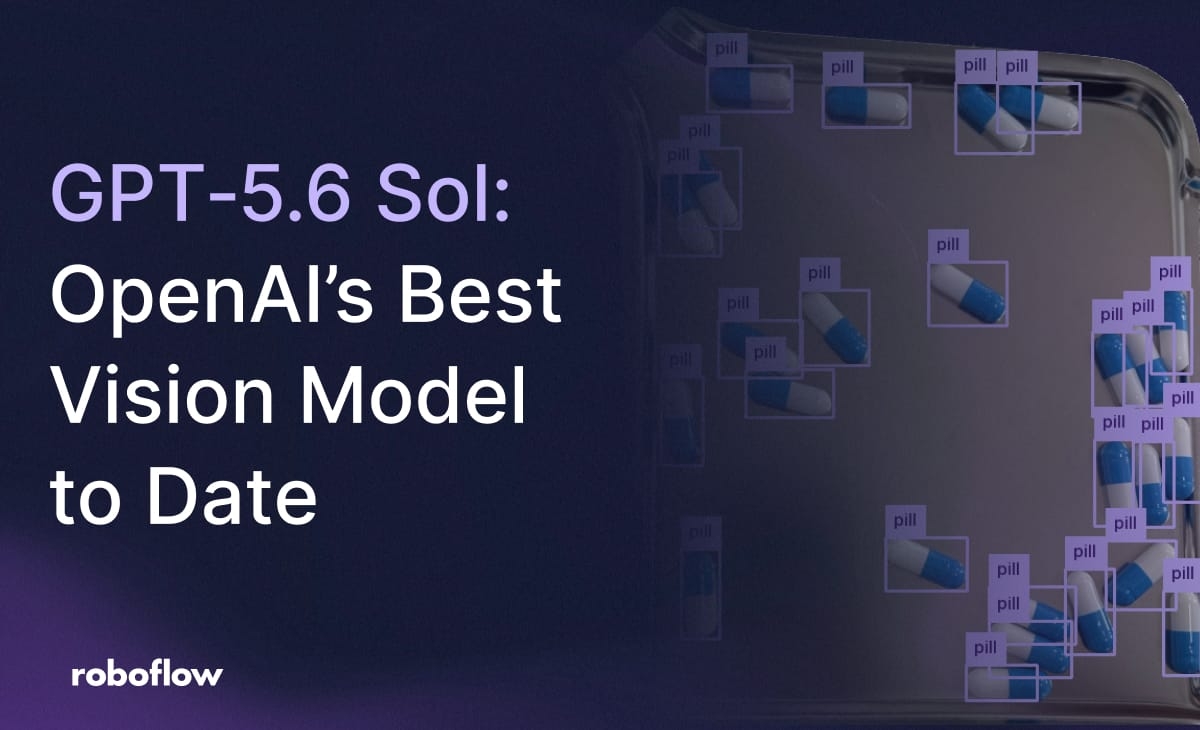
Detection climbs from 13.8 to 46.2 mAP at Roboflow
"Sol is clearly the best vision model OpenAI has released so far," Roboflow says, with detection up from 13.8 to 46.2 mAP@50. Gemini 3.5 Flash still leads that task at 0.8 cents per image against Sol's roughly 2.5.
Related stories
- Cloudflare takes in the team that cloned its Workers
- Copilot wins GitHub's benchmark, ranks fourth on Martian's
- Left free to choose, OpenAI's Dots picked Cloudflare 8 of 8
- DeepSeek Harness v0.2 lands on macOS and Windows, not Linux
- Codex keeps coding in the cloud after your laptop closes
- GLM 5.3 signed a commit as Claude Fable 5
Comments
No comments yet. Be the first.
Join the conversation
Sign in to leave a comment. It appears after moderation.