
Gemini Omni 1.2 Flash drops 720p video to $0.07 a second
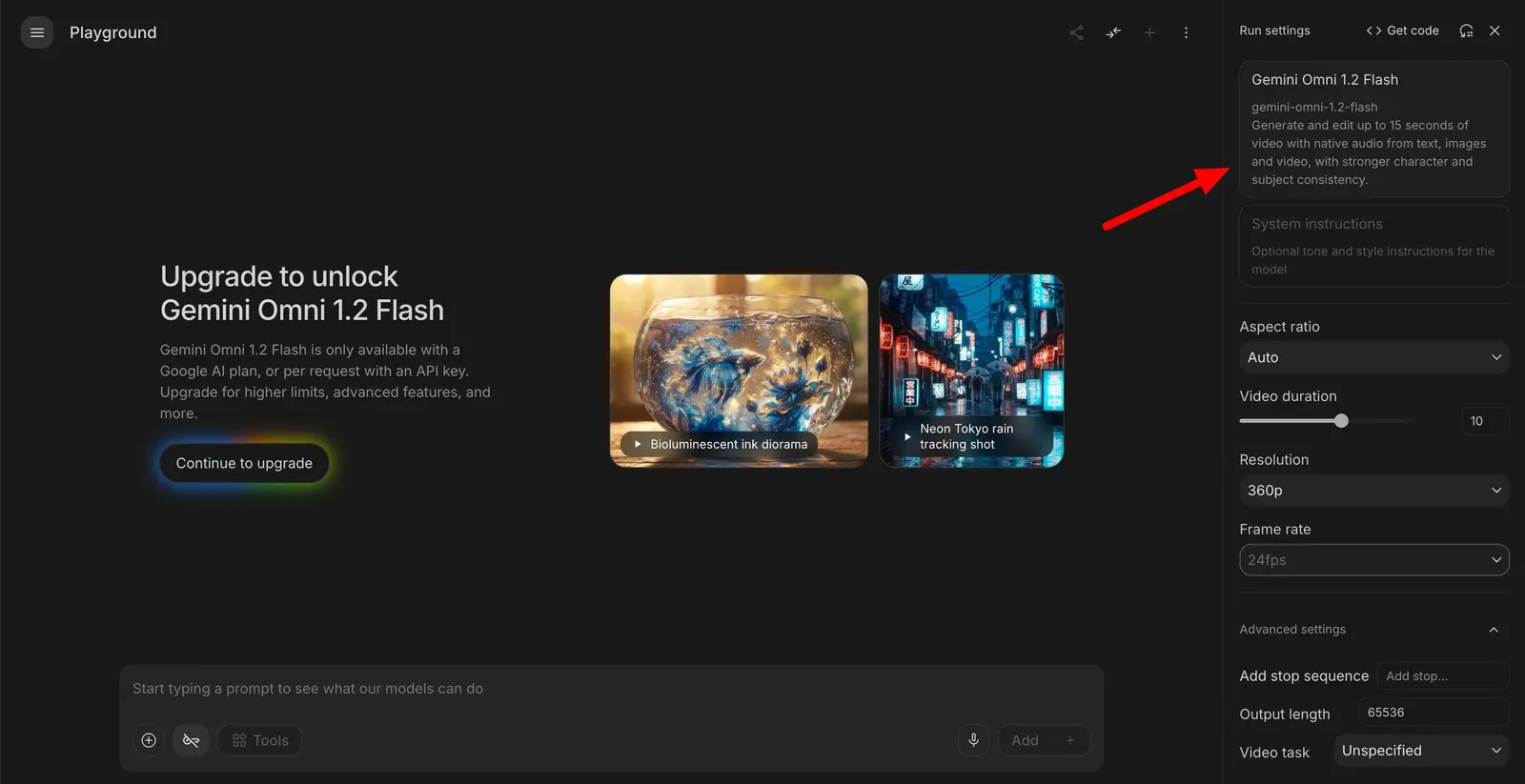
On November 5 Google made Gemini Omni 1.2 Flash generally available in the Gemini API and Gemini for business, and set the price for 720p video at $0.07 a second, 30% below Omni 1.1, according to Google’s launch post. If your team renders product clips or ads through the API, a full 15-second 720p clip now costs $1.05 on a model that is out of preview. Google’s own caveat is that fast sports action, rapid script changes and complex physics still need work.
Google also suggests a way to keep the bill down. Draft at 360p or 720p, fix a detail with a follow-up edit rather than regenerating the whole clip, then upscale the best takes to 1080p or 4K. The 4K in the launch headlines comes from that upscale step, and the $0.07 rate is quoted only for 720p. You set clip length in one-second steps from 3 to 15 seconds. Omni 1.1 topped out at 10.
What the edits and references cover
Multi-turn editing now works across full 15-second clips. Turn by turn, you can swap a product or a background, change the lighting or weather, or switch the aspect ratio, and you never start the clip over. Google pitches this for producing ad variants for different audiences and placements without re-briefing the model.
To guide a generation you can combine character, product or style images, motion clips of up to three seconds and audio cues. Google says faces, garments, packaging typography and brand colours stay consistent across camera angles. The audio references come with a condition: Google Cloud’s post says they are gated behind allowlisting, so Google has to enable them for an account first.
The other changes are about holding a shot together. When you interpolate between a first and last keyframe or extend a clip into a longer sequence, products, characters and environments are meant to stay consistent from shot to shot. Dialogue gets clearer lip-sync and separate conditioning for each speaker, so each sampled voice goes to the right character. Long continuous camera moves, such as FPV drone flythroughs and orbits, are meant to come out with fewer unwanted jump cuts.
From preview to GA
Omni Flash first reached developers on June 30 as gemini-omni-flash-preview, in Google AI Studio, the Gemini API and the Gemini Enterprise Agent Platform. At that point it cost $0.10 a second, the same as Veo 3.1 Fast, so 1.2 Flash comes in below the preview rate. On August 27 the release circulating as Omni 1.1 Flash was still marked preview in Google’s documentation. Google now says this is the first time Gemini Omni is generally available, running on Google Cloud’s enterprise infrastructure and security. Provisioned Throughput, Google Cloud’s reserved-capacity option, is available for it, and every output carries an imperceptible SynthID watermark.
Where it runs
Outside the API, 1.2 Flash is coming to Flow for directing scenes and multi-turn edits, and to Google Vids, which generates 15-second clips at no extra cost with a Google account or a Workspace subscription. It is also rolling out in the Gemini app to Google AI Ultra subscribers and in Google Ads for video campaigns. Google Cloud lists Artlist, FLORA, invideo and Krea among the businesses already using it. Invideo’s VP of Engineering summed up the length change as “15 seconds means a full scene in one go.” Developers can prototype in Google AI Studio, which has interactive starter apps, and businesses can start in the Google Cloud console.
Up next

Read-only bank access arrives in Claude, US beta only, Video
Claude got read-only access to US bank and card accounts in a new beta, and it can’t move money. Anthropic still tells users to check important figures with their bank. Do you recheck your bank’s numbers by hand, or would you trust a chatbot’s sum?
Related stories
- Generative video controls come to Gemini Omni Flash
- Real-time world model Genie 4 generates its own audio
- Gemini 3.8 Flash TTS takes stage directions line by line
- Lyria 3.5 lands in the Gemini app, AI Studio and APIs
- GIFs and 50% faster generation land in ChatGPT Images 2.6
- Kimi K3.1 Pro weights land on HuggingFace at 2.8T params
Comments
No comments yet. Be the first.
Join the conversation
Sign in to leave a comment. It appears after moderation.