
OpenAI pledges up to 1,000 MW of grid flexibility in Georgia
OpenAI on November 2 launched the Grid Protectors Program, which commits its future U.S. campuses to cut their electricity draw when the local grid is under strain. So far one deal has concrete terms: up to 1,000 megawatts of flexible demand from Georgia Power at a campus that is still in development. The roughly $950 million a year in customer savings cited with the announcement is Georgia Power’s projection from 2029 for its whole portfolio of large-load agreements and expected growth, not a figure for the OpenAI deal alone.
OpenAI’s announcement names the planned Effingham County campus as the starting point and the program’s pilot. For that site OpenAI has committed to pay the full infrastructure and electric-service costs required to serve it. Arrangements at other campuses will differ by location, and the company says it will publish more commitments as they are finalized.
How big the flexible slice is
Georgia Power says the facility is expected to need approximately 3,200 megawatts, so the up to 1,000 megawatts that can be dialled down is just under a third of the campus’s expected load. Under the 25-year agreement, the utility will be able to reduce the energy it delivers to the facility at certain times to keep the grid stable. That arrangement is called demand response: a large customer agrees to cut its use when the utility asks. Georgia Power calls it “among the largest single-facility demand response commitments in the country.”
OpenAI says the 1,000 megawatts equals the average electricity demand of roughly 700,000 households, freed up to keep air conditioning running during extreme heat. The whole campus is far bigger. Known as Project Camellia, it is planned at up to 3.2 gigawatts, built in phases from 2028, with about 4.4 million square feet of data-center space 30 miles northwest of Savannah, Inside Climate News reported. For comparison, Atlanta uses about 1 gigawatt at any given time.
What the $950 million covers
Georgia Power projects approximately $950 million in annual customer savings beginning in 2029 from its portfolio of large-load agreements and expected growth, Project Camellia among them. It estimates a benefit of at least $15 a month for a typical residential customer using 1,000 kilowatt-hours. The utility also says the flexibility lets it build fewer new generation resources to serve future growth, and it presents that as a long-term saving for customers.
OpenAI’s case for why this lowers bills goes through fixed costs. Power lines and substations cost the same whether demand is high or low. A campus that draws power all year spreads that cost over more electricity sales, and cutting its use at peaks limits the upgrades that would otherwise have to be sized for peak demand. Where local needs and equipment allow, OpenAI says it will also supply power from on-site generation or storage and use batteries and power controls to smooth swings in its demand. For future campuses, it says it will agree with each utility on how much demand can be cut, how quickly and for how long.
Who carries the risk if plans change
Georgia Power says the OpenAI approach follows updated rules for large energy users that the Georgia Public Service Commission (PSC) first approved in January 2025, and that large-load contracts are reviewed with PSC staff as they are reached. Under a rule passed in April 2025, Georgia Power must file any contract with a data center over 100 megawatts at least 30 days before signing it. If staff file no objection within those 30 days, the contract counts as approved, and the commission does not have to vote on it, The Current reported.
Commissioner Peter Hubbard, one of two Democrats elected to the PSC in fall 2025 amid a backlash against rising electricity prices, said Georgia Power submitted a 100-page unsigned contract on July 15. It covers 3.2 gigawatts delivered in phases from 2028 to 2032 to a $20 billion campus projected to launch in 2028. Hubbard said loopholes in the 2025 rules let a company make only four years of payments instead of the full 15, and that OpenAI can leave the long-dated contract before it ends, so someone else would have to pay for the infrastructure already built, per The Current. OpenAI’s post argues the general case the other way: long-term contracts and financial assurances “can protect other customers if a project is delayed, reduced or canceled.”
The local tax deal is the other cost residents are contesting. The Effingham County Industrial Development Authority approved a 50 percent property-tax break for OpenAI for 15 years, and a lawsuit filed by residents and the group One Hundred Miles, represented by SELC, estimates it could be worth nearly $900 million, Inside Climate News reported. The suit is over public notice and is the second legal challenge to how the county handled the project.
OpenAI puts its own limit on the program: “Flexibility cannot replace investment in new energy supply and transmission.”
Up next
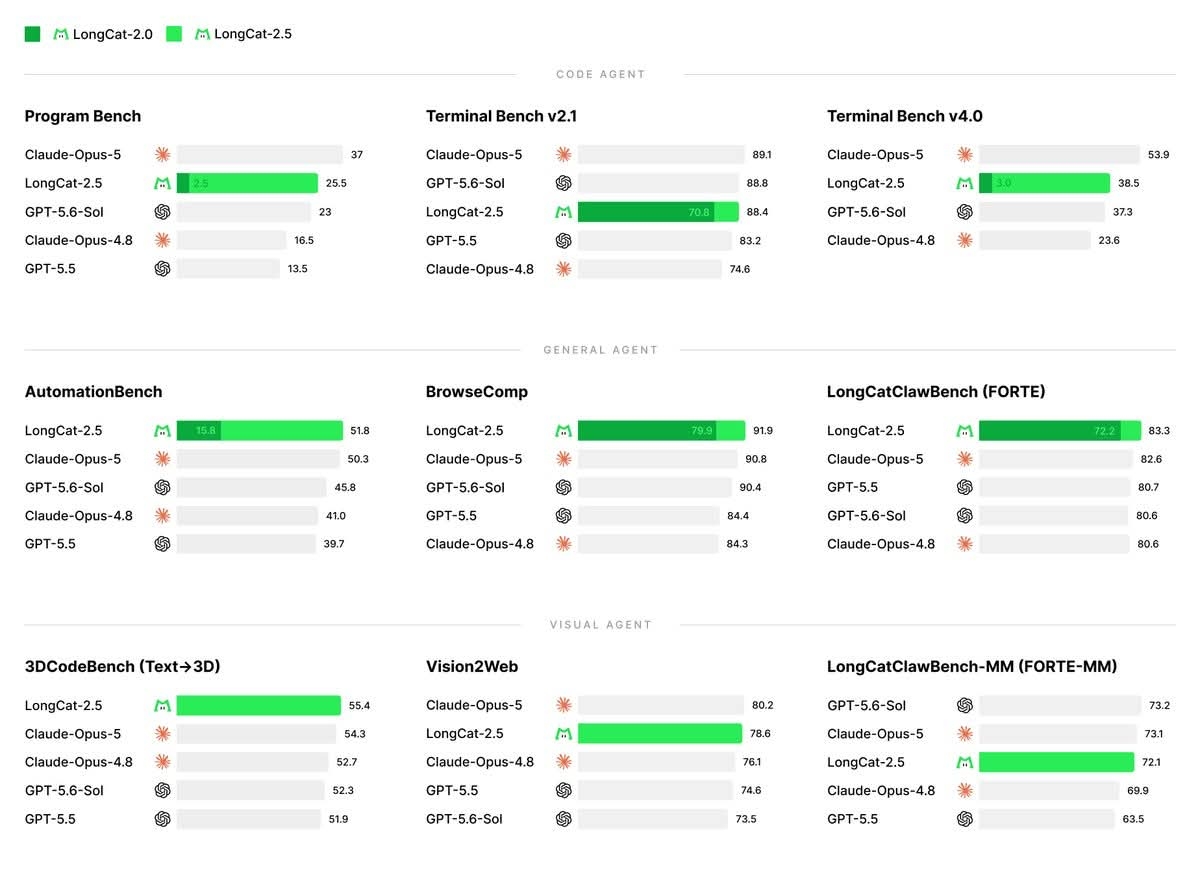
Meituan’s LongCat-2.5 runs 49B of its 1.6T parameters
Anyone wiring up a coding agent can point it at LongCat-2.5 through the API, a 1.6T-parameter model from Meituan that wakes only 49B of them for each token. How many model APIs does your coding agent run on today?
Related stories
- 8 gigawatts of IT booked at Ohio’s PORTS-Pike campus
- $1B in subsidized models for water and power utilities
- OpenAI’s Habitat cut read latency from 120 ms to 10 ms
- OpenAI says a staffer took device files back to Apple
- Stock OpenAI models saved Jalapeño over 13% of die area
- Anthropic and OpenAI start shopping in 20–30 MW slices
Comments
No comments yet. Be the first.
Join the conversation
Sign in to leave a comment. It appears after moderation.