
SpaceXSI makes Grok API text watermarks opt-in
SpaceXSI’s Grok API documentation changed between November 9 and 10 to switch text watermarking off by default on all seven supported Grok models, after the November 7 date it had set for default-on marking, The New Stack reported. If your team serves Grok output to EU users and was counting on SpaceXSI to apply the mark, that output now goes out unmarked until a team administrator enables watermarking for each model.
How the switch works
The control sits at team level. An administrator turns watermarking on or off per Grok model, and the setting applies to every API key in that team. There is no per-request option, so one model’s output can’t be marked for EU customers and left unmarked for everyone else inside a single team. Running different policies for different regions takes separate team configurations. The supported list includes Grok 4.7 and Grok 4.6.
The mark itself is Google’s SynthID Text, the docs confirm. It is applied during generation: the model’s choice of each next token is nudged slightly, and over a long enough passage those choices form a statistical pattern a detector can find later. Detection needs specialised tools, and the major labs restrict access to their detectors to approved applicants.
The compliance language moved too. The earlier text read: “SpaceXSI watermarks text model output to comply with the EU AI Act.” The current version says watermarking “can help enable compliance with the EU AI Act.”
Article 50(2) of the Act requires providers to mark AI-generated text, images, audio and video in a machine-readable format, with the provisions in force since August 2, 2026. A later amendment gave systems already on the market before that date a grace period until December 2.
Where the other labs landed
On the API side, Grok now works the way OpenAI’s textGrain does. OpenAI introduced textGrain in October as an option for API developers, while marking eligible ChatGPT and Codex text in the EU automatically. Anthropic went the other way in August, watermarking supported Claude models globally, API included, with no way to opt out, which drew objections from developers worried about the effect on generated code; it is extending the mark to four older Claude models on November 16. Google has been rolling SynthID out across its products, the Gemini API among them, and confirmed in July that it was signing the EU’s Code of Practice on Transparency of AI-Generated Content.
From default-on to opt-in
SpaceXSI was the only major lab that hadn’t signed that code, and at least one report at the time suggested it would steer clear of watermarking Grok’s text. The feature then surfaced in late October with no formal announcement. On October 31, the X account @XFreeze posted that from November 7 “All text outputs from supported Grok models will include a watermark by default,” and Wayback Machine captures of the documentation from November 1 and November 6 show the same default-on plan.
The archiving service Spybara places the switch between Monday night and Tuesday morning, which means the page kept describing watermarking as on by default for nearly three days after the scheduled rollout; whether that policy ever fully took effect is unclear.
Up next
Anthropic’s IPO roadshow opens at $70-78 a share
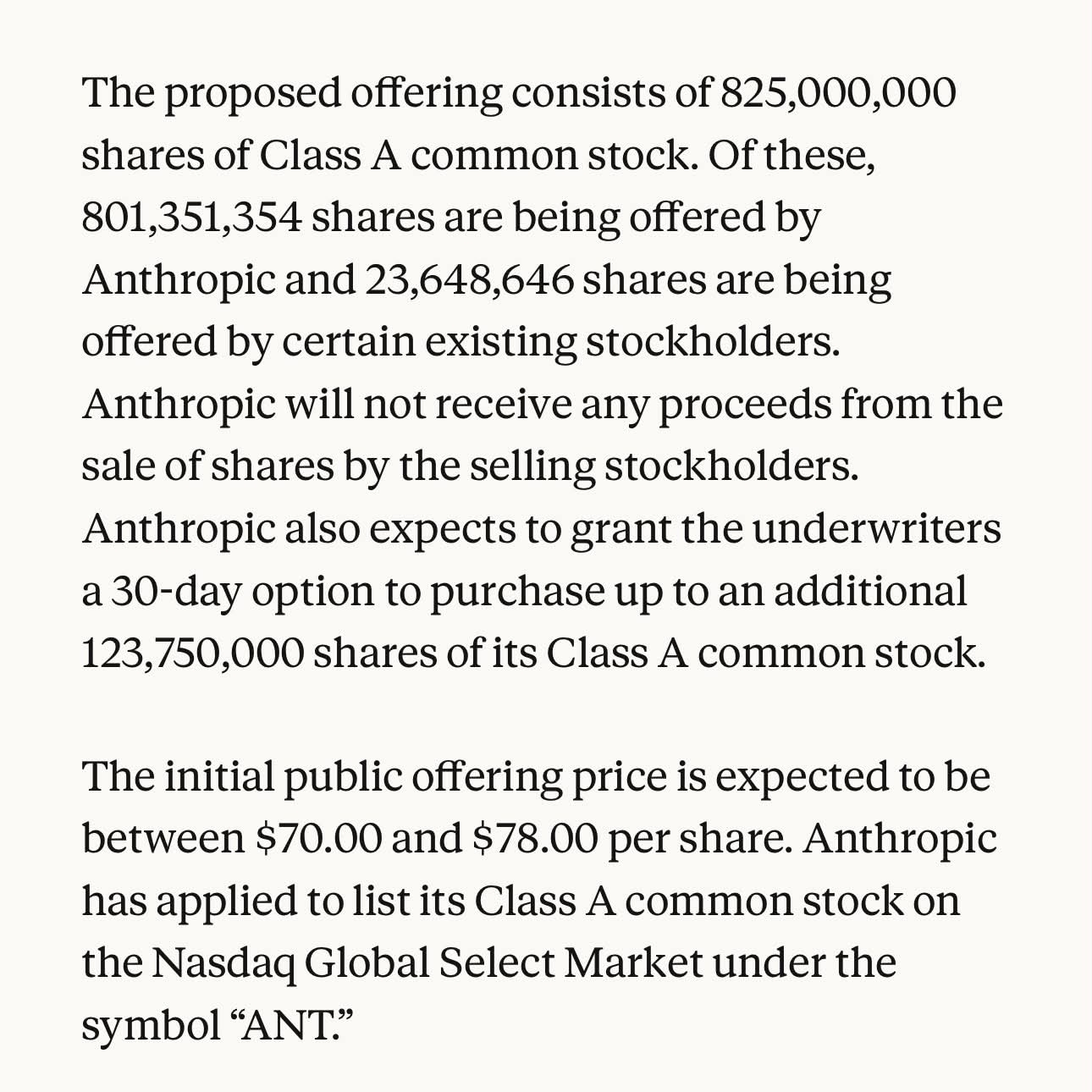
$70-78 a share is what Anthropic expects for 825,000,000 shares as its IPO roadshow opens, though nothing can be sold until the SEC registration takes effect. Would you buy Anthropic stock at listing or wait for it to trade first?
Related stories
- Four older Claude models get a watermark on November 16
- OpenAI shelved a text watermark in 2024. EU fines forced one
- Cursor reportedly gets Computer Use for other laptop apps
- Routers and AI gateways will need OpenAI’s sign-off
- OpenAI’s text watermark fades after a 25% synonym swap
- Grok Build starts remembering how your team runs tests
Comments
No comments yet. Be the first.
Join the conversation
Sign in to leave a comment. It appears after moderation.