
B.C. sues OpenAI over chats the RCMP never saw
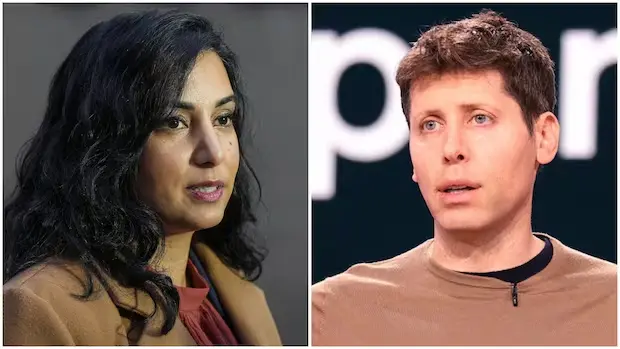
The bill for a school building is part of what British Columbia wants from OpenAI. The province announced Monday that it is suing the company in California over the Tumbler Ridge mass shooting, CBC reports, and among the damages it seeks is reimbursement for a new Tumbler Ridge school after the old one was demolished.
At a glance
- Attorney General Niki Sharma says the claim rests on two things: OpenAI's failure to tell law enforcement about threats made on ChatGPT, and the design of an unsafe product.
- Six children and two adults were killed on Feb. 10; the 18-year-old shooter, Jesse Van Rootselaar, died of a self-inflicted gunshot wound, according to police.
- Sharma says the shooter's ChatGPT conversation was alarming enough to trigger an internal review at OpenAI, that the RCMP never heard about it, and that the company has refused to release the chats.
If you have not followed the case: Tumbler Ridge is a mining town of 2,399 people as of the 2021 census, and its secondary school had 191 students in grades 7 to 12 for the 2025–26 year, by Wikipedia's account, which also records the attack as the deadliest school shooting in Canada since École Polytechnique in 1989. The attacker was a former student of that school.
The province is claiming its own losses, not the families'
Sharma said the families' and victims' lawsuits are separate from what the province is pursuing, and that the basis for its claim for damages is quite different: the losses the province itself suffered. The replacement school is the concrete item she named. The province is working closely with the affected families and the school district.
The case goes to California because, Sharma said, the decision not to report the chats was made there. She put the purpose plainly: the province owes the families, survivors and everyone whose life was changed by the tragedy answers and accountability.
Sharma has not read the chats she is suing over
The conversation between ChatGPT and the shooter was alarming enough to trigger an internal review inside OpenAI, Sharma said, and it was not reported to the RCMP. She has not seen it herself.
We have asked OpenAI to disclose these chats. They have refused. We should all be asking them: Why?
OpenAI called the events of Tumbler Ridge an unspeakable tragedy in an emailed statement, said its thoughts remain with the victims, their families and the entire community, and said it remains committed to working collaboratively with government and law enforcement officials and to advancing its ongoing safety work.
The victims' own suits name Sam Altman personally
According to the tracker Lawsuit Informer, families of those killed and injured filed seven federal lawsuits on April 29, 2026, in the U.S. District Court for the Northern District of California. A second wave began on September 2, 2026, in San Francisco federal court, brought by students, teachers and a principal who were inside the school; plaintiffs' counsel has said it will reach thirty complaints in total, one per plaintiff.
The same tracker lists the defendants as Sam Altman personally along with OpenAI Foundation, OpenAI OpCo, LLC and OpenAI Group PBC as successor to the earlier for-profit entities, and the claims as including negligence, negligent entrustment, negligent undertaking, aiding and abetting a mass shooting, and strict liability. An earlier civil claim proceeds separately in the British Columbia Supreme Court.
How does a flagged chat reach the police?
Per Lawsuit Informer, OpenAI's automated systems flagged Van Rootselaar's account in June 2025, eight months before the attack, for gun violence activity and planning, and the account was deactivated. A second account was created and used, and OpenAI has said it did not learn of that second account until after the shooting.
The September filings add an allegation, also per Lawsuit Informer, that OpenAI's own investigators wanted the account referred to Canadian police and that the company's global affairs operation overruled them. OpenAI says that account of its decision-making is false.
A detector inside a chat product is a smoke alarm, and what matters is where the wire goes. In May 2026, according to AI Herald, OpenAI shipped Trusted Contact, an optional feature that alerts a person the user designated when the model detects signs of serious self-harm.
The same report describes the pieces: a lightweight on-device classifier that looks for explicit statements about harming oneself rather than generalized sadness, a threshold of multiple high-severity signals before an alert fires, a short user confirmation window, and SMS or email instead of in-app alerts, chosen because they arrive even when the app is closed.
The chats themselves stay undisclosed: the province is suing over a conversation its own attorney general has not read, and the claim that investigators were overruled is contested by the company. In our view the disclosure fight is the sharper part of this case, because the one loss the province has attached to a building, the replacement school, came with no dollar figure on Monday.
Where the chat logs go next — Sharma has tied the venue to the conduct, saying the decision not to report was made in California, so the demand for the logs travels with the case to a U.S. court. The province has not named what the new school will cost. According to Lawsuit Informer, the second wave of victims' complaints is still filling out toward thirty, one per plaintiff, while the separate British Columbia Supreme Court claim continues on its own track.
Related stories
- 30 more lawsuits over Tumbler Ridge school shooting
- Microsoft disclaims its own director's "astonishing theft"
- Both sides seek a ruling without trial in AI book case
- Two more newspapers take OpenAI to court
- US government sides with OpenAI in NYT lawsuit
- iCloud habits become OpenAI's defense in Apple suit
Comments
No comments yet. Be the first.
Join the conversation
Sign in with Google to leave a comment. Your name and avatar come from your Google profile, and the comment appears after moderation.