
Claude designed 211 protein binders, 17 passed the lab
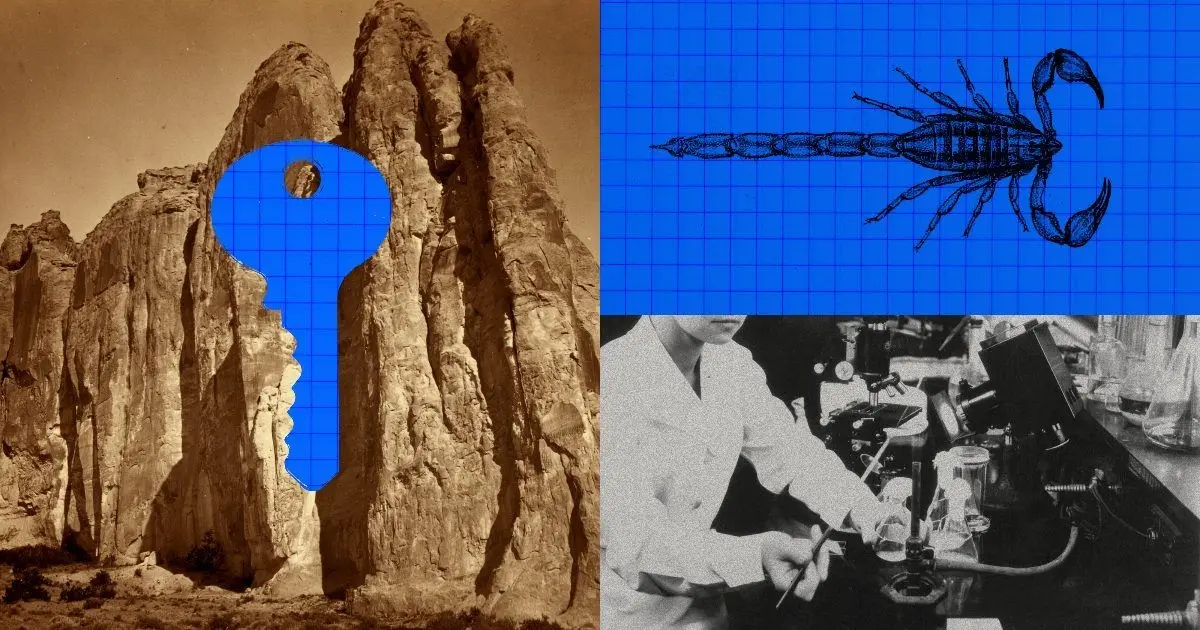
The emails that ordered the DNA came from Claude, and said so in the text. The recipient was Twist Bioscience, the attachments were protein sequences, and Anthropic said on October 20 that 17 of the 211 designs its partners eventually tested in the lab met its criteria for a binder.
A minibinder is a small protein built to latch onto one spot on a target and hold. The targets here were five neurotoxins from four scorpions, the parts of venom that jam the sodium channels nerve cells use to fire; stings injure 1.2 million people a year and kill more than 3,250, mostly children far from hospitals, and the economics have left the field with almost no new treatments. The prompt was written with Citrini Research, an investment research firm that had asked whether motivated nonexperts could take a real run at a problem in human health. Anthropic is releasing all 211 designs with their binding data, and it does not claim an antivenom: no design was tested for neutralization in cells or for protection in animals.
Where the model was left alone
The opening prompt named the toxins, the design and folding tools, and the rules for novelty, scoring and filtering. Everything downstream of that was Claude’s: it searched the Protein Data Bank and the AlphaFold database for structures to design against, picked five hotspots per toxin - the specific amino acid positions a binder was meant to grip - set the quality thresholds a design had to clear, decided how heavily to lean on each tool, and worked out the strategies for hitting several toxins with one molecule.
It used 12 of the design tools the prompt listed, generated 318,484 designs, threw out anything that resembled a toxin or a known protein, and co-folded 553,052 design-toxin pairs, predicting each as a single complex to see whether the two would sit together. Sixty-four hours after the first prompt it returned a list of 180. The first 24 of those hours ran unattended; the four follow-ups that came after were mostly pushing for a multitoxin binder, and most of the 180 - including Cn2-B1, the tightest binder in the campaign - were selected only after the third. The whole thing used on the order of 10,000 H100 GPU hours on Modal, in up to about 350 containers at once.
Anthropic’s team added 31 designs of its own afterwards, with Claude’s help, to reach 211.
Five toxins, one fold
Cn2 comes from Mexico, Ts1 from Brazil, AaH I and AaH II from North Africa, LqhIII from the Middle East. They share one overall fold, but any two of them are only 26% to 62% identical in sequence, which is why Anthropic picked them: a hard test of whether one designed protein could cover several at once. That is the prize worth chasing. A universal antivenom cocktail costs less and travels better the fewer molecules it contains, and today’s product is made by milking thousands of scorpions, immunizing horses and purifying the antibodies, over months.
So the 211 were split four ways: 60 against single toxins, 12 each; 30 against the two beta-family toxins; 30 against the three alpha-family ones; and 91 against all five.
None of the multitoxin designs qualified against more than one toxin. But the failure was not flat. The binder rate falls step by step with ambition - 11 of 60 single-toxin designs, 18%, then 5 of 60 across the double and triple sets, 8%, then exactly one of the 91 all-five designs, a fusion called AaHI-B3. Six of the 17 binders therefore came out of designs drawn up against two or more toxins; they simply landed on one. Three of those five double and triple hits grew from backbones first built against a related toxin, which the report reads as shapes transferring between relatives. By toxin, the single-toxin rate ranges from 0% to 42%, and Ts1 produced nothing at all.
Anthropic calls 18% consistent with typical protein design campaigns, including its own earlier work. For scale, Adaptyv Bio said that in the August campaign it tested 1,320 Claude designs across 16 targets and 354 bound, an average of 26.8%.
Cn2-B1 and the antibody it competes with
Both labs made the proteins and both measured binding by surface plasmon resonance, flowing toxin over an immobilized design and watching in real time how fast it attaches and lets go. Adaptyv Bio expressed the designs in a cell-free system, using protein-making machinery extracted from bacteria with no cells involved; Twist Bioscience made them in human kidney cells, fused to the stem of an antibody. The bar for calling something a binder was a dissociation constant of 1 µM or tighter in every replicate, at both labs.
Cn2-B1 and Cn2-B2, both against the Mexican toxin Cn2, cleared it by a wide margin: the report puts Cn2-B1 at approximately 3.1 nM at Adaptyv Bio and 1.7 nM at Twist Bioscience, both estimated as upper limits rather than pinned values. The molecules this would have to replace - antibodies and nanobodies already shown to protect mice from Cn2 or AaH II - are reported between 0.11 and 0.70 nM, so neither lab’s fit placed the best design in their range.
The more useful result is where it binds. In a competition experiment, Cn2-B1 and Cn2-B2 each cut the binding of LR, an antibody reported to neutralize Cn2 in mice, which suggests they sit on or near the same epitope. LR’s site covers the face of Cn2 that docks onto the sodium channel. Cn2-B1 is the design Anthropic names as one of its strongest candidates if it were to push one toward a therapy: confirm first that it binds toxin purified from real venom, then patch-clamp recordings to see whether the channel current survives, then mice.
Anthropic sent the work to two outside reviewers. Timothy P. Jenkins of the Technical University of Denmark called the broad target space across animal toxins something that can now be tackled agentically, “a significant speed-up in discovery.” Susana Vázquez Torres, of the Spanish National Cancer Research Centre, was blunter about what is left: “binding itself is no longer the main bottleneck,” she said, and the real impact will come from the parts of the pipeline that come after it.
Our analysis
What we checked
Our analyst desk read Anthropic’s technical report alongside the blog post on October 21 and recounted the 17 binders against the criteria the report sets out.
The headline number holds, but only under the four criteria Anthropic chose, and the report publishes the alternatives itself. Two of the 17 never faced the two-lab bar at all, because Twist Bioscience never measured that toxin. Two others, one of them the campaign’s tightest binder, stuck to an unrelated control protein that was kept outside the criteria. The hit rate our first account of this campaign gave as the usual range for such work, 10% to 15%, appears in neither document.
- Of the 17, 15 were hits at both labs. LqhIII-B1 and LqhIII-B2 qualified under a separate single-lab rule that exists because only Adaptyv Bio measured LqhIII; the post concedes this in a footnote.
- CLEC12A, the off-target control, ran at Twist only. Adaptyv Bio ran a second one, ovalbumin, on 52 designs, and Cn2-B1 and AaHI-B4 were hits against it. Ovalbumin is not among the four criteria, and Anthropic computes the counterfactual itself: requiring it too would leave 15 of the 17.
- Cn2-B1’s ovalbumin signal reached 13% of theoretical Rmax at 1 µM without plateauing, a level it reached against Cn2 at about 0.5 nM, a concentration roughly 2,000 times lower.
One more line from the limitations is worth carrying: no design baseline was run, not experts and not a fixed pipeline with the same tools and the same budget. Anthropic draws the consequence itself - without it, Claude’s contribution cannot be separated from that of its tools, and the campaign’s time and cost cannot be set against a conventional one.
Up next
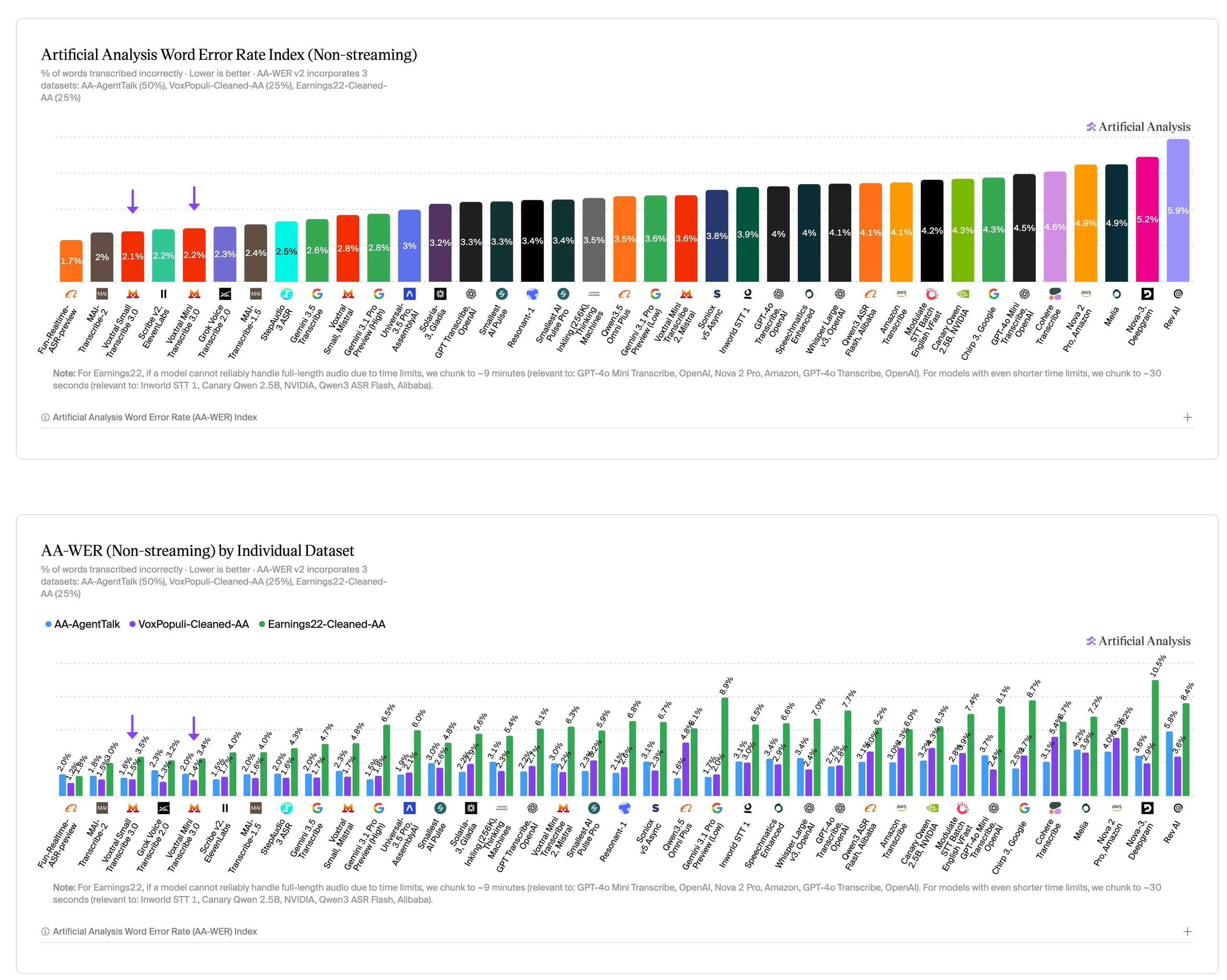
Mistral’s Voxtral 3 TTS costs $13 per 1M characters
A contact-center voice agent built on Mistral’s Voxtral 3 can run on your own servers, keeping caller audio in your environment. The other route is Mistral’s EU-hosted API. Where does your call audio get processed now, a vendor’s cloud or your own servers?
Related stories
- Claude cut a quantum circuit’s gate count 17x in 53 hours
- Junior share of Anthropic tech hires fell from 27% to 9%
- Claude traced NIST curve seeds to 1990s Unix timestamps
- A $55 TV box fleet ran a 26B model in Anthropic’s test
- Anthropic’s bug hunt outruns the people checking it
- Claude’s workarounds take every Anthropic eval offline
Comments
No comments yet. Be the first.
Join the conversation
Sign in to leave a comment. It appears after moderation.