
Scorpion toxin binders: 17 of Claude’s 211 designs worked
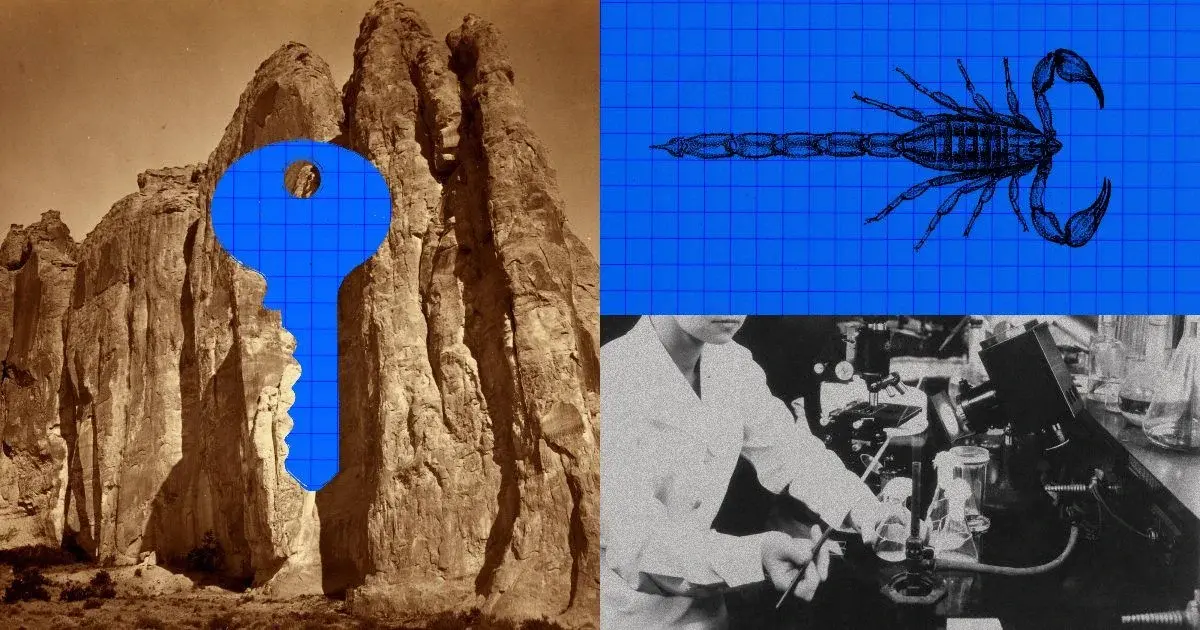
Anthropic handed an internal research model one prompt and four follow-ups, and 64 hours later it came back with 180 protein designs aimed at five scorpion neurotoxins. Of the 211 designs eventually tested in two labs, 17 bound their target, the company said in an October 20 post from Anthropic. All 211 sequences and the lab data are published.
The question that started it did not come from a biologist. A team from the investment research firm Citrini Research approached Anthropic a month before its August binder study came out, asking whether Claude could let motivated nonexperts take on a real human health problem. Anthropic’s life science team brainstormed targets with Claude and landed on scorpion venom.
Why scorpions
Scorpions sting 1.2 million people or more a year, killing more than 3,250, mostly children in places with limited access to care. Antivenoms for stings are generally made from the antibodies of immunized animals: venom is milked from thousands of scorpions, horses are immunized with it, and antibodies are purified from their blood. That takes months, and the result is usually effective for only a small number of neurotoxins. New treatments are expensive to make and unlikely to earn back what they cost to develop, which is why envenomation has been described as a neglected tropical disease.
The toxins that kill people attach to sodium channels, the proteins in nerve cell membranes that let those cells fire. Disrupt the channels and nerves fire at the wrong moment, dumping adrenaline and other stress chemicals into the body; in severe cases the heart fails and fluid builds up in the lungs. So the designs were pointed at the exact patch of each toxin that grabs the channel. A binder that sticks there should keep the toxin from reaching its target at all.
The five targets span four regions: Cn2 from Mexico, Ts1 from Brazil, AaH I and AaH II from North Africa, LqhIII from the Middle East. Anthropic picked them as a challenging test of multitoxin design. They share a fold, the overall shape of the protein, but any two of them are only 26% to 62% identical in sequence.
What Claude decided on its own
The initial prompt set the targets, the design and folding tools, and the rules for novelty, scoring and filtering. Almost everything downstream of that was the model’s. It searched the Protein Data Bank and the AlphaFold database to choose which toxin structures to design against, picked five hotspots on each toxin - specific amino acid positions its designs were meant to latch onto - set the quality thresholds a design had to clear, decided how heavily to lean on each of the 12 design tools available, and worked out the strategies for hitting multiple toxins at once.
It generated 318,484 designs, filtering out anything that resembled a toxin or a known protein, then co-folded and screened 553,052 design-toxin pairs, predicting each pair’s structure as a single complex. The campaign ran on the order of 10,000 GPU hours.
The first 24 hours were autonomous. The results were good enough that Anthropic prompted it to keep going, and the follow-ups were mostly about pushing toward a multitoxin binder. Most of the final 180 designs, including the strongest binder in the whole campaign (Cn2-B1), were selected only after the third follow-up. At Anthropic’s request, Claude sent the sequences to Twist Bioscience itself, in emails indicating they were written by Claude. Anthropic and Claude later added 31 more designs, bringing the total to 211: 60 against single toxins, 30 against the two β-family toxins, 30 against the three α-family toxins, and 91 against all five at once.
Two labs, one bar
Adaptyv Bio and Twist Bioscience each produced the designs in a different format, which Anthropic describes as complementary ways to measure the same binding process. Adaptyv used a cell-free system, protein-making machinery extracted from bacteria rather than living cells; Twist expressed the designs in human kidney cells, fused to Fc, the stem of an antibody. Both measured binding by surface plasmon resonance, flowing toxin over the design while the instrument tracks in real time how fast the toxin attaches and comes off. The resulting number is the dissociation constant, or KD: the lower it is, the tighter the binding.
The bar for calling something a binder was strict. A design had to be a hit at both labs, show binding in every replicate, hit 1 µM or tighter in every KD measurement, and show no signal against CLEC12A, an unrelated human protein used to catch designs that stick to everything.
Seventeen designs cleared it: seven against Cn2, four against AaH II, four against AaH I, two against LqhIII. Among the 60 single-toxin designs, 11 were binders, an 18% hit rate that Anthropic calls consistent with typical design campaigns including its own earlier work. In the August study, Adaptyv Bio reported 354 binders out of 1,320 designs, an average hit rate of 26.8%.
And none of the multitoxin designs bound more than one toxin. A single molecule covering several toxins is what Anthropic says would make a universal antivenom cocktail the most cost-effective and regionally neutral treatment, and most of the final design set was aimed there. The company lists its own prompting, the limits of the available design tools and the biological feasibility of multitoxin design itself as possible explanations, alongside the model’s current capabilities.
What it is not
Anthropic makes no antivenom claim. The binders have not been shown to neutralize venom in a cellular environment, and getting to a drug would mean cell tests, then mice, then a long list of further steps. Antibodies and nanobodies remain the standard for de novo designs to beat: three such molecules have reported affinities below 1 nanomolar.
Anthropic sent the work to two outside researchers, Susana Vázquez Torres of the Spanish National Cancer Research Centre and Timothy P. Jenkins of the Technical University of Denmark, both of whom called it a promising first step. Jenkins framed the speed as the point: being able to work agentically across the broad target space of animal toxins, he said, “brings realistic therapeutic solutions much closer.” Vázquez Torres put the weight further down the pipeline.
Designing a binder against almost any target no longer seems unrealistic. We can now obtain very tight binders remarkably quickly, and binding itself is no longer the main bottleneck.
For venomous animals such as snakes and scorpions, she said, the real impact will come from tackling the parts of the therapeutic pipeline that go beyond binding - turning these tools into molecules that are safe, affordable and widely accessible.
Up next
Anthropicanalysis
OSS Scanner sends maintainers 77 critical findings
The first OSS Scanner runs sent 77 critical and 803 high findings straight to open source maintainers, every one rated by Anthropic’s models with no human review. When an AI flags a bug in your code, is your first move to verify it or patch it?
Related stories
- Claude Mythos 5 beat the best published quantum circuits
- Claude found a CRISPR-like puzzle hidden in phage DNA
- Junior technical hires at Anthropic fell from 27% to 9%
- Claude traced NIST curve seeds to 1990s timestamps
- Anthropic invites philosophers to sharpen Claude’s reasoning
- Fifteen cheap TV boxes ran a 26B model in Anthropic’s test
Comments
No comments yet. Be the first.
Join the conversation
Sign in to leave a comment. It appears after moderation.