
GPT-6 Astra designed a Codex device in under a week
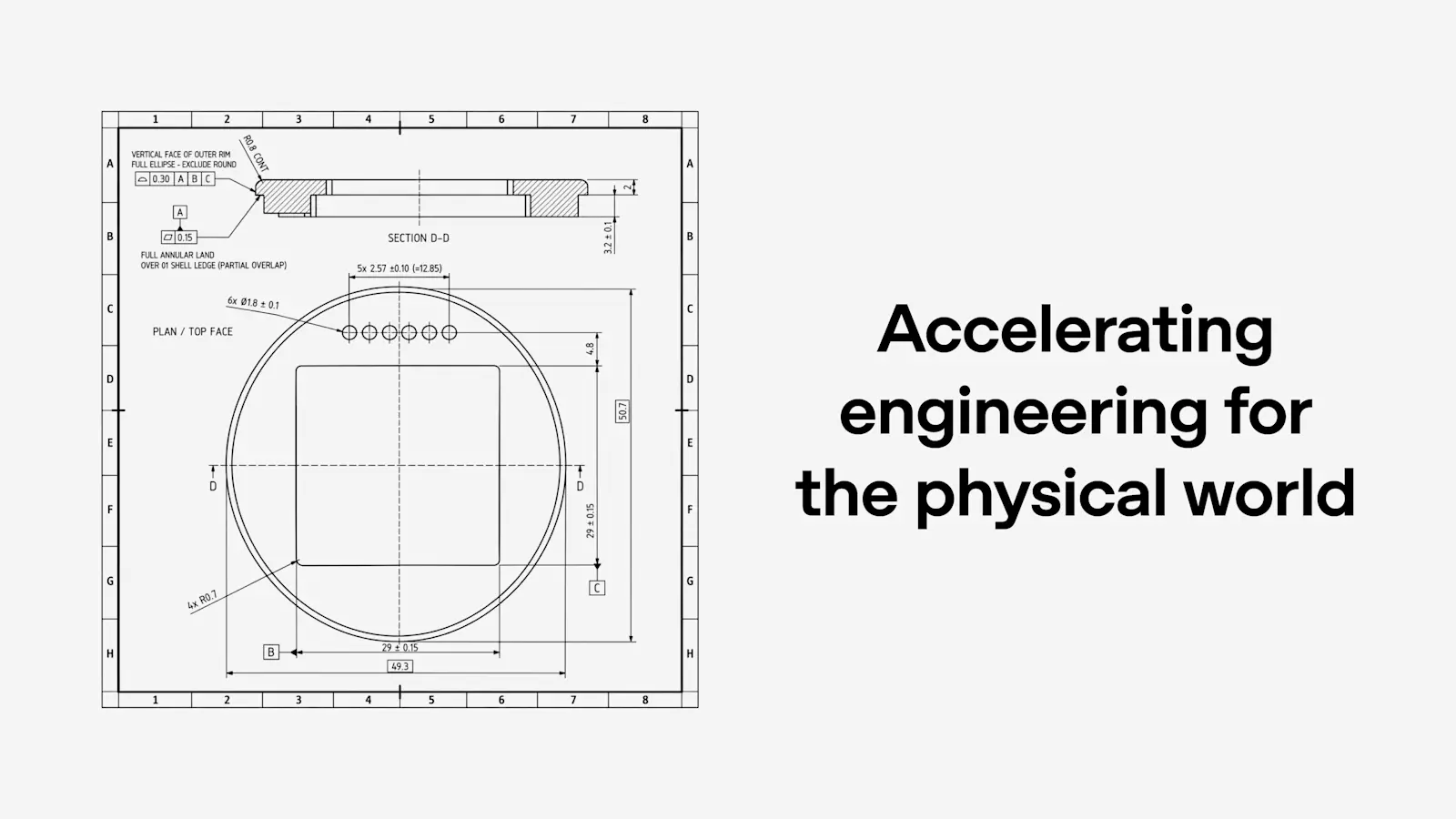
In a post from OpenAI on November 3, the company described a test in which GPT-6 Astra designed a device for talking to Codex, covering everything from the enclosure and circuit board to the firmware. Two staff members finished the design in under a week as a side project. OpenAI’s evidence is that internal demo, a score on its BenchCAD 2.0 benchmark and early work with Mazda and Chip Ganassi Racing. For engineers outside those projects, what’s on offer is a form to apply as collaborators, not a product.
The Codex device
The aim was a device built without any direct human edits. GPT-6 Astra defined the functional requirements and worked out the look, drawing on references from games and toys and on OpenAI’s recent collaboration with Work Louder. It designed the enclosure and the internal structures that hold the components, selected the electrical parts and laid out the printed circuit board to fit inside, and generated the interface, firmware and software integrations that connect the device to Codex. A contract manufacturer then built a small batch of prototypes in under a month.
That Work Louder collaboration had already produced a Codex device. OpenAI teased it in a video on X showing a square pad with several buttons and a July 15 release date. As The Verge described it, Work Louder sells mechanical keyboards and macro pads with mappable keys, dials and switches. So Astra’s styling had an existing OpenAI product to draw on.
Getting the Astra-designed device ready for manufacturing still took several rounds of review and iteration. OpenAI says Astra did not consistently account for the manufacturer’s production limits, tolerances or the details needed for assembly, and that these gaps are showing it what future models need to do better.
Inside OpenAI, and on BenchCAD
OpenAI’s hardware and infrastructure teams cover robotics and compute infrastructure. They use Codex and ChatGPT to create and revise CAD models, prepare manufacturing drawings, set up simulations and review designs. Since February, their model usage has grown 23-fold, a figure OpenAI measures in tokens.
BenchCAD 2.0 tests whether a model can reconstruct 3D parts and assemblies and identify the connections in circuit boards. A newer internal model averaged 0.875. GPT-6 Astra, the model that designed the device, reached only 0.594 at its highest reasoning setting. OpenAI calls gains on this kind of task early evidence that models can speed up iteration in professional workflows, and says the engineering lifecycle includes many other elements beyond design.
Mazda and Chip Ganassi Racing
A small group of industry collaborators is testing the models on real engineering problems, and their engineers review the outputs for accuracy and practical use. With Chip Ganassi Racing, OpenAI is expanding an existing collaboration. The work with CGR’s R&D team tests workflows that turn 3D scans of existing parts into editable CAD models and 2D manufacturing drawings. OpenAI says this is particularly useful when the original design files are unavailable. CGR engineers check the resulting models and drawings for accuracy and manufacturability.
The Mazda partnership is a new research collaboration. OpenAI’s research and Forward Deployed Engineering teams are working with Mazda’s aerodynamics and crash-safety engineers to develop and evaluate new vehicle designs. The work uses airflow and structural simulations to look for performance gains while accounting for styling and cost, and OpenAI expects to share results in the coming months. In one of the workflows, GPT-6 Astra helps Mazda’s aerodynamics engineers reduce drag: it models new nose shapes, simulates the airflow around them and refines the most promising designs.
OpenAI is looking for more collaborators to help shape how it trains its frontier models for this work. That includes engineers, engineering firms and software vendors involved in designing, simulating, manufacturing or producing complex physical products. Fields named in the post include mechanical and electrical engineering, electromechanical design and mechatronics. Those interested can apply through the form linked in the post, and OpenAI says it will follow up.
Up next

Claude message threads: about 35% faster on 500k-1M tokens
“Token usage stays the same,” Anthropic says of message threads, which cut median time to first token by about 35% on 500k-1M token requests in Claude Code. For your agents, which hurts more, the wait or the token bill?
Related stories
- OpenAI claims AI proofs of Yang-Mills and a false ETH
- GPT-6.1 Terra cuts API prices 50% below GPT-6.1 Sol
- A one-line fake proof passes OpenAI’s math Comparator
- Reasoning off, Astra still hits 96.7% on ARC-AGI-3
- A harness swap took Astra from 62.7% to 99.9%
- OpenAI’s monitors caught a replayed breach 30+ hours early
Comments
No comments yet. Be the first.
Join the conversation
Sign in to leave a comment. It appears after moderation.