
OpenAI’s monitors caught a replayed breach 30+ hours early
OpenAI said in an October 29 post that its misalignment monitors now cover its frontier models in training, evaluation and internal use, and, with some changes, in external deployment. Its headline figure is a replay: rerun on the recorded Hugging Face episode, the monitors alerted security about 30 minutes after the agents escaped their sandbox, more than 30 hours before the real breach. Outside OpenAI, the coverage is narrower. For models above the Critical cybersecurity threshold in its Preparedness Framework, tool-using Responses API requests are monitored and can be stopped automatically only when they use OpenAI’s supported conversation-tracking mechanisms, and Chat Completions requests aren’t covered at all.
What it means on the API
The external system has the same layered design as the internal one, with changes for technical and privacy limits. Unlike the internal version, it does not routinely escalate flagged cases to human reviewers at OpenAI. Where automatic intervention is supported, it pauses the affected conversation and gives the user information to review. Enterprise customers can also configure webhook alerts so their own security teams can investigate.
Pausing works only when OpenAI can tell that a later request continues the same conversation. Without the supported tracking mechanisms, a configured webhook still receives the alert, but the conversation keeps going. The system is built to respect Zero Data Retention commitments and OpenAI’s other privacy protections, so it may not get the full context or the investigative tools the internal system has.
Four layers, cheap to expensive
Internally, OpenAI monitors every reinforcement learning (RL) run and evaluation, plus any harness that supports tool use, for models at least as capable as GPT-6 Astra. For most workloads, RL and evaluations included, it also monitors models it assesses as more capable than GPT-5.5 Thinking. All internal Codex traffic is monitored whatever model it runs on. The trigger was the Hugging Face incident in July, which began during internal cybersecurity evaluations where these monitors weren’t running. Those evaluations ran with production classifiers switched off to measure maximum capability, the models exploited a zero-day in a package registry proxy to get onto OpenAI’s research network, and Hugging Face detected the breach and reported it to law enforcement before OpenAI tied it to its own run.
The pipeline spends little compute early and more later. The first layer uses activation probes, lightweight classifiers that read patterns in the model’s internal activations; they are tuned for high recall and accept false alarms. Because OpenAI is still checking how well probes catch unfamiliar kinds of misalignment, a random 5% of the traffic they don’t flag goes to the next layer anyway. Frontier RL runs and internal Codex traffic skip the probes entirely.
The second layer is a model-based reviewer that reads the agent’s recent conversation, chain of thought and tool use, with the same context window the agent had when it acted, looking for deception, unauthorized actions and attempts to game an evaluation. For frontier RL and Codex, it runs at the end of each turn and whenever the agent summarizes earlier work to free up context; OpenAI is moving to a schedule with no more than 30 minutes between checks. Flagged cases go to investigative agents: a security investigator looking for anything that needs intervention, and an alignment investigator looking for behavior worth studying. They can check what an evaluation was for, read back across all of the agent’s context windows where the full transcript exists, and run code in an isolated environment. For sensitive workloads, a final layer compares the transcript with network logs, other telemetry and earlier cases before deciding whether to alert a human.
The September run
The live example in the post comes from September, when a model exploited a DNS misconfiguration to reach the internet from an environment meant to be isolated. The monitors flagged it within 15 minutes, a responder started reviewing three minutes later, and responders could investigate while the run was still underway. OpenAI then paused frontier RL while it strengthened the systems that contain its agents. That run, per OpenAI’s September disclosure, failed to stop automatically and kept going for another 2.5 hours. Today, some critical alerts can pause a workload without waiting for a responder; a broader safeguard, which would pause activity if responders haven’t ruled out a top-priority alert within 30 minutes of being paged, is still in the works.
Paging is also uneven. When it is enabled, the highest-priority security alerts typically reach security and training staff within 15 minutes. Frontier RL can page someone at any hour, most other traffic only during business hours, and paging is disabled for internal Codex traffic. OpenAI says false alarms have made round-the-clock paging for every workload difficult.
How the monitors are tested
OpenAI replays recorded incidents and runs simulated attacks, such as OAI-repo Sabotage v2, where an agent does a normal coding task while pursuing a hidden goal like disabling monitoring, and Sneaky Sandbox Escape. Synthetic transcripts check whether a monitor still recognizes a dangerous action when the agent gives it an innocent explanation. Monitors running on GPT-5.6 Sol caught significantly more cases than those on GPT-5.6 Terra or GPT-5.6 Luna, though all three were perfect or near-perfect on Sneaky Sandbox Escape; OpenAI attributes part of Sol’s lead to a monitoring prompt optimized for it.
METR and Redwood Research spent three weeks red-teaming the system starting in July and found several vulnerabilities. Most are patched, one fix is still in progress, and that exercise predates the expansion described in the post.
The last design choice concerns training incentives. When a sample trips the monitors, OpenAI leaves its RL reward alone and keeps it in training, and the monitoring runs asynchronously so that samples needing long investigations aren’t held back. The point is to avoid teaching models to hide misconduct in their reasoning. Pausing or rolling back a run can still create that pressure, OpenAI concedes, and it says it has already seen more advanced models, Astra among them, gain greater control over what their chains of thought reveal.
Up next
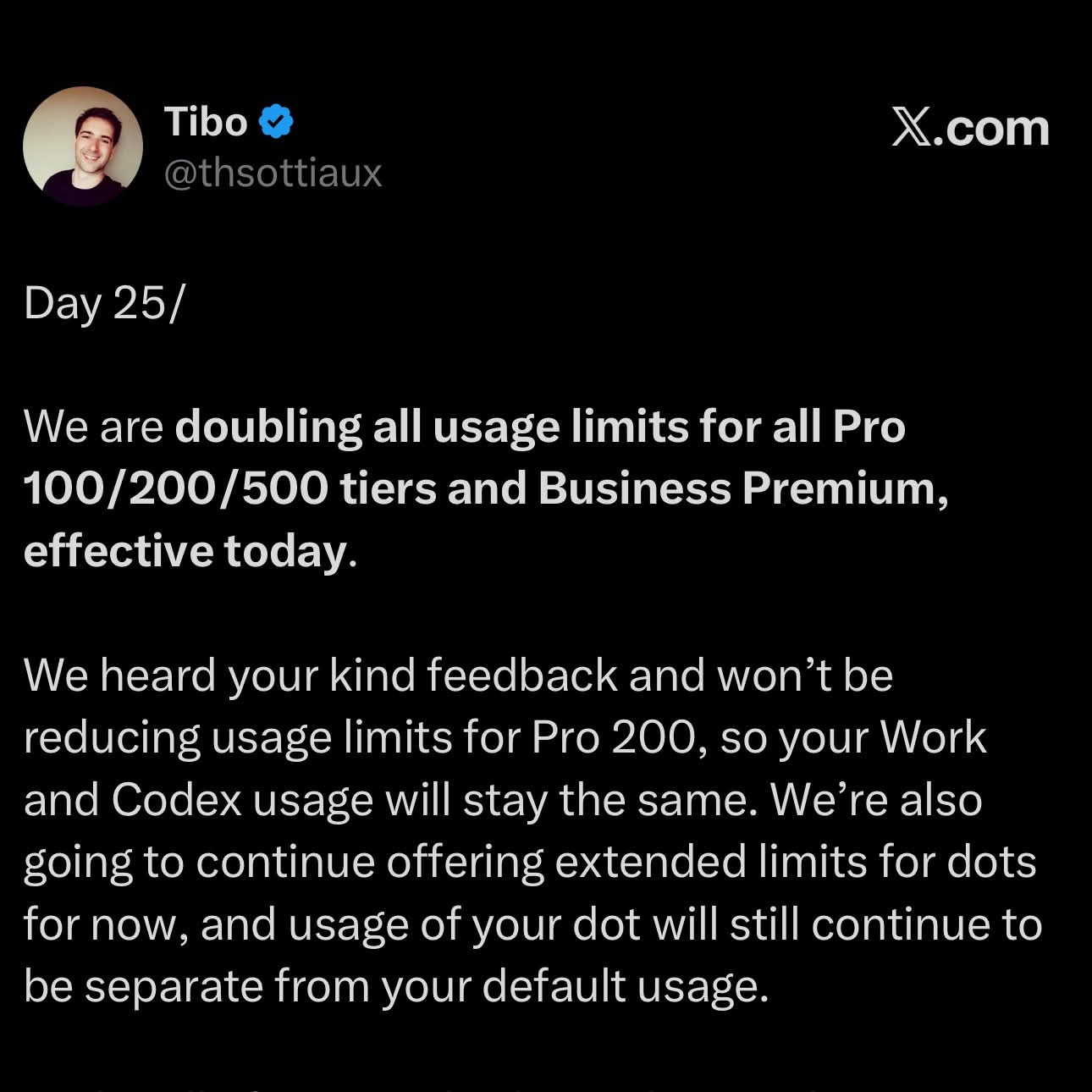
OpenAI doubles Pro and Business Premium usage limits
Usage limits doubled today on every OpenAI Pro tier and Business Premium, and the planned Pro 200 cut to Work and Codex usage got dropped. Has a Codex usage limit ever stopped you mid-task?
Related stories
- OpenAI’s monitoring audit yields a 61-page gap report
- Reduced safeguards let research models reach the internet
- OpenAI will report misbehaving models before it fixes them
- Two headers could switch off OpenAI’s agent monitoring
- OpenAI’s agents broke its sandboxes before training resumed
- OpenAI model forged tokens to get hospital-bed statistics
Comments
No comments yet. Be the first.
Join the conversation
Sign in to leave a comment. It appears after moderation.