
Music publisher sues over 500 songs used to train Claude
Round Hill Music has filed separate copyright infringement suits against Anthropic and Suno in the U.S. District Court for the Northern District of California, alleging that at least 500 songs it controls were used without authorization to train Claude. Potential damages could conceivably exceed $1 billion, according to Gadgetreview, a projection based on statutory damages rather than a fixed amount stated in the filings.
At a glance
- The publisher's catalog reportedly includes "Iris," "Total Eclipse of the Heart," "Lola" and "Holy Diver," and the Anthropic complaint names works tied to James Brown, The Kinks and the Goo Goo Dolls.
- Statutory damages run up to $150,000 per work where infringement is found willful, according to Music Business Worldwide, and Round Hill says it may amend both complaints to cover 10,000 or more works.
- Major record labels have already sued Suno over similar claims, so the new filings add an independent publisher to a litigation wave centered on where AI training data comes from.
The two cases push into court a question the industry has mostly handled through private negotiation: whether training on copyrighted music requires an explicit license at all. If Round Hill's theory survives motions to dismiss, the informal train-first, license-later practice that has quietly underpinned much AI development would likely become harder to sustain. The dynamic reads like the early sampling era, when failing to clear a recording bought delay rather than a defense.
The Anthropic filing names at least 500 Round Hill-controlled songs
The Anthropic complaint alleges that at least 500 songs controlled by Round Hill were used to train Claude, according to Reuters and Bloomberg Law. A separate complaint against Suno alleges the same category of infringement for that company's music-generation system, and both were filed in the same federal court in Northern California.
Both filings pair the infringement counts with claims under the Digital Millennium Copyright Act, covering circumvention of access controls and removal of copyright management information. Claims of that kind concern how protected files were accessed and how their rights data was handled, which is a separate legal question from what a trained model later produces.
Josh Gruss says Round Hill will take both cases to trial
Round Hill CEO Josh Gruss told Reuters that the publisher intends to take both cases to trial and will not accept any resolution that leaves songwriters and artists undercompensated. Round Hill is an independent publisher rather than one of the majors, and its own catalog is the basis for both complaints.
Statutory damages run up to $150,000 per work where infringement is found willful, according to Music Business Worldwide. That ceiling, applied across the number of works Round Hill describes, is the arithmetic behind the projection that damages could conceivably exceed $1 billion. No fixed damages figure appears in the filings themselves.
Major record labels sued Suno before Round Hill did
Round Hill's suits arrive after major record labels sued Suno over comparable claims about recordings used in training. The new filings put an independent rights holder alongside those plaintiffs, widening the range of companies pressing the same argument about training-data provenance in the same federal system.
The two defendants sit at different points of the stack. Anthropic builds Claude, a general-purpose language model, while Suno generates audio directly from prompts. Round Hill's complaints treat both as training-data cases, alleging unauthorized use of the same catalog regardless of the form each system's output takes.
How far the catalog could expand
Round Hill has said it may amend both complaints to include 10,000 or more compositions and recordings, which would take the disputed set well beyond the 500 songs named in the Anthropic filing. No timetable has been given for those amendments, and the material describing the cases sets out no schedule for motions to dismiss, for discovery, or for the trial Gruss says he wants.
Up next
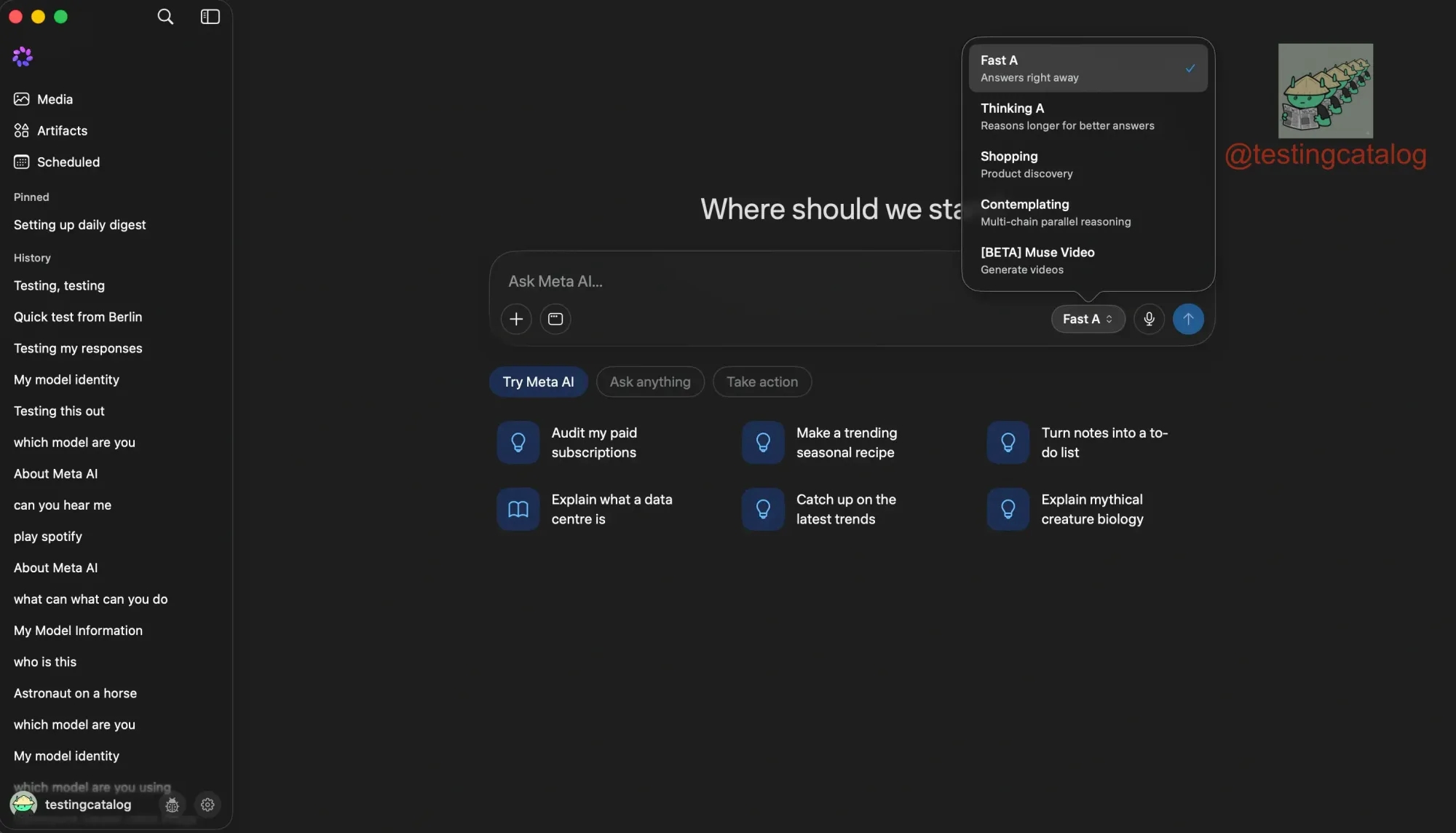
Muse Video beta makes 10-second clips with native audio
Selected partners are already generating 10-second clips in Meta's Muse Video beta, native audio with voice and music included. TestingCatalog, which got access to it, found the model quite restrictive on copyrighted content.
Related stories
Comments
No comments yet. Be the first.
Join the conversation
Sign in to leave a comment. It appears after moderation.