
Two federal officials, two verdicts on Anthropic
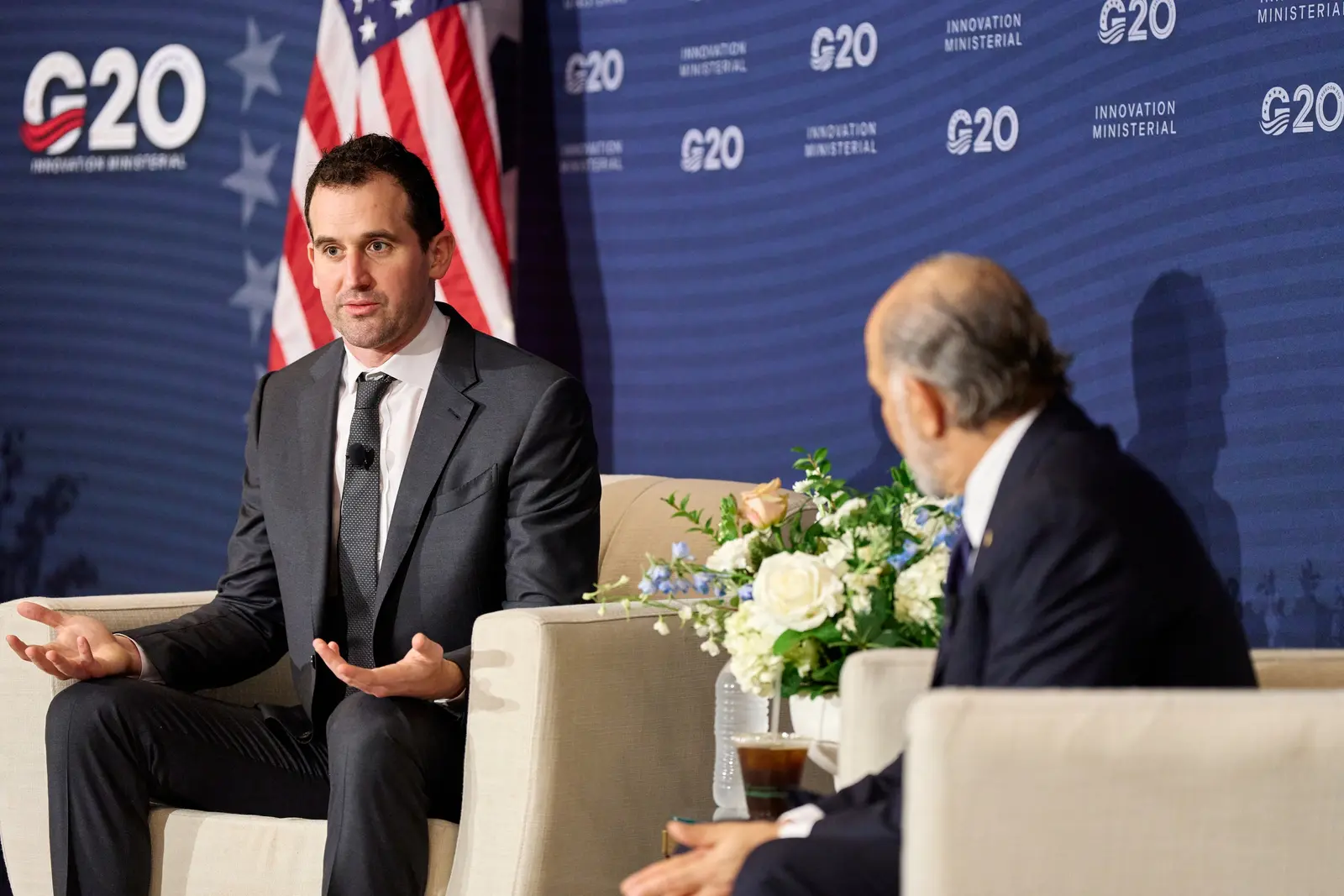
Pentagon research and engineering leader Emil Michael posted on September 3 that Anthropic “is still a designated supply chain risk” at the department and within the defense industrial base, and signed off with “Thank you for your attention to this matter!” A day earlier, Commerce Secretary Howard Lutnick told Bloomberg that Anthropic and the government were “in tune together”. He said it after sharing a stage with Anthropic co-founder Tom Brown at the G20 Innovation Ministerial in North Carolina.
That leaves federal buyers with two answers from the same administration, a day apart, while Anthropic is still suing the Pentagon, FedScoop reported. “It seems contradictory because it is,” said Jessica Tillipman, associate dean for government procurement law studies at George Washington University Law School. “None of this has made sense because designating Anthropic as a supply chain risk never made sense.”
Which designation Michael means
Legal experts told FedScoop that Michael is likely referring to the challenge still running in the U.S. Court of Appeals for the D.C. Circuit. The Pentagon labeled Anthropic under two separate laws: 10 U.S.C. § 3252 and the Federal Acquisition Supply Chain Security Act of 2018 (FASCSA). That split is why Anthropic filed two cases on March 9, one in the Northern District of California and one directly in the D.C. Circuit.
The two laws work very differently. Lawfare explains that FASCSA routes a designation through an interagency council, gives the company 30 days’ notice and a chance to respond, and sends judicial review to the D.C. Circuit. Section 3252 stays entirely inside the Pentagon, with no notice and no chance to respond, and it bars judicial review when the government limits disclosure of its determination. Lawfare found only one publicly known earlier use of either authority: a September 2025 FASCSA order from the Office of the Director of National Intelligence against Acronis AG, a Swiss cybersecurity firm with reported Russian ties, limited to intelligence community contracts.
U.S. District Judge Rita Lin’s August 27 ruling struck down the designation under the statute aimed at protecting the defense industrial base. She also vacated Secretary Pete Hegseth’s directive that imposed a secondary boycott of Anthropic among military contractors. The designation before the D.C. Circuit rests on FASCSA, which covers federal procurement broadly.
That is where Michael’s wording gets questioned. Simona Grossi, a professor at Loyola Marymount University’s Loyola Law School who filed an amicus brief supporting Anthropic in the district case, told FedScoop that his claim of an active designation “for the industrial base” needs more explaining. Whether the FASCSA determination “can be implemented consistently with an injunction against carrying out the directive that ordered it is a question the government will have to answer,” she said.
The Mythos problem
Tillipman noted that the Pentagon’s earlier statements about Anthropic came while reports said the National Security Agency, which sits inside the Department of Defense, was using Anthropic’s Mythos model. Lin cited that use in her ruling as part of her finding that the administration’s stated national security concerns were not earnest.
The dispute itself started with contract terms. Under a July 2025 contract, Claude became the first frontier AI approved for classified government networks. When the contract came up for renegotiation, the Pentagon asked Anthropic to drop its restrictions on mass domestic surveillance and fully autonomous weapons, and Anthropic refused, law firm Mayer Brown wrote. The firm describes the label that followed as the first supply chain risk designation ever applied to an American company.
Agencies keep buying Claude
Outside the Pentagon, purchasing has continued. The Department of Energy’s top IT official told FedScoop that “everybody wants” Claude and that the agency first bought it in 2024. SAM.gov records show the Federal Communications Commission signed delivery orders with Carahsoft for Claude in May and July, under contract IDs 273FCC26F0051 and 273FCC26F0081.
Those orders came months after President Trump told federal agencies on February 27 to stop using Anthropic products, the same day Hegseth issued the designation, Tech Policy Press recorded. Lin then granted a preliminary injunction on March 26 blocking enforcement of the ban and the designation.
Grossi said the mixed signals still cost the company. “The two statements are in tension with each other, and this is not without consequences,” she wrote in an email. “The market is not receiving clear messages and that translates into a burden for the company — others might not feel comfortable doing business with Anthropic for fear of becoming the administration’s next target.”
What the D.C. Circuit has to decide
The question of how far Lin’s decision reaches is already argued in the appeals case. Anthropic says her ruling on the designation is “persuasive authority” for its challenges there. The government filed its disagreement on September 3, the same day Michael posted.
Tillipman said Anthropic’s biggest obstacle in the D.C. Circuit is the court’s “inherent deference towards national security decisions.” That deference has already shown up in this case: on April 8 a three-judge panel refused Anthropic’s request for a stay and let the government keep its designation, citing “weighty governmental and public interests on the other side of the ledger,” Tech Policy Press reported. The panel also said a stay would force the military to keep dealing with an “unwanted vendor” during a significant ongoing military conflict. Tillipman still sees this case as an extreme one: it “has to be one of the most outer limits of national security excuses I’ve ever seen,” she said.
Grossi listed what is still open: Anthropic’s challenge under the procurement statute and the constitutional claims that come with it. Lin’s ruling does not bind the D.C. Circuit, although both courts work from the same record, and it is not the last word. The government’s appeal of her preliminary injunction is still pending in the Ninth Circuit, on hold while the D.C. Circuit case plays out. And Grossi expects more: “an appeal from the final judgment is all but certain.”
Up next
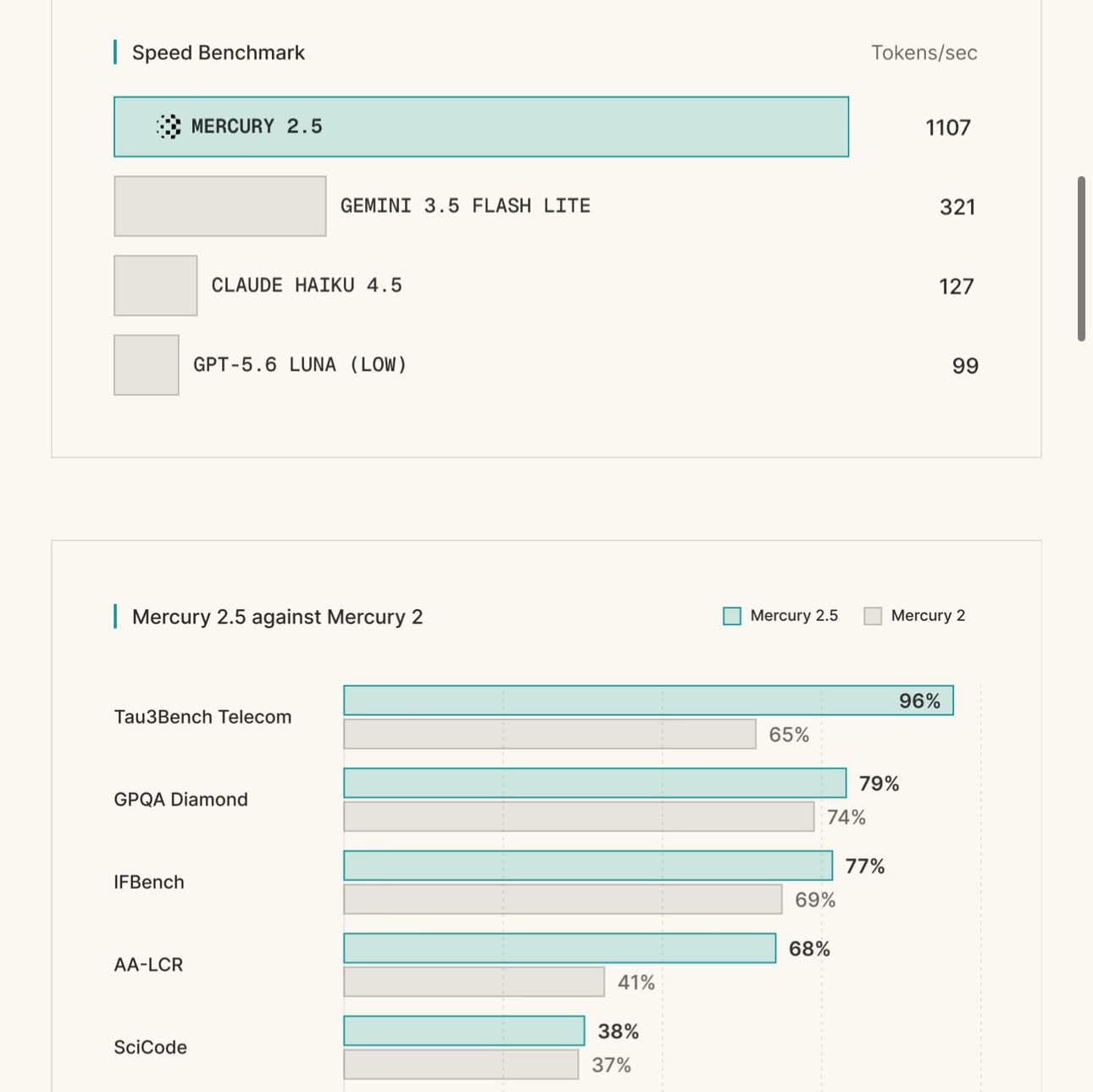
Diffusion model claims 1,107 tok/s in Mercury 2.5
Inception shipped Mercury 2.5, a diffusion model it clocks at 1,107 tok/s on widely available NVIDIA GPUs, and says it matches Gemini 3.5 Flash and GPT 5.6 Luna Low on quality, a comparison resting on its own benchmarks.
Related stories
Comments
No comments yet. Be the first.
Join the conversation
Sign in to leave a comment. It appears after moderation.