
Astra lands on Pro and Business before Plus
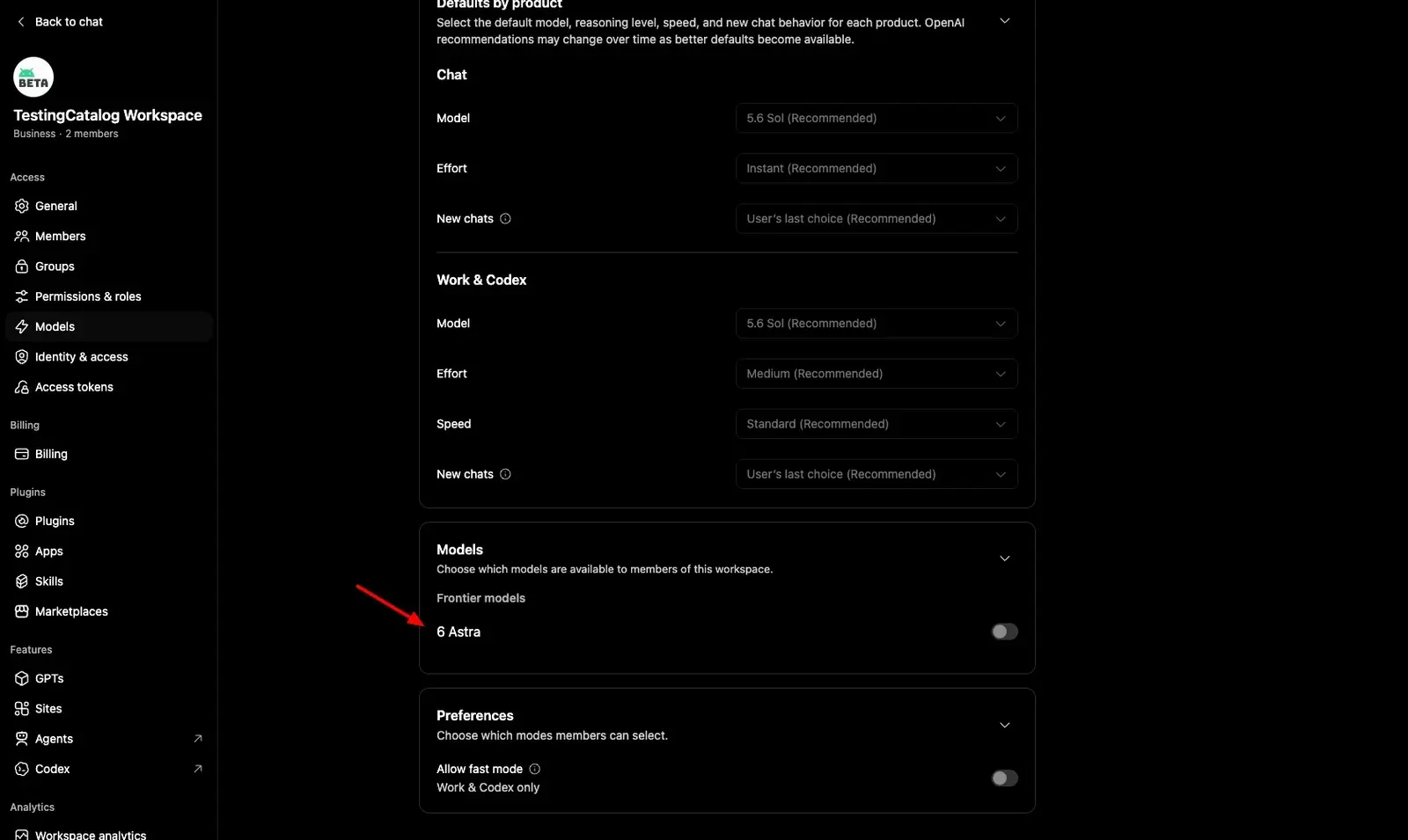
OpenAI started rolling out GPT-6 Astra to ChatGPT Pro and Business accounts on September 4. That came a day after the company announced the model and opened it to a limited set of organizations.
“Some of you should start seeing it across ChatGPT Work and Codex,” the company’s message read, as quoted in a post on Threads. Pro costs $100 or $200 a month, and those subscribers get Astra before people on the $20 Plus plan. OpenAI followed the same order for earlier model releases. Pro, Business and Enterprise users also get access to GPT-6 Astra Pro. An API release is being prepared: the model id is gpt-6-astra, and Astra will also be available through Azure and AWS Bedrock. OpenAI calls Astra “the world’s most intelligent and aligned model” and says it brings together “years of research and big bets across pre-training, reinforcement learning, and alignment.”
Notes instead of compaction
For developers, the biggest change is how Codex handles long sessions. Until now, when a context window filled up, models relied on compaction: the agent condenses the work so far into a summary and continues from that summary. OpenAI says each compaction can drop details, such as why a fix failed or how a component behaves. Those losses add up over a long debugging session or a large refactor.
With Astra, Codex keeps notes across context windows, so the details it has collected are not squeezed into a single summary over and over. Earlier context windows also stay searchable. If a requirement or a test result from an earlier message or tool output never made it into the notes, Astra can still go back and find it. For now the feature is experimental, and you have to turn it on in Codex. OpenAI says it will become the default for Astra in the coming weeks.
Computer use, and older models too
Astra is also aimed at computer use, where ChatGPT operates your Mac or another desktop, including in the background while you work. OpenAI says the model combines that ability with targeted training for professional environments and can carry out multistep workflows that produce documents, spreadsheets and presentations. It also calls Astra “the best model for software engineering to date.”
Not all of the speedup comes from the model. “With Astra, ChatGPT is nearly 2x faster at computer use than before,” Ari Weinstein wrote on September 4. He added that the team had also optimized the harness, the code that runs the model’s tool calls and actions. “These optimizations work in existing models too,” he wrote, and he put the speedup for GPT-5.6 Sol at about 60%.
Why roll it out slowly?
OpenAI’s own explanation is cybersecurity. It describes Astra as a “significant jump in cyber capabilities” and says the model “meets the Critical threshold in cybersecurity under our Preparedness Framework,” the company’s internal scale for rating dangerous capabilities. That is why access was staged. Members of Daybreak, OpenAI’s cybersecurity-focused program, got the model first, the same pattern the company used for GPT-5.6. Paid ChatGPT tiers, the API and AWS follow “over the coming days.”
OpenAI’s benchmark claims point the same way. The company says Astra scores 98% on FrontierMath Tier 4, 100% on ExploitBench and 99.9% on ARC-AGI-3, and that it has already helped solve long-standing open problems in mathematics. The ARC-AGI-3 result depends on how the test was run. In September, the 99.9% came from a harness that preserves OpenAI’s opaque reasoning state between requests, with Astra at the high setting. Under the Standard harness, where a model keeps only the visible notes it chooses, Astra at the max setting scored 62.7%.
What the API gets
Astra has a 1.05-million-token context window, a maximum output of 128K tokens and a knowledge cutoff of April 30, 2026. GPT-5.4 Thinking already had a million-token window. In the API, Astra costs $10 per million input tokens and $50 per million output tokens. Fast mode costs twice as much: $20 for input and $100 for output.
Astra arrives just over a year after GPT-5 launched on August 7, 2025, as ChatGPT’s default model. Since then OpenAI has shipped a series of point releases, most recently July’s GPT-5.6 Sol, Terra and Luna. The software around the models changed over the same period. Codex got its own Mac app in February. In July, Codex effectively became the ChatGPT desktop app, bringing Chat, Work and Codex together, and the old native client was renamed ChatGPT Classic.
Allowances and the Enterprise switch
OpenAI says Astra usage counts against existing subscription allowances, and users and businesses will be able to buy credits for more.
Enterprise works differently. Access is off by default at launch, and an administrator has to enable Astra for the workspace. Settings from earlier Early Model Access programs do not carry over automatically, so admins who opted into earlier models ahead of time have to turn Astra on separately.
Up next
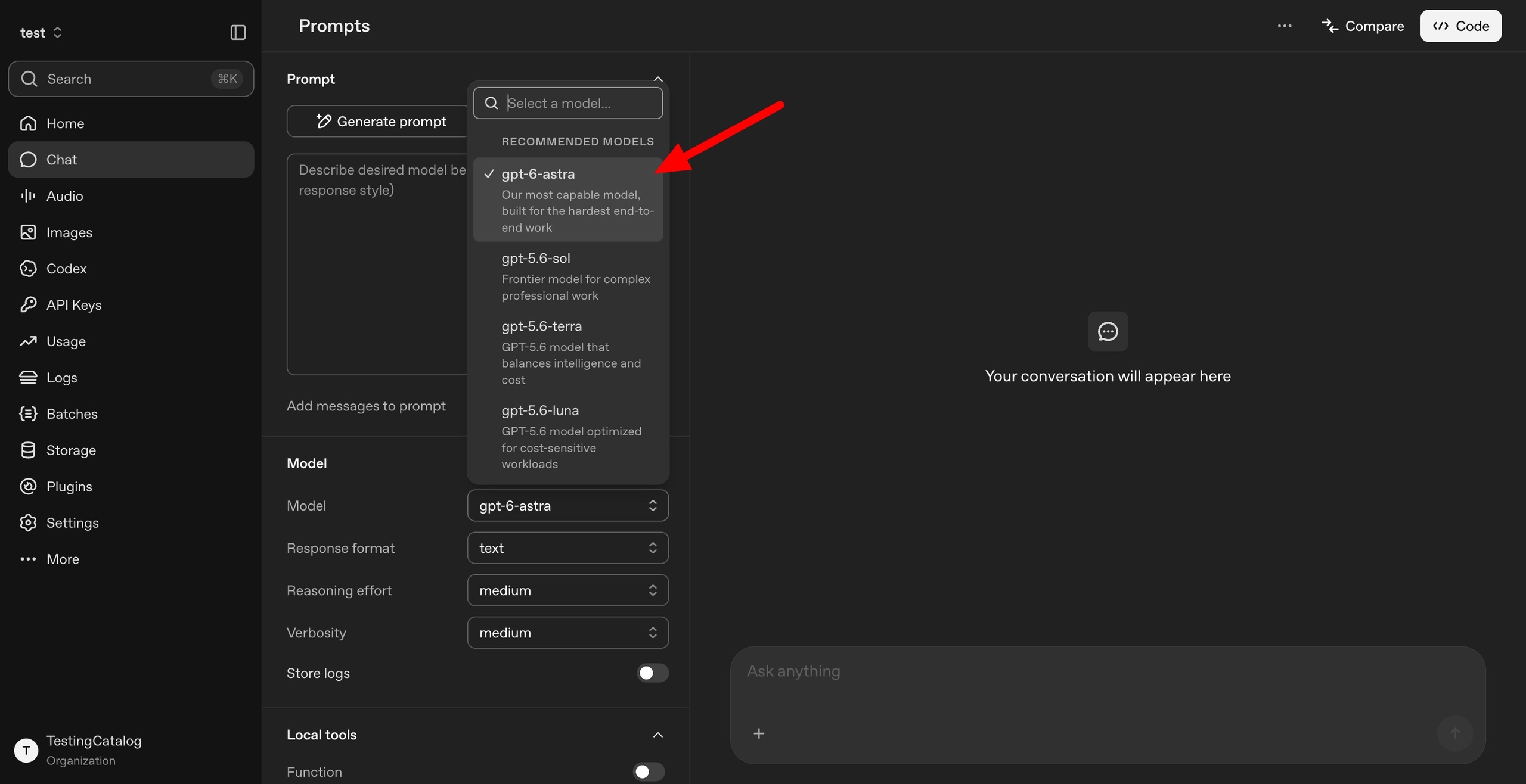
GPT-6 Astra lands on the API at $10 in, $50 out
The API got GPT-6 Astra before Codex did. Access in ChatGPT Work and Codex may take a few days to reach Plus and all Business users, at $10 per million input tokens and $50 per million output.
Related stories
Comments
No comments yet. Be the first.
Join the conversation
Sign in to leave a comment. It appears after moderation.