
GitHub hit 7.4B monthly commits, up from 2.9B in August

GitHub said at its Universe conference on October 28 that it now handles 7.4 billion commits a month, and that so far this year it has added 4 million CPU cores, 160 petabytes of high-speed storage and 50 Tb/s of network capacity, The New Stack reports. Those cores and petabytes are already in service. The rearchitecture that separates compute from storage is still on the way, and its gain of up to 35x higher write throughput comes from GitHub’s internal benchmarks.
From 65 million to 7.4 billion
In 2024, developers pushed 65 million commits a month to GitHub. In April 2026 the figure was 1.4 billion, and in August GitHub put it at 2.9 billion. The new number is more than five times the April level. The New Stack reported earlier that GitHub handled roughly 1 billion commits across the whole of 2025, and that in early June COO Kyle Daigle said GitHub was targeting capacity for 30 times its current load, which he described as far beyond the normal playbook of adding more machines.
In August, CTO Vlad Fedorov said the platform had added 3 million CPU cores, mostly on Azure. The count for the year now stands at 4 million, so about a million cores have already gone in since August. GitHub also added more compute for GitHub Actions, its CI and automation service.
Why the outages keep coming
Outages have become a recurring theme for GitHub, and the company puts them down to fast usage growth driven mostly by “agentic demand.” The August figure of 2.9 billion came from the postmortem of an almost eight-hour outage on August 17, the second major one that month, which Fedorov traced to capacity pressure rather than a code change.
GitHub’s August availability report said the month “proved to be a challenging month for availability” and named two responses: architectural improvements and the move to Azure. By then, reads from the monolith, GitHub’s core application, peaked at 64.3% in Azure, and Git reads reached 54%. On August 11, GitHub ran a production MySQL primary from Azure for the first time, and it added two more primaries on August 27. For Actions, routing changes moved 33% of jobs off a constrained production cluster, cutting peak cache CPU utilization from 98% to 80% and adding an estimated three months of headroom. GitHub called that a near-term containment measure. The extra Actions compute announced on Wednesday comes after that stopgap.
The New Stack’s reading is that moving to Azure and its services was essentially the only option, especially once GitHub’s own data center was out of capacity.
The architecture still to come
GitHub first described the compute-storage split earlier this month, and on Wednesday it reiterated the commitment. Separating the two lets each layer scale on its own instead of growing together on the same machines. The up-to-35x write throughput figure GitHub gave at the time is, so far, only a result from its internal benchmarks. The New Stack notes that separating compute and storage isn’t exactly radical in 2026, but it shows GitHub had been trying to scale on a legacy foundation.
Jay Parikh, Microsoft’s EVP for Core AI, frames the plan in the announcement: “Agents are changing the volume and shape of software development. Adding capacity matters, but capacity alone won’t get us there. We’ve also had to change the architecture.”
Up next
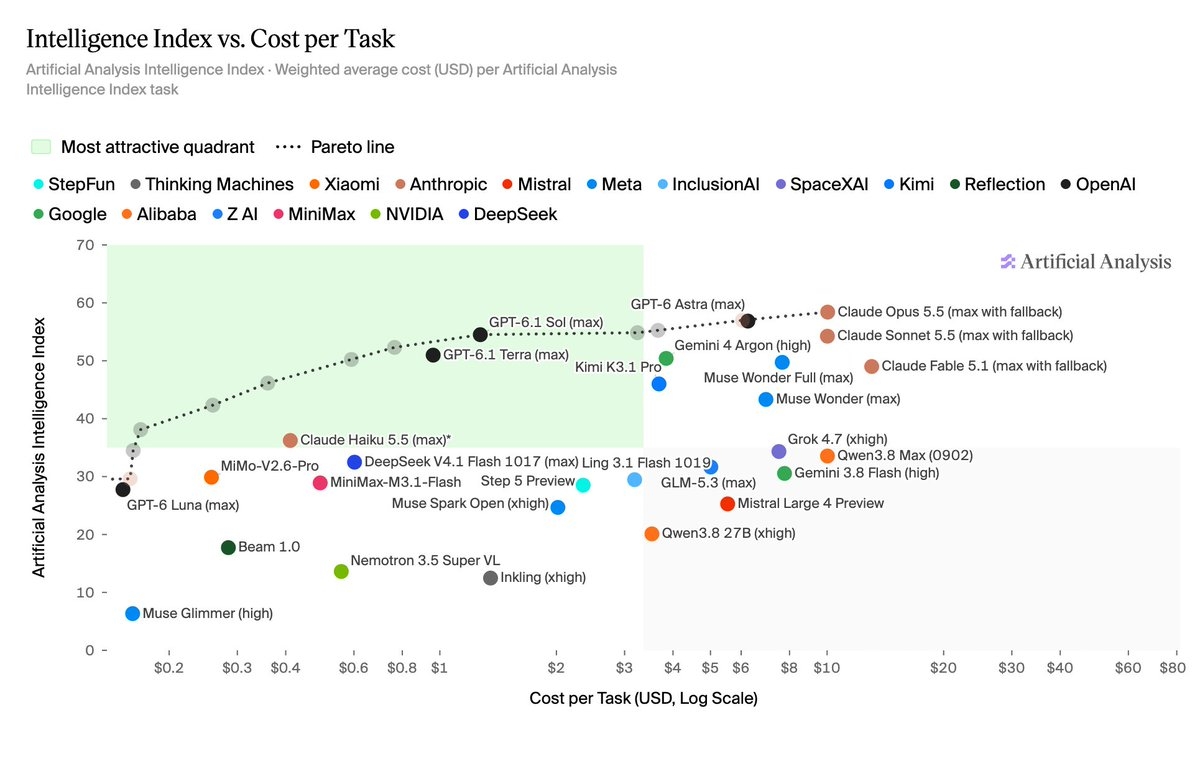
Opus 5.5 edges GPT-6 Astra, 58 to 57, on Artificial Analysis
Claude Opus 5.5 took the top spot in Artificial Analysis Intelligence Index v5 with 58, though GPT-6 Astra trails at 57 and most of the index runs on private datasets. Has a benchmark leader ever lost to the runner-up on your own tasks?
Related stories
- A maxed-out data center behind GitHub’s August 17 outage
- Cursor reportedly gets Computer Use for other laptop apps
- Cloudflare’s Rust port of TypeScript runs up to 8x faster
- DeepSeek open-sources DeepInfer with Huawei Ascend support
- Distillation attack hit 1.4% of OpenCode Console users
- Codex Desktop hid 323 GB of crash dumps on one Mac
Comments
No comments yet. Be the first.
Join the conversation
Sign in to leave a comment. It appears after moderation.