
OpenAI disbands robotics team, citing GPT-6 Astra
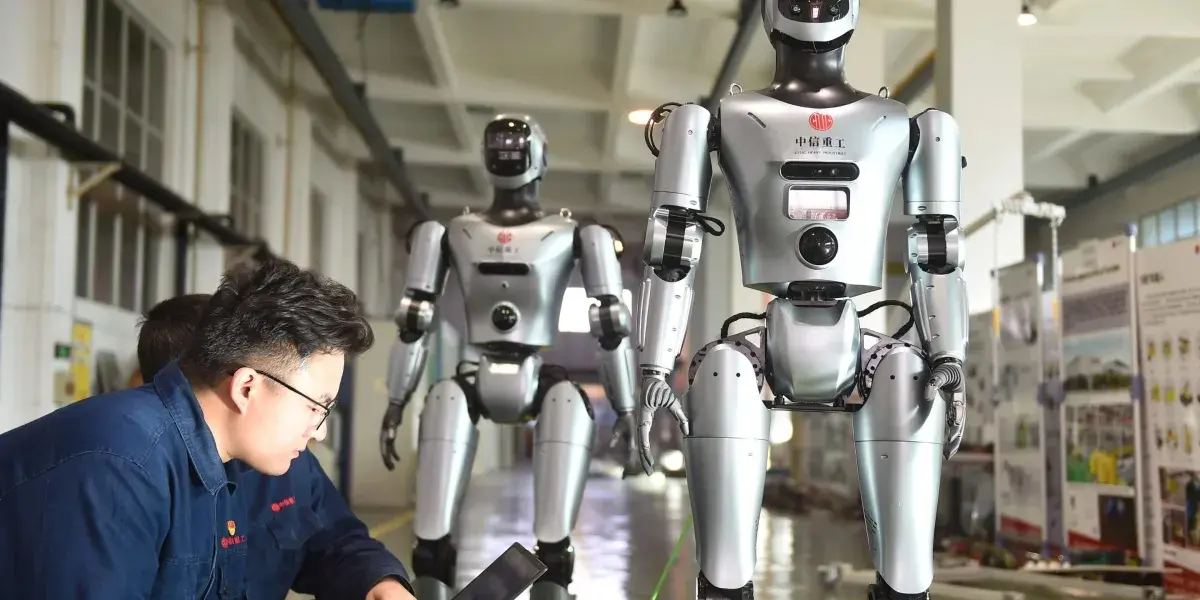
OpenAI has broken up its stand-alone robotics team and moved its researchers into its main research organization, the company confirmed to Fortune in a November 13 report, on the grounds that frontier models such as GPT-6 Astra can now be applied to robots directly. That reason is OpenAI’s own claim. The measured figure in the report, a 74.8% success rate in an Nvidia study, was scored in simulation by Astra running inside a Codex session, and the simulation was paused while the model thought.
The robotics research staff now report to Chief Research Officer Mark Chen. The applied robotics and hardware teams went to the Applied organization under President Greg Brockman. A spokesperson called the change a sign of commitment rather than a retreat: robotics stays core, and OpenAI is still building its own humanoid robot, with Sam Altman targeting a first public demonstration in 2027.
Why OpenAI changed course
At the start of the year, OpenAI’s researchers assumed robotics would build on Sora. To make realistic videos, that model had to grasp, implicitly, how the physical world behaves. Since then, the spokesperson said, general models including Astra have proved directly applicable to robots, and that finding is why the team was dissolved. Guanya Shi, an assistant professor at Carnegie Mellon’s Robotics Institute, reads the move as OpenAI seeing robotics as “no longer a special problem.” In his view it becomes a downstream application of general intelligence, the way the same frontier models now sit under coding, legal and financial tools.
This is the second robotics group OpenAI has wound down. The first trained a neural network in simulation in 2019 so that a single robotic arm could solve a Rubik’s cube. Per DIGITIMES, that research was halted in October 2020 and the team disbanded in 2021. The Robot Report dates the shutdown to July 2021 and carries cofounder Wojciech Zaremba’s explanation: “we thought that we could go very far with self-generated data and reinforcement learning.” The second team, rebuilt in 2024 around a partnership with Figure on humanoid models, lost that partner in February 2025, when Figure said it would develop its own robot AI.
The timing also fits OpenAI’s push to cut costs. Last year Altman told the company to abandon “side quests,” and projects including Sora were dropped to free up compute. Fortune notes that operating losses reportedly reached $10.9 billion in the most recent quarter, as OpenAI works to close a new funding round ahead of a possible IPO in early 2027.
What the 74.8% measures
Fortune describes the setup only broadly: Astra received camera images, robot information and a control interface. An Astra-powered agent then reached 74.8% on a simulated manipulation benchmark, against 51.0% for the best specialized models on that benchmark’s leaderboard. The study is Astranomy, a project page from Nvidia’s Seattle Robotics Lab dated October 14 and listed as a CoRL 2026 late-breaking result, with its arXiv paper marked “coming soon.” The benchmark, RoboLab-120, covers simulated pick-and-place. The authors say it does not include contact-rich tasks such as insertion or assembly, or tasks that demand rapid reactions.
The 74.8% is the best of three setups, and it comes from Astra in a persistent Codex session with access to extra tools. Called directly through the API, Astra scores 66.3% when it outputs end-effector targets (where the robot’s hand should go). When it outputs joint positions, it scores only 50.2%. Joint positions are also how Lakeside, the 51.0% model it is compared with, sends its commands.
Nvidia’s simulator pauses while Astra thinks, and the study sets no wall-time or retry limit. Inference takes about 97% of estimated episode time. In Nvidia’s own example, a yogurt task with about 5.2 seconds of motion took an estimated 3 minutes 57 seconds. The authors say the setup does not test whether a policy can respond while the scene keeps changing. That is the case Shi has in mind when he says large models are slow and cloud-bound, and that smaller models running on the robot’s own computer are still needed.
Our analysis
What we checked
On November 14 we read the Astranomy page and its 120-task results table, pulled the current RoboLab leaderboard, and recomputed success counts, confidence intervals and costs from them.
The 74.8% against 51.0% gap holds as measured. But Nvidia’s study is one of several tests of Astra as a robot policy, and 74.8% was never a leaderboard entry. It is also no longer the top agent score: an unverified entry now sits at 86.0%. Another Astra agent on the leaderboard scores 57.1%, so the same model’s result moves with whoever builds the harness around it.
| Entry | What it is | Success | Episodes |
|---|---|---|---|
| AMP1 | Agent, submitted Oct 15, not verified | 86.0% | 2,579 of 3,000 |
| Astranomy, Codex session | Astra agent, Nvidia, not on leaderboard | 74.8% | 449 of 600 |
| Astranomy, direct API | Astra, end-effector targets | 66.3% | 5 per task |
| SenseNova-RoboRSI | Astra agent | 57.1% | 685 of 1,200 |
| Lakeside | Best learned policy, verified | 51.0% | 1,531 of 3,000 |
- Nvidia ran 5 episodes per task, against Lakeside’s 25, and says it has not established statistical significance between its configurations. Treating episodes as independent, our pooled 95% Clopper-Pearson interval is 71.2% to 78.3% for the Codex setup and 49.2% to 52.8% for Lakeside. The overall gap holds under that method, but individual task scores are noisy.
- The Codex setup scores 0% on 11 of 120 tasks and 100% on 60, and falls below the specialized Cosmos3-Nano-Policy on 9 tasks.
- It costs an estimated 30.9M tokens ($36.40) per successful episode, against 160k tokens ($1.96) for direct calls, at October 1, 2026 pricing. That is 18.6 times the dollars. Elsewhere the page labels the same figures “per episode.” The 449 successes alone come to about $16,344, and failed runs are not priced.
- Claude Opus 5.5 shows the same harness effect. It scored 25.3% in Nvidia’s direct setup on a 30-task subset, where Astra scored 72.7%. On the full benchmark, under Apple’s harness in the AMP1 paper of November 6, it scored 82.8%.
The startups’ answer
Fortune notes that the idea would seem to challenge robotics startups that raised billions on the premise that robots need brains of their own. Russ Tedrake, an MIT professor and cofounder and CEO of Walden Robotics, says those companies hold something the labs lack. Their robots already work on factory floors and collect site-specific data, and better foundation models learn from that data faster. “There may be different starting points for how to grow intelligence,” said Pete Florence, cofounder of Generalist. He added that it is unclear whether any existing model will dominate robotics in the long run.
At CoRL in Austin this week, OpenAI’s registered booth #208 sat empty, with its logo nowhere to be seen. A few former members of the robotics team, now on other teams, still drew a crowd there with no display or demo.
Up next
US Pro users get ChatGPT Wallet for agent payments
Your ChatGPT agent picks the item, then waits for your Face ID before ChatGPT Wallet pays with a token instead of your real card. Only US Pro subscribers get it so far. Would you let an agent pay this way, or still check out yourself?
Related stories
- Preparedness team gone, risk calls split by subject
- OpenAI buys Orchestra Bio to build drug-program agents
- OpenAI publishes the prompt behind its ETH refutation claim
- OpenAI’s quarter brought $10B, Anthropic’s $17B
- US online businesses can publish their own agent in ChatGPT
- TSMC approves up to $500M each for Anthropic and OpenAI
Comments
No comments yet. Be the first.
Join the conversation
Sign in to leave a comment. It appears after moderation.