
US Pro users get ChatGPT Wallet for agent payments
On November 13, OpenAI started rolling out ChatGPT Wallet in dots, its always-on agents. A dot can now pay for a purchase with a substitute card number issued by the payment network, so Wallet doesn’t hand the real card details to the agent or the store, and the first users are ChatGPT Pro subscribers in the US. If you run an online store, Wallet’s tokens work with the checkout flow you already have, but OpenAI’s announcement warns about two other problems: your firewall may block the agent, and your fraud and risk tools may decline its legitimate purchases.
What merchants are asked to change
Alongside Wallet, OpenAI published a Commerce Partner Playbook. It gives practical guidance on serving customers whose agents shop for them, and businesses can start with whichever part matters most to their customers:
- Agent access. Set up your CDN or firewall to recognize signed requests using Web Bot Auth, and make sure your general site security isn’t blocking ChatGPT agents by accident. An agent shopping through the browser doesn’t need a plugin or a product feed.
- Payments and risk. The tokens go through existing checkout flows, but risk systems may still flag legitimate agent purchases, which leads to declines or cancellations. OpenAI suggests working with your providers to understand how they recognize these transactions.
- Product data. Claim your business in ChatGPT and, once you’re verified, update your business details and upload a product feed with current pricing and availability.
- Deeper integration. Build a plugin so agents can check availability, manage carts or take other actions through your existing systems, or add WebMCP tools to your site.
On the risk side, OpenAI is working with the fraud-prevention companies Forter, Riskified, Sardine and Signifyd, and with the payment providers Adyen, Checkout.com and Stripe, to help their systems recognize legitimate agent purchases. OpenAI also says some sites may block purchases through Wallet or other agent payment products without meaning to.
How a purchase goes through
The user adds a card once. Before every purchase, they see the items, the total and the selected card, then approve with a security check such as Face ID or a fingerprint scan. Each approval leaves a record of what the user authorized the agent to buy.
Once the user approves, the payment network issues a token with its own card number, security code and expiration date. The charge goes to the user’s chosen card, and Wallet doesn’t share the real card details with the business or the agent. Card rewards still apply, and so does the card’s protection for eligible disputes, for example over a defective item. Banks and networks keep evaluating the transactions. The user buys directly from the business, which keeps its customer relationship and control of pricing, fulfillment, returns and customer service.
Who gets it, and what comes later
Wallet was built with American Express, Mastercard and Visa. OpenAI says the limited start lets it learn from real-world use and work with businesses, banks and payment networks on compatibility and reliability before expanding availability. Approving every purchase is the rule for now. Letting an agent buy without a check each time, within limits the user sets on spending, purchase categories or time periods, is something OpenAI says it expects “over time”, with safeguards that build on today’s, including biometric checks and records of authorization.
For now, Wallet is open only to Pro subscribers aged 18 and older in the US with eligible US-issued cards.
Up next
Metaanalysis
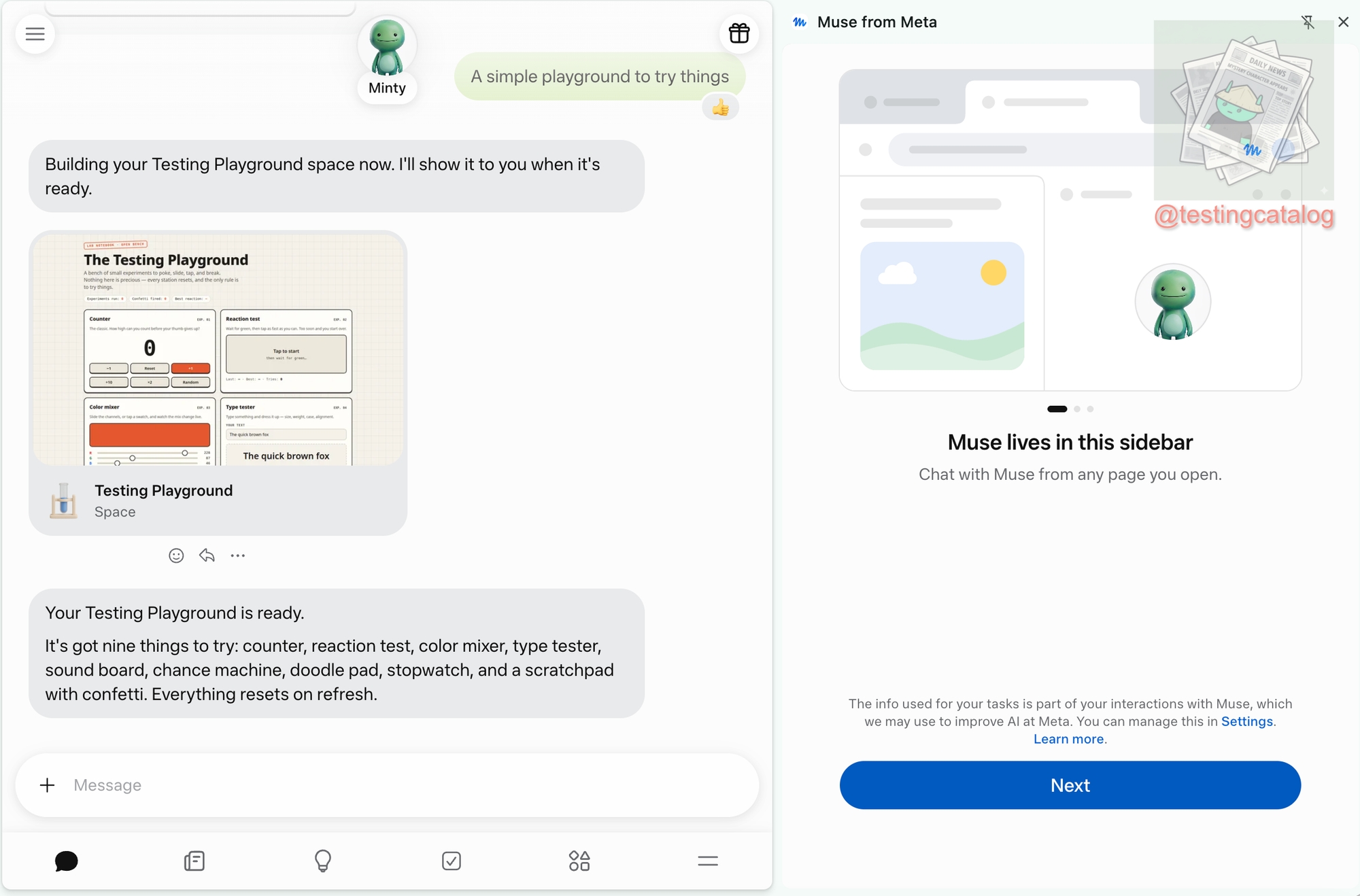
Meta’s Muse agent quietly lands in the Chrome Web Store
Someone shopping in Chrome can hand the checkout to Meta’s Muse from the side panel, and it buys with their OK. The same listing warns Muse may take unexpected actions. Would you let an agent buy for you after one approval, or click checkout yourself?
Related stories
- OpenAI’s dots work 24/7 on their own cloud computer
- ChatGPT’s code points to a wallet for agent purchases
- GPT-6 Astra Pro splits one task among parallel agents
- ChatGPT Auto-review goes free for ChatGPT sign-ins
- ChatGPT Space puts people and agents in one document
- Grok Bot exits beta and joins Slack, Teams and video calls
Comments
No comments yet. Be the first.
Join the conversation
Sign in to leave a comment. It appears after moderation.