
Canva Craft debuts fourth among image models on DesignArena
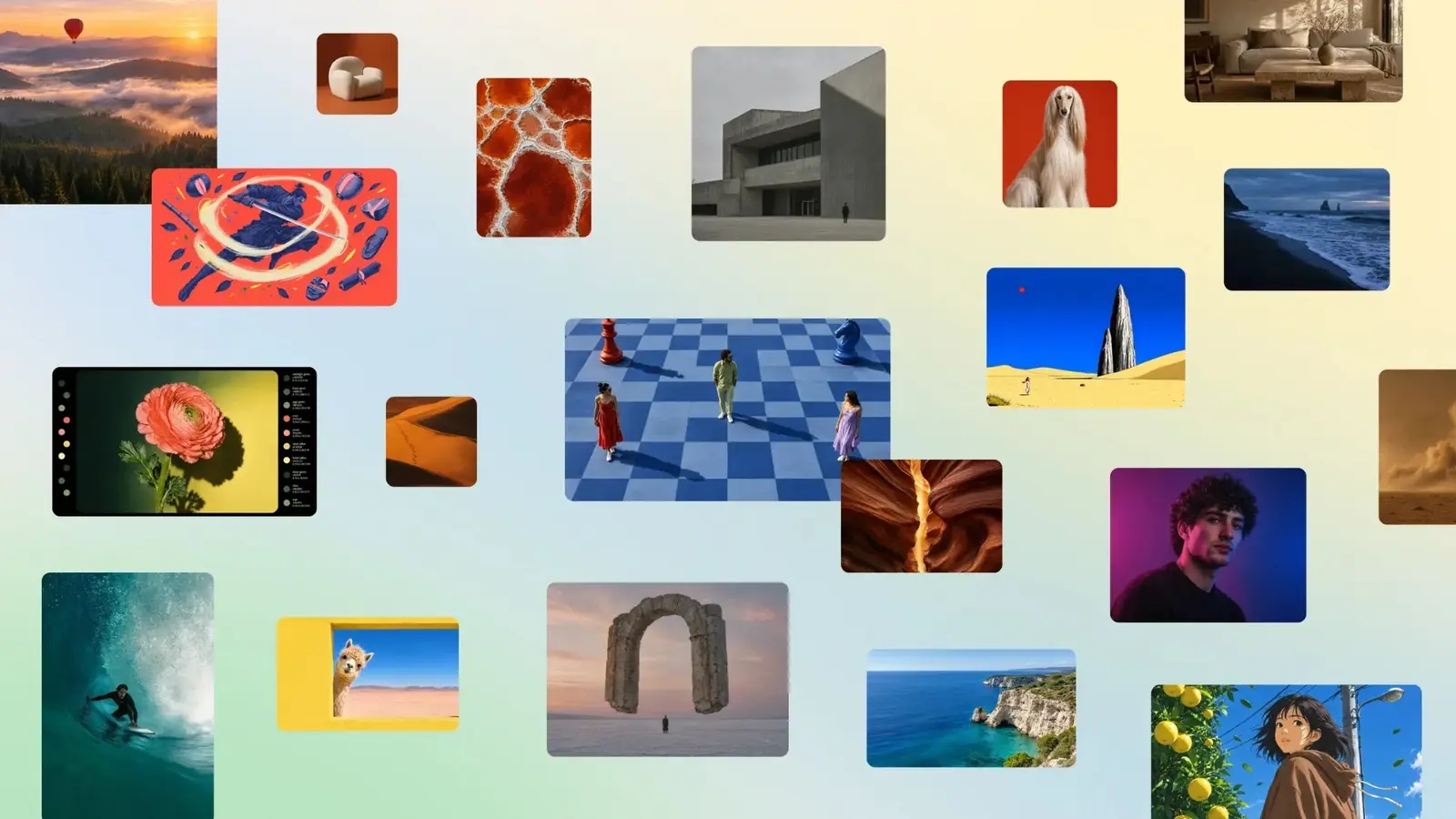
Canva Research, Canva’s in-house AI lab, has released Craft, the first image foundation model it built and trained from scratch. On October 22 it went live for every Canva user and opened to developers through Canva’s public API. Craft generates images at up to 2K resolution in more than 30 preset aspect ratios, or in a custom ratio you enter.
In Canva’s announcement, the main pitch is the architecture. Craft writes out a plan of the composition before a second model draws anything. Canva says this is why its text comes out legible and objects land where the prompt asked, and why its outputs are particularly well suited to Magic Layers, Canva’s tool for turning images into editable design elements.
Plan first, then render
Most image models generate pixels directly from a prompt. Craft splits the job into two stages. First, a planning model reads the prompt and writes a detailed plan covering which elements appear, how they relate in space, their relative scale, the visual hierarchy, and any text the image has to carry. Then a separate rendering model turns that plan into an image at up to 2K.
Canva says modelling composition and typography before rendering lets Craft handle complex layouts more accurately: readable text, precise object placement and consistent relationships between elements. The company’s own example is a prompt for a purple sky, long shadows and a lone tree: “you’ll get all three, with the emphasis where you wanted it.” The same structure is meant to allow targeted changes to single elements without disturbing the rest of the image. Canva says more advanced editing and reference-image features will come in future releases.
For now, the plan is most useful inside Canva’s editor. Canva credits what it calls JSON boundary boxing with making Magic Layers faster and more accurate on Craft outputs. Prompts can be written in any language, and Craft can render text in 55 languages.
Templates as training data
Canva says most image models are trained mainly on photographs, while Craft’s training leans much more toward design. Its data includes millions of human-made templates from Canva’s content library: posters, social posts, presentations, infographics, menus and typography-heavy layouts. The company argues that templates, unlike flat images, show the model how layout, hierarchy and type fit together.
After pre-training, Canva tuned Craft with supervised fine-tuning and reinforcement learning, using feedback from its professional designers to improve instruction following, typography accuracy and overall visual quality. For internal evaluation, those designers and dozens of researchers compared more than 25,000 pairs of images head to head against leading models. When the automated metrics and the people disagreed, the tiebreak rule was simple: “we sided with the designer.”
Building its own model is something Canva flagged earlier. When it announced it was acquiring Leonardo.Ai, Canva said it planned to integrate Leonardo’s Phoenix foundation model into Magic Studio products such as Magic Media, and called deeper investment in foundation model research and development pivotal for both companies.
Where it ranks
The outside numbers come from DesignArena, which Canva calls the largest crowdsourced assessor of AI design. Craft debuted there as the fourth-ranked image model overall. That ranking also makes Canva Research the second-ranked lab for image generation, and Canva led its launch post on X with the lab ranking: “With Craft, Canva is now the world’s second most advanced AI lab for image generation on @DesignArena’s global leaderboard.” The model’s own rank, fourth, is the less flattering of the two.
By subcategory, Craft ranks first in People & Portraits (out of 87 models) and first in Landscapes & Nature (out of 85). It is second in Abstract & Patterns and fourth in Products.
How to get at it
In Canva, Craft lives in Dream Lab, which opens from the panel at the bottom left. It is available to all users worldwide from launch day. Canva lists marketing assets with ready-to-use text and layout, lifestyle and editorial photography, illustration in flat, vector, painterly and hand-drawn styles, portraits and group scenes, landscapes and interiors, and conceptual compositions as the intended range.
Developers use the public API. Canva pitches it for building Craft into marketing platforms, e-commerce sites, ad builders and print services. It also calls the API the quickest way to run Craft on your own prompts and compare it with other models. The company describes the API and MCP releases as part of a push to take its AI models beyond its core product.
The third route, the Canva MCP Server, is still marked “coming soon.” MCP (Model Context Protocol) is the standard way AI assistants call outside tools. Once Craft is connected, an agent could generate a launch graphic, a product shot or a social post as one step in a longer task, and the image would arrive ready to use in a Canva design.
Craft runs under Canva Shield, the company’s umbrella safety program. It includes input and output moderation, privacy and safety controls, and reporting tools for flagging harmful or misleading content. Canva says it evaluates models for brand safety, cultural context and potential for harmful content before release.
Speed and two cheaper variants
Scale shaped the engineering. More than a quarter of a billion people use Canva, creating over 400 designs every second. To serve that, Canva used distillation, which trains a model to reach a similar result in fewer generation steps, and cut Craft’s inference steps to a fraction of the original model’s count. It also built a custom inference engine optimized for the planning stage. Together, Canva says, these changes make Craft an order of magnitude faster than its first internal version. That comparison is against Canva’s own earlier build, not against other vendors.
The same work underpins Craft-fast and Craft-ultrafast, two upcoming variants that Canva says will deliver high-quality generation at a fraction of the cost of leading frontier models. For Craft itself, Canva says it will keep working on quality, detail and control, with fine print and technical drawings among the things it wants to improve.
Up next
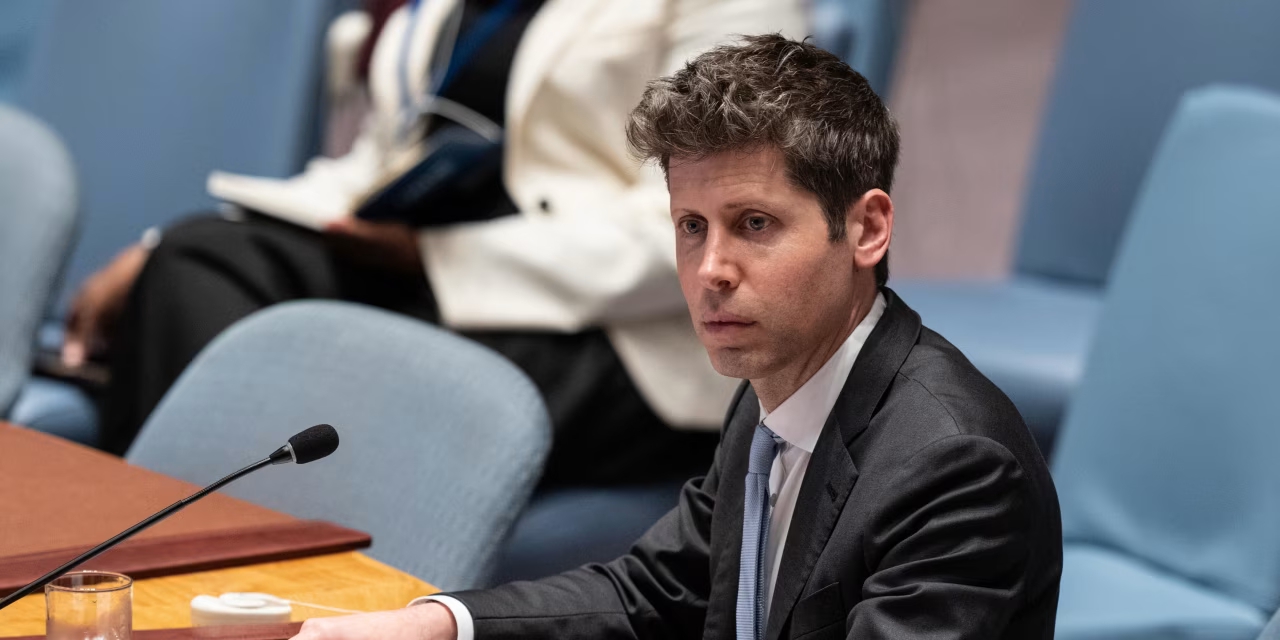
OpenAI had fired researchers unlock their personal phones
Per the WSJ, OpenAI security had three safety researchers unlock their personal phones, and some had disappearing messages on in Signal. A week later, all three were fired.
Related stories
- Ideogram Vector 1.0 splits each SVG into editable layers
- Krea 3 edits a 2K image in under 8 seconds
- ElevenLabs’ Realtime v1 Max starts speaking in 0.57s
- Mistral’s Voxtral 3 TTS costs $13 per 1M characters
- Microsoft brings streaming MAI-Transcribe-2 to its APIs
- FLUX 3 Max outpaces Seedance 2.5 over 25x in fal’s test
Comments
No comments yet. Be the first.
Join the conversation
Sign in to leave a comment. It appears after moderation.