
SubQ Snap reads 384K tokens before each agent decision

Subquadratic says its new decision model reads 100K tokens and returns an answer in about one second, and that it can take in up to 384K tokens of text and images before every choice. That is the core of SubQ Snap, laid out in Subquadratic's announcement post, and the number the company wants you to compare it with is Jev's 32K.
At a glance
- Subquadratic has entered the decision-model market with SubQ Snap, a model that picks answers from a fixed list for agent steps such as routing, tool picking, checking results and deciding when to stop.
- Snap averages 67.6 against Jev's 61.6 across 16 enterprise benchmarks, scores 61.7 versus 57.9 on the Decision Index, and costs $0.05 per million input tokens with output tokens free.
- Every result comes from Subquadratic itself, Jev wins three of the 16 enterprise tasks, and the company's earlier SubQ launch had no third-party leaderboard entries to check its figures against.
If you have not been following, decision models have become a crowded category. TypeSafe unveiled Jev in mid-September, and The New Stack reports that OpenAI, Perplexity, Cloudflare, Amazon and, most recently, Microsoft have since joined in. Subquadratic came out of stealth on May 5 with $29 million in seed funding and SubQ, an LLM built on its Subquadratic Sparse Attention (SSA).
Snap reads up to 384K tokens per decision, 12 times Jev's 32K limit
A decision model does not write prose. It gets some context, a question and a set of allowed answers, then returns a probability for each answer. An agent makes these calls at nearly every turn: which files matter, which tool comes next, whether a test passed, which step needs a frontier model. Subquadratic says today's decision models stay at 32K tokens and so decide without most of what they need to see.
Snap takes up to 384K tokens of mixed text and images, so screenshots, charts and scanned pages can sit next to logs and documents in one call. It processes requests of up to 100K tokens in under a second. The 384K cap is a temporary preview limit set by available compute, the company says. Snap is in public preview at $0.05 per million input tokens, and output tokens are free.
Snap leads Jev on 13 of 16 enterprise benchmarks and trails on three
Across 16 Decision Index benchmarks picked to match enterprise work, Snap averages 67.6 against Jev's 61.6. The biggest gap is phishing detection on PhishNChips, 47.1 versus 25.1, followed by code-output prediction on CRUXEval, 73.8 versus 57.1. Jev comes out ahead on When2Call, which tests whether to call a tool, ask, answer or decline (74.6 versus 67.0), on API-Bank (88.0 versus 86.4) and on ACOS review analysis (27.3 versus 26.7).
On the full Decision Index public suite, where every request is under 34K tokens, Snap scores 61.7 to Jev's 57.9 and leads in four of five subareas, the largest of those leads being arts and human taste at +12.11. On Bespoke Labs' Nimble Suite 13 it posts 82.9% against 76.0%.
The long-context numbers are where the gap opens. On Decision LCR, at 72K–115K tokens, Snap scores 74.0 in one shot while Jev, aided by chunking, gets 48.0. On Decision RULER, Snap stays between 99.5 and 99.8 from 32K to 256K tokens; Jev's only listed score is 94.1 at 32K.
Whedon says decision models should take work away from frontier LLMs
Co-founder Alex Whedon told The New Stack in an email Q&A that Jev's arrival shaped Subquadratic's entry. The same outlet has reported that Workday uses Jev in its Sana AI assistant to pick prebuilt interface components, such as paycheck cards and date pickers, based on what an employee asks.
Snap was developed with inspiration from Jev, because decision models are highly thesis-aligned.
Whedon added that decision models "remove the need for decoding for some problems," and argued that their current supporting roles, judging LLM outputs or picking which LLM handles a task, undersell them. "We see a vacuum of vision for decision models," he said. "Decision models become exciting when they actually take work away from frontier LLMs."
SubQ's May launch numbers drew pushback that still applies
Snap rests on the same research as SubQ, and that launch left open questions. Each model was run only once because of inference cost, SubQ was considerably smaller than the models it was compared against, and there was no arXiv paper, no open weights and no third-party leaderboard entries. Published figures also differed by outlet, with RULER 128K reported as 95%, 95.6% or 97.1%.
According to aiHola, researcher Will Depue called SubQ "almost surely a sparse attention finetune of Kimi or DeepSeek" and said its O(n) scaling claims and reported speedups "don't seem to line up." Whedon, per the same outlet, confirmed the company starts from open-source model weights "as a function of our funding and maturity as a company."
Doubling the context quadruples dense attention compute, and SSA is built to avoid that
For a decision model, nearly all inference compute is prefill, the pass that reads the input. Dropping text generation removes the cost of the output, not of the reading. Under dense self-attention every token is compared with every other, so doubling the context quadruples attention compute, and at long lengths that eats the savings that justify a decision model in the first place.
Snap splits the job in two. SSA learns from the content which positions matter and computes attention only over those, which Subquadratic says cuts attention cost from quadratic to linear. A decision head then maps the result straight to a probability over the allowed answers. Picture a lawyer who skims a thick contract for the clauses that bear on one yes-or-no question, then ticks a box instead of writing a memo.
The obvious caveat is that every Snap number is Subquadratic's own, and the company's earlier figures varied between outlets. The post also has an internal oddity: its summary claims 96.3 on Decision RULER at 1MM tokens, while its RULER table stops at 256K and the stated cap is 384K. In our view, the price is the most concrete part of the pitch, since free output and $0.05 per million input tokens suit a model that mostly reads.
When the 384K preview cap lifts
Subquadratic calls the 384K limit temporary and ties it to available compute, but it has given no date for raising it and no price beyond the preview rate. The next useful checkpoint is independent testing. Until someone outside the company runs Snap against Jev on long agent traces, the 12x context figure is a spec sheet number rather than a measured advantage in production.
Up next
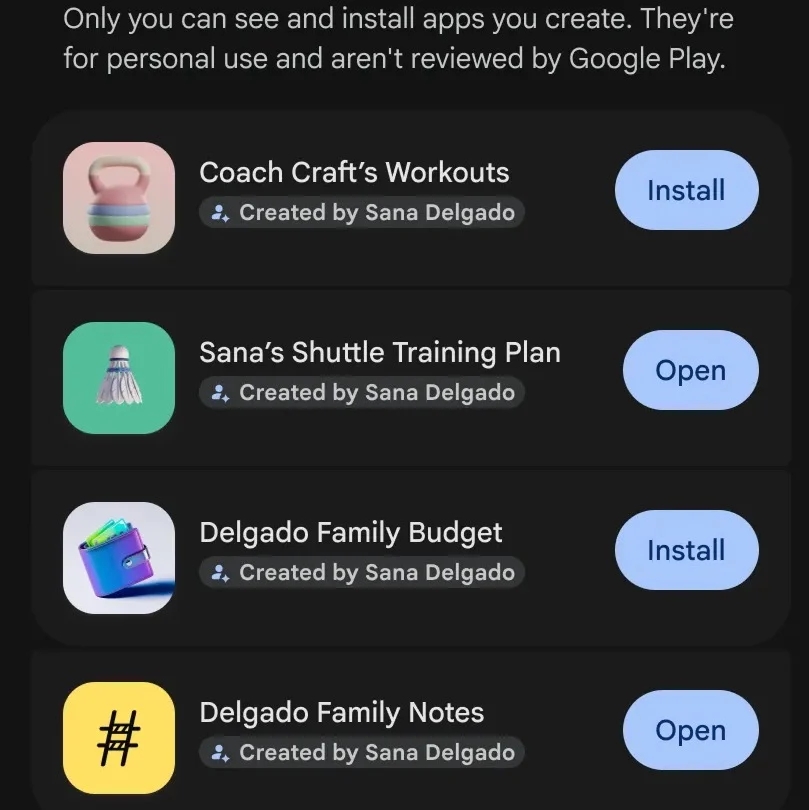
Google Play now runs vibe-coded apps without a dev account
Google Play dropped the developer account requirement for personal apps vibe-coded in AI Studio, though they install only on your own device and stay out of the public store. Ever built an app just for yourself and never got it onto your phone?
Related stories
- Microsoft-Decision-1 bills input only, at $0.042 per million
- AWS's Strands Decider 2B picks from your list, never writes
- TypeSafe AI's Jev answers with choices, never sentences
- Liquid AI's 2B-active model beats Qwen on LiveClaw
- Gemini 4 Argon lands fifth on Arena, behind Opus 5.5
- Mistral Large 4 tops open models at just 15% on legal tasks
Comments
No comments yet. Be the first.
Join the conversation
Sign in to leave a comment. It appears after moderation.