
Ozempic maker adds Claude next to OpenAI’s Rosalind
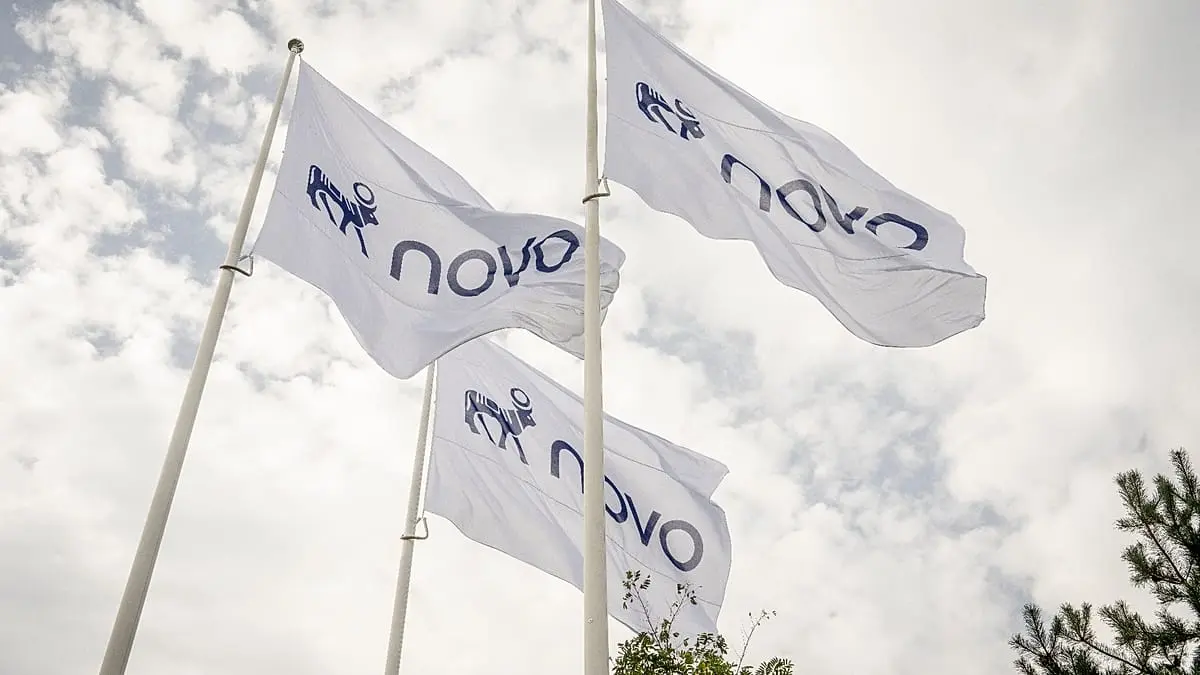
On September 16, Novo, the Danish maker of Ozempic formerly called Novo Nordisk, announced a partnership with Anthropic. Novo will use Anthropic’s models and Claude Science to push scientific reasoning in its research and development, Euronews reported. Novo already uses OpenAI’s science model GPT-Rosalind under a deal it sealed in April.
“Joining forces with Anthropic will supercharge our R&D organisation and help us on our mission to bring new, transformative health solutions to people living with chronic diseases,” Mike Doustdar, Novo’s president and CEO, said in the press release. He also argued that the tools do more than raise R&D productivity. They can open “completely new scientific opportunities,” he said, and help with reasoning about human biology and how drugs work.
Dario Amodei went further. “AI’s increasing capability brings with it the potential to compress a century’s worth of biological and medical breakthroughs into a decade,” the Anthropic co-founder and CEO said. He added that giving leading researchers access to safe, capable and trusted frontier models can shorten research timelines, improve outcomes and lead to medicines that significantly improve human life.
Anthropic has done this kind of deal before. In May 2026 it announced a collaboration with Bristol Myers Squibb to deploy Claude across that company’s research, clinical development, manufacturing, commercial and corporate functions. That announcement came with a list of functions. Novo’s so far offers only one phrase: scientific reasoning in R&D. Neither a first project for Claude nor the financial terms have been disclosed.
The OpenAI deal came with more specifics. CNBC reported that Novo announced it on April 14 and said it would use AI to analyse complex datasets, identify promising new drugs and cut the time a medicine takes to get from research to patients. Doustdar said then: “Integrating AI in our everyday work gives us the ability to analyse datasets at a scale that was previously impossible, identify patterns we could not see, and test hypotheses faster than ever.” Novo’s stock rose 2.8% shortly after the opening bell that day.
The same CNBC report described Novo as being in a race with Eli Lilly for the weight-loss market, where it has lost its first-mover advantage and is trying to win back share with its Wegovy pill, launched in January, and next-generation drugs. Experts quoted there said the industry is still far from using AI’s full potential, and that quicker gains could come from tasks like finding patients and sites for clinical trials. Ben van der Schaaf, a partner at Arthur D. Little, put it this way: “AI is not an end-to-end component yet.”
Up next

Claude Code 2.1.274 warns before memory turns critical
A corrupted transcript could pin a Claude Code session in an endless retry of an “unexpected tool_use_id” 400 error. In 2.1.274 those transcripts self-heal where possible, and otherwise a clear error ends the loop.
Related stories
- Barclays wants half its developers on Claude Code this year
- Anthropic’s new wet lab puts Claude in charge of robots
- Claude found a CRISPR-like puzzle hidden in phage DNA
- Claude wrote GPU code and made biology models 4x faster
- Mythos opens to verified biologists for the first time
- Anthropic trains AI engineers like medical residents
Comments
No comments yet. Be the first.
Join the conversation
Sign in to leave a comment. It appears after moderation.