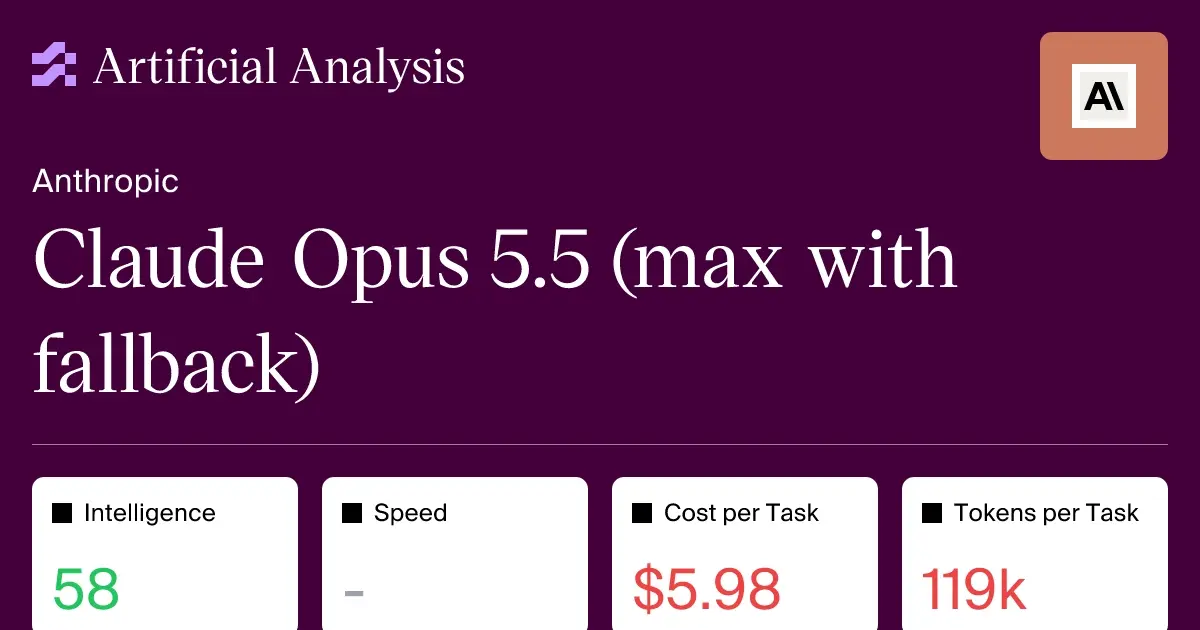
Grading Claude Opus 5.5 on the Artificial Analysis Intelligence Index cost $8,708.20, and most of that bill was words: at max effort the model wrote 260M output tokens, while the median model wrote 92M.
Pro and Team Standard plans in Claude Code switched their default from Sonnet to Opus, and that Opus is the new Opus 5.5, with 1M context at $4/$20 per Mtok.
One early tester finished a 680,000-line code migration with Claude Opus 5.5 in less than a day, work Anthropic says would have taken an engineering team weeks. And on typical workloads it costs 40% less to run than Opus 5.
"Fable 5.2 is pure JS thats it one shot," posted X user Chetaslua, per TestingCatalog. No assets, no plugins, every sprite drawn in code, and Anthropic hasn't commented on the model it hasn't announced.
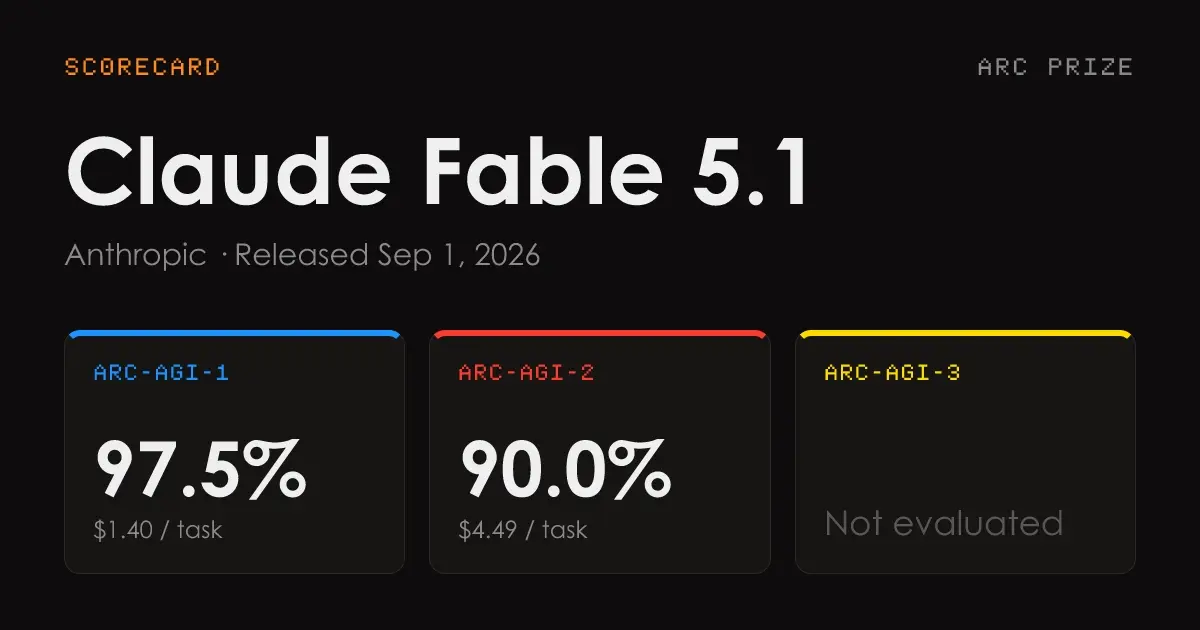
Pay for Claude Fable 5.1's top reasoning level on ARC-AGI-2 and you get 90.0%, the same score the level below already reaches. ARC Prize puts max effort at $4.49 per task in its verified run.
Fable 5.1 takes the default Fable slot in Claude Code, 1M context at $10/$50 per Mtok. Claude apps gateway sessions keep resolving fable and best to Fable 5 for now, because unconfigured gateways reject it.
Cache reads on Claude Fable 5.1 cost $0.25 per million tokens, 75% below Fable 5, and that pulls a typical workload's bill down around 25%, or up to approximately 45% on context-heavy agentic work.
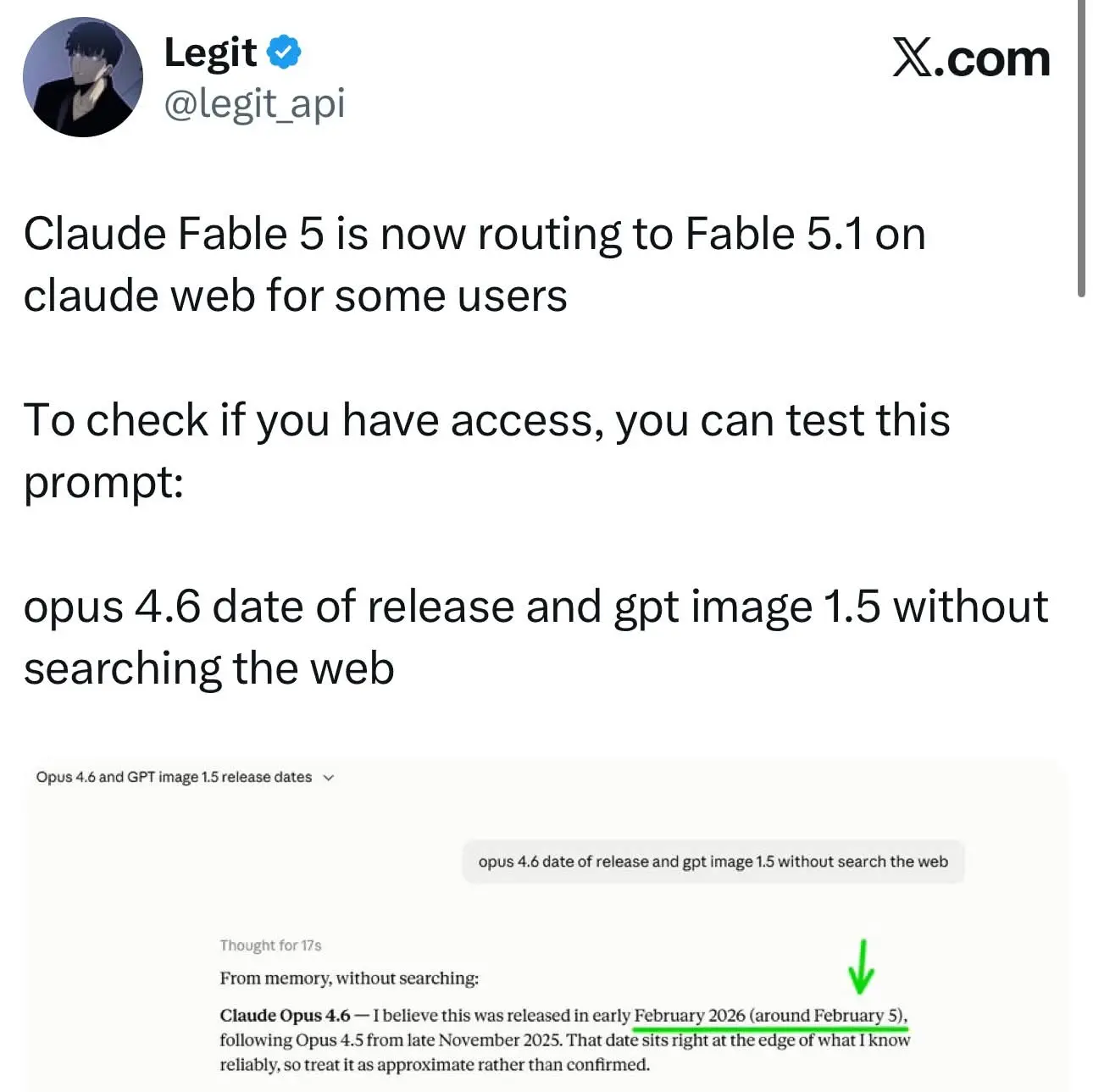
Some Claude Fable 5 users are being routed to a successor believed to be Fable 5.1 while keeping Fable 5 selected, according to TestingCatalog and AI News Live. Updated knowledge cutoffs are appearing too, pointing to a stealth rollout.
Claude's new text watermark is statistical, not hidden characters. It requires a few hundred words to detect reliably, so short snippets under 100–200 words often lack the density.
Anthropic loosened Claude Fable 5's biology guardrails: in its own tests, false refusals on biological queries fell roughly 85% across all products, so everyday health and educational questions get answered. Virology, toxicology and molecular design still route to Opus 5.
Anthropic's Opus 5 prompting guide says to strip "add a final verification step" and "re-check your answer" from old prompts. Opus 5 checks its own work, so those lines just burn tokens with no quality gain. Opus 4.8 prompts otherwise carry over unchanged.
Opus 5 beats Fable 5's best OSWorld 2.0 computer-use score at a little over a third of the cost: $5 per million input tokens, $25 per million output. On ARC-AGI 3 it scores triple the nearest model.
Anthropic released Claude Opus 5 today, pricing it at $5 and $25 per million input/output tokens, same as Opus 4.8. On Frontier-Bench v0.1 it beats Opus 4.8 by more than 2x at a lower cost per task, and it's now the default on Claude Max.
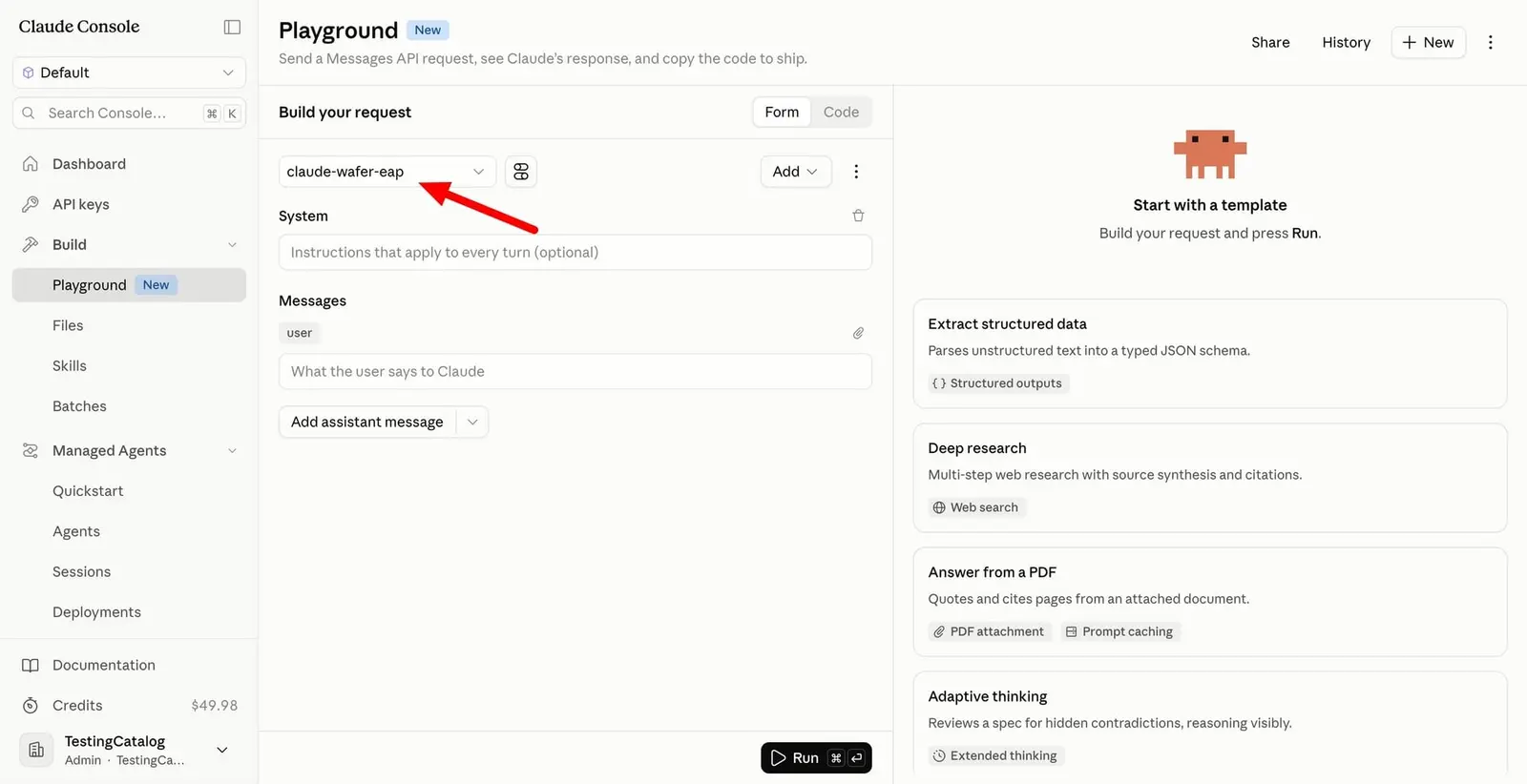
A Claude Opus 5 model string turned up in Google Vertex's quota catalog, per Testing Catalog, after a research entry flashed in a coding tool: 1M token context, a high-compute mode, and an Opus 4.8 fallback. No pricing or system card yet.
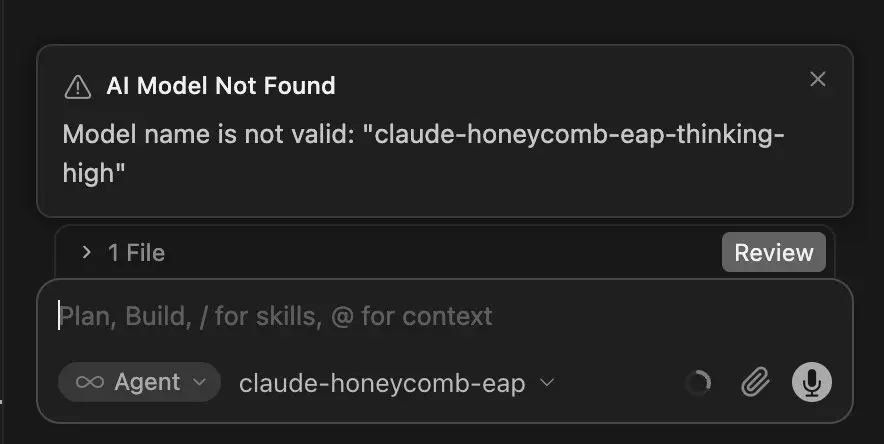
An unannounced "Claude Honeycomb" model briefly appeared in Cursor, then vanished. Logs showed a safety fallback to Opus 4.8, and since fallbacks usually route to a weaker model, the user who ran two prompts thinks Honeycomb may be stronger. Anthropic hasn't confirmed it.
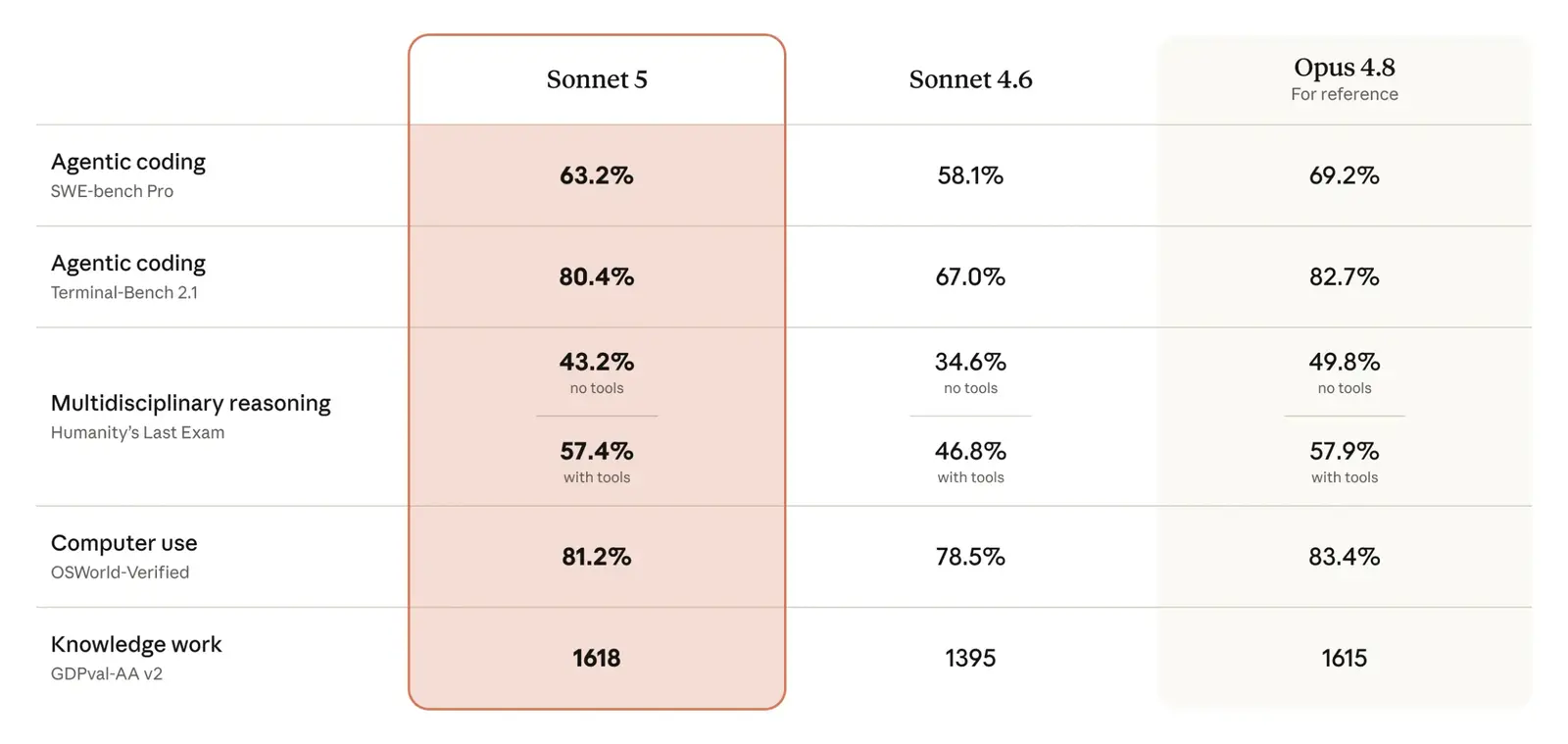
Anthropic published the System Card for Claude Sonnet 5, detailing safety and performance for its most agentic model yet. At the Extra High setting, it matches Opus 4.8 performance on OSWorld-Verified and BrowseComp benchmarks. The model is now available to all users.
Empero released Qwythos-9B, a Qwen3.5-9B variant fine-tuned on 500 million tokens of Claude Mythos and Fable traces. It gains +34 points on MMLU over the base model and supports a 1,048,576-token context window via YaRN scaling. The model is uncensored and optimized for specialized fields like cybersecurity and pharmacology.
Anthropic has fully discontinued Fable 5 and Mythos 5 models globally. The move follows a letter from US Commerce Secretary Howard Lutnick, warning of criminal charges if Anthropic allows foreign nationals to access these models without a US Commerce Department license.
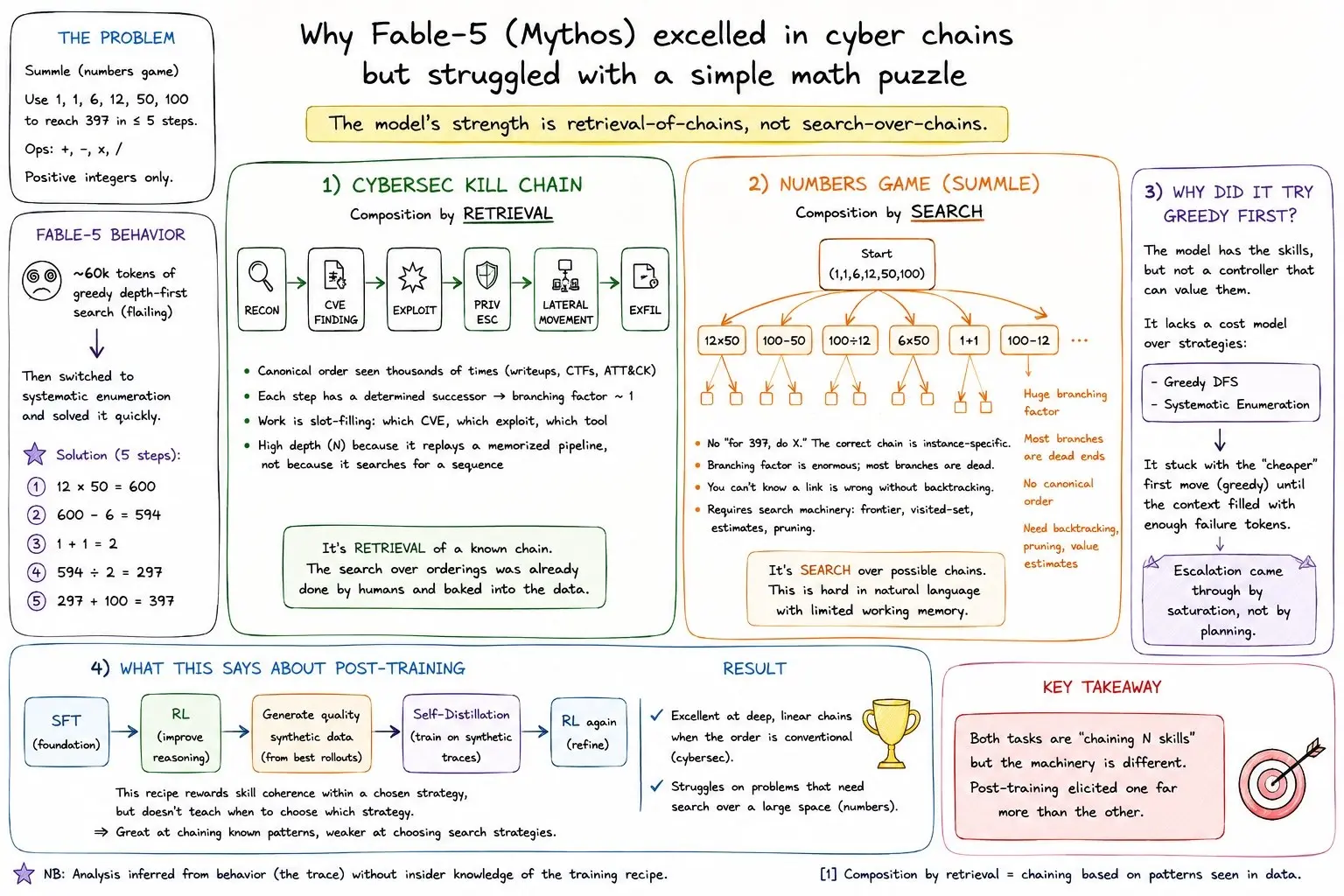
Claude Fable 5 excels at coding but struggles with simple math. Analysis shows the model relies on memorized patterns rather than searching for solutions. This explains why Fable 5 shines in cybersecurity but falters in tasks where copying a template won't work.
Claude Fable 5 is out. It leads in coding and analytics benchmarks but has a safety catch: complex queries on cybersecurity and chemistry get redirected to Opus 4.8. This creates a two-tier system where full power is reserved for select partners with access to Mythos 5.