Teams on Vercel's AI Gateway are shifting work off Fable 5 onto the cheaper Opus 5, and Anthropic still collected 64 cents of every dollar spent there in August, while open-weight models moved 56% of the tokens.
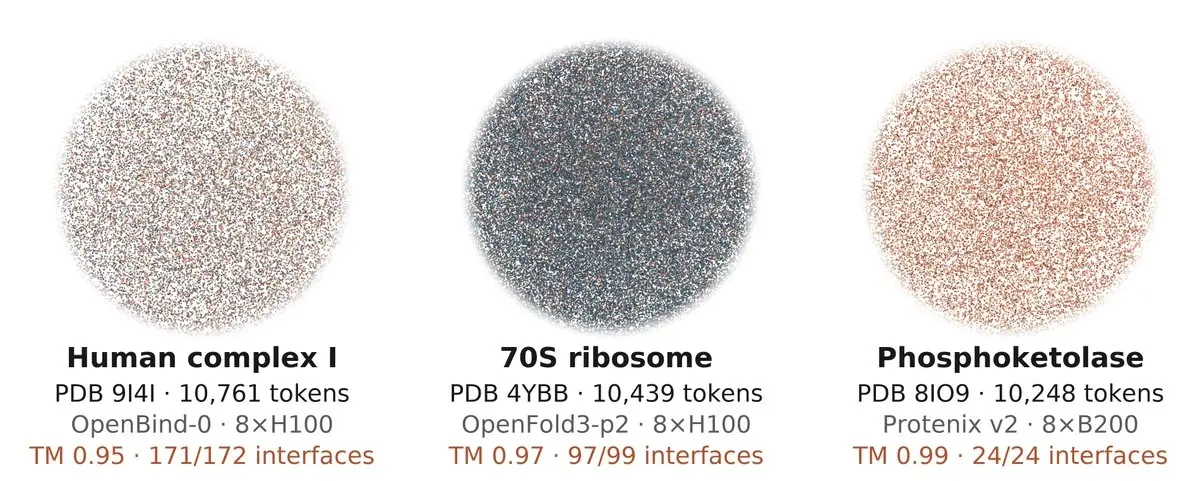
Claude made 30+ biology models 4x faster Claude wrote custom GPU software that runs more than 30 open-source biology models 4x faster on average. The code goes public, and Adaptyv Bio will validate over 5,000 protein designs.
Nearly 300,000 requests hit Claude in one 10-day period through a network of 5,000 accounts, and Anthropic says Moonshot AI sent them, with some seeming to come straight from the Chinese military.
"Turn Claude on and Ollama will configure the third-party gateway for you." While connected, Claude Desktop can run any model in Ollama, local or on its cloud, and flipping the toggle back off restores your previous setup.
A team can fine-tune open weights and keep its data in-house, yet still rents every GPU it runs on. That's Dario Amodei's point: open weights "shift the concentration somewhat to those with the most compute and chips."
Claude Opus 5's cheapest effort setting beat its high setting on VulcanBench, solving 20 of 23 tasks against 18. High effort made fewer mistakes but kept hitting the timeout, and a timeout scores as zero.
Dario Amodei says industrial distillation could cut China's lag behind the US frontier to a few months, but won't produce capabilities that match or beat American models. His fix: target the distillation operations, not open weights as a category.
Dario Amodei says "Anthropic has never advocated for banning open weights," and instead proposes a mandatory pre-release safety review for every "sufficiently capable" model. His letter doesn't define that threshold or say who runs the tests.
Microsoft, Nvidia, Meta, Hugging Face and 21 other organizations signed a statement against "premature restrictions" on open weights. Anthropic and OpenAI didn't sign, per The New Stack. The text calls distillation a "widely used technique."
Across three real coding tasks, Kimi K3 cost $2.13 versus $5.98 for Fable 5, about a third of the price, and produced identical diffs. The catch: it took 28 minutes to Fable's 7.
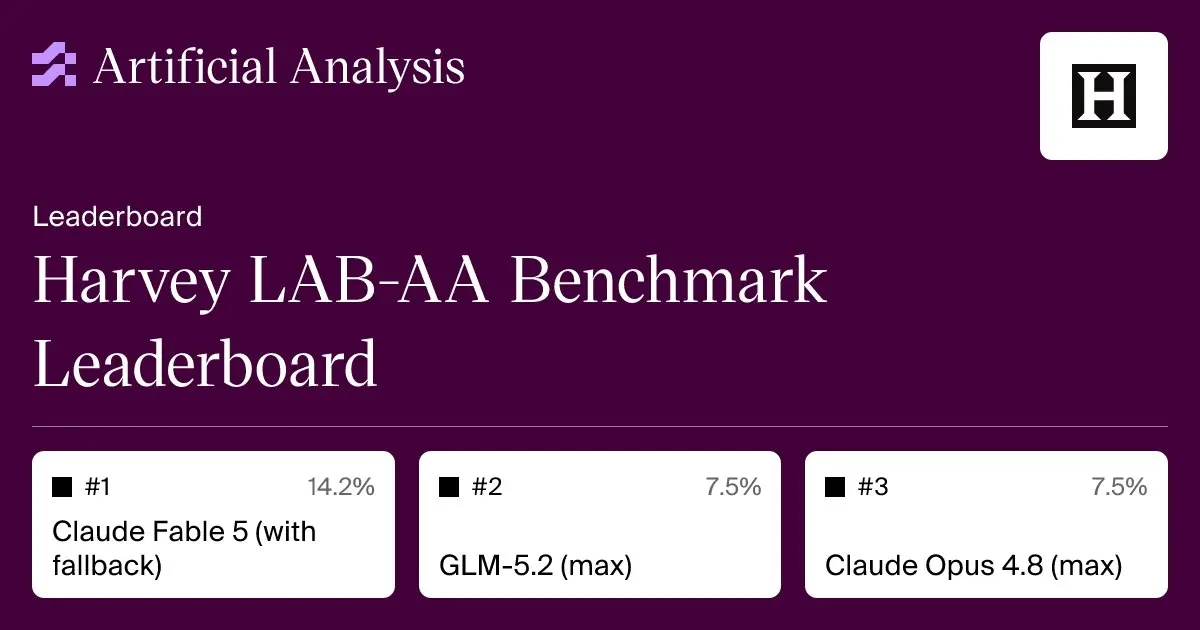
GLM-5.2 (max) matched Claude Opus 4.8 on all-pass rate in the legal-task benchmark Harvey LAB-AA, per an independent Artificial Analysis measurement. Harvey's scoring is strict: a task counts only if every rubric criterion passes, no partial credit.
Empero released Qwythos-9B, a Qwen3.5-9B variant fine-tuned on 500 million tokens of Claude Mythos and Fable traces. It gains +34 points on MMLU over the base model and supports a 1,048,576-token context window via YaRN scaling. The model is uncensored and optimized for specialized fields like cybersecurity and pharmacology.
Zhipu AI's new Z.ai model has reached parity with Anthropic's Mythos in vulnerability detection. While it still trails in other benchmarks, this closes a critical gap in the one area where American models previously held a clear lead. The development is already influencing U.S. policy discussions regarding export restrictions on high-end models.
GLM-5.2 is the first open model to nearly match Claude Opus 4.8 in coding. The token generation cost difference is 5.7x. Opus 4.8 still leads in long engineering tasks and visual context, but the quality gap with GLM-5.2 is minimal for most autonomous agents.