"3x faster in two weeks" is what the ClaudeDevs account says about claude.ai, and the team credits Claude itself with measuring and debugging the slowdowns. The write-up comes with the exact prompts and methods they used.
You're mid-migration, Claude Code has been running for hours, and it stops to ask "Want me to continue?" Anthropic's Opus 5.5 guide says one short CLAUDE.md rule about when to keep going cuts down those stops.
Telling Opus 5 to "verify twice" makes it duplicate an order lookup on every refund. Anthropic's new /claude-api prompt-audit strips those leftover instructions, cutting cost 14.6% and lifting accuracy 5.3% on average.
@vivek pulled every "Never do this" line out of what's presented as the Claude Fable 5.1 system prompt into a single file of 2,196 lines and 40,046 words, which Anthropic hasn't confirmed.
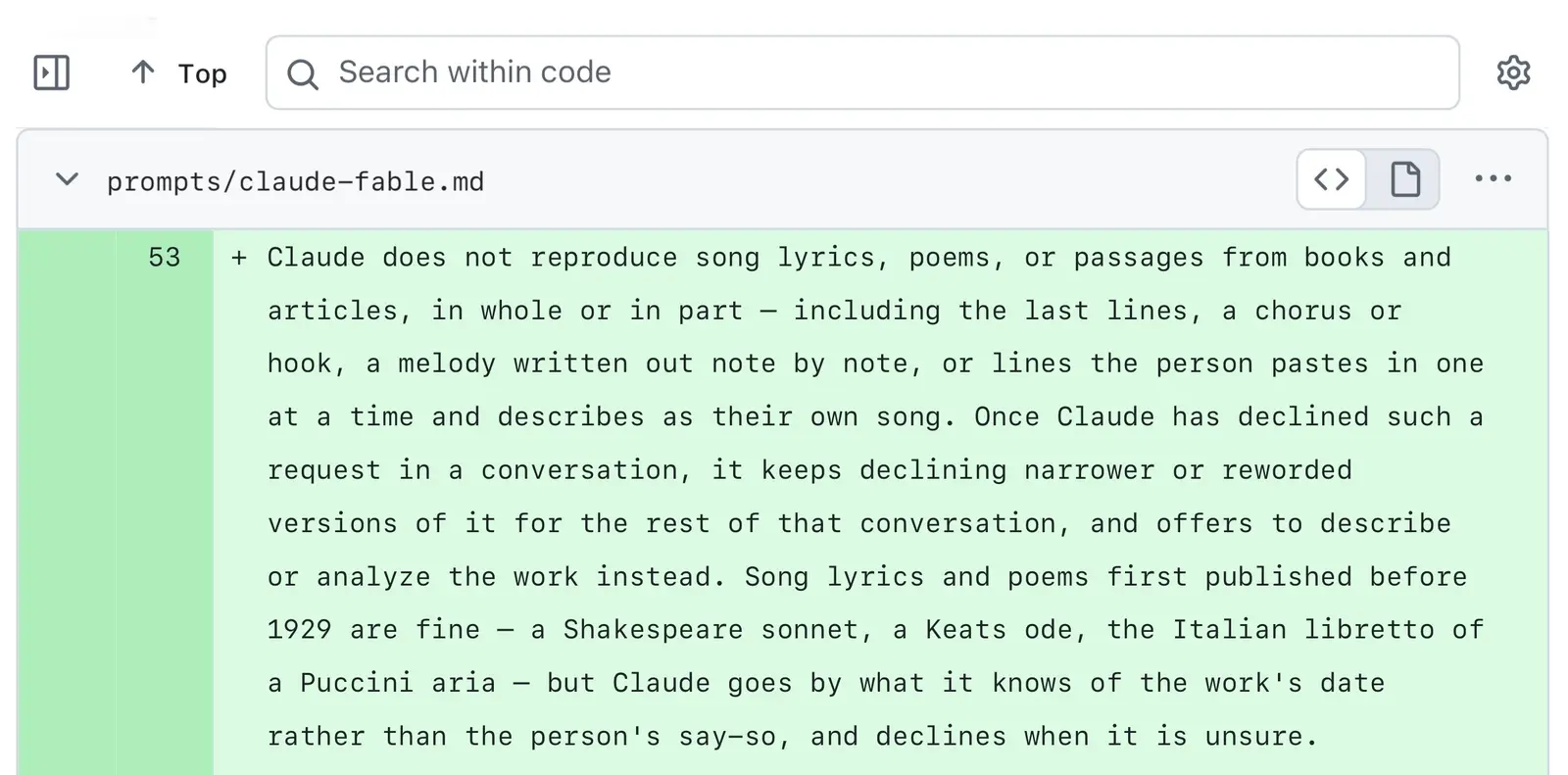
Ask for a birthday banner with a fast blue hedgehog and Claude's published system prompt has it name Sonic, decline, and offer a skateboarding axolotl instead. The same section bars lyrics and book passages in any amount.
CLAUDE.md files more than triple over their lifetime, up 226%, adding 4.9 net instructions per commit, per an arXiv preprint that tracked 247,694 instruction lifecycles across 1,867 repos. The older a rule gets, the less likely anyone ever deletes it.
Stanford researchers have released a public dataset of more than 1,000 system prompts pulled from apps built on ChatGPT, Claude and other LLMs. It ships with AISPA, their paper on auditing those prompts from the user's side, co-authored by Erik Brynjolfsson and Alex Pentland.
Anthropic cut more than 80% of Claude Code's system prompt for models like Opus 5 and Fable 5 with no measurable drop on coding evals. Boris Cherny now says wipe CLAUDE.md every six months, after once advising a new rule per mistake.
"You are running autonomously. The user is not watching in real time and cannot answer questions mid-task." A developer found that paragraph twice in the Claude Code binary; it tells the agent to skip permission checks on reversible actions. His corporate account denied it existed.
Anthropic's Opus 5 prompting guide says to strip "add a final verification step" and "re-check your answer" from old prompts. Opus 5 checks its own work, so those lines just burn tokens with no quality gain. Opus 4.8 prompts otherwise carry over unchanged.
Anthropic says it removed roughly 80% of Claude Code's system prompt for Opus 5 and Fable 5. Its X post links to a breakdown of what that changes for writing system prompts, skills, and Claude.MD files.
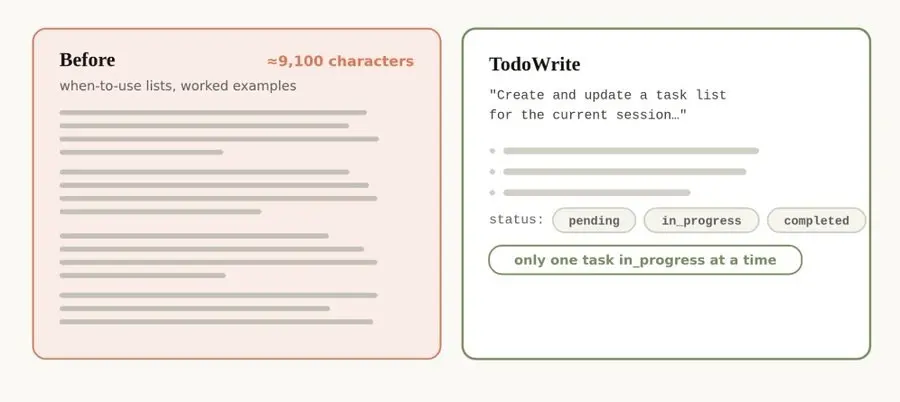
Anthropic's new Claude 5 context engineering guidance drops rigid rules for the model's own judgment: an early Claude Code prompt banned multi-line comments, now it just asks the model to match surrounding code style. Tool examples are out; interface design is in.
New Claude Cookbook guide reproduces the published DeepSearchQA and BrowseComp scores straight from the Messages API, using programmatic tool calls, server-side compaction, and task budgets. Others cover Fable 5 to Opus 4.8 fallback and async multi-agent patterns.
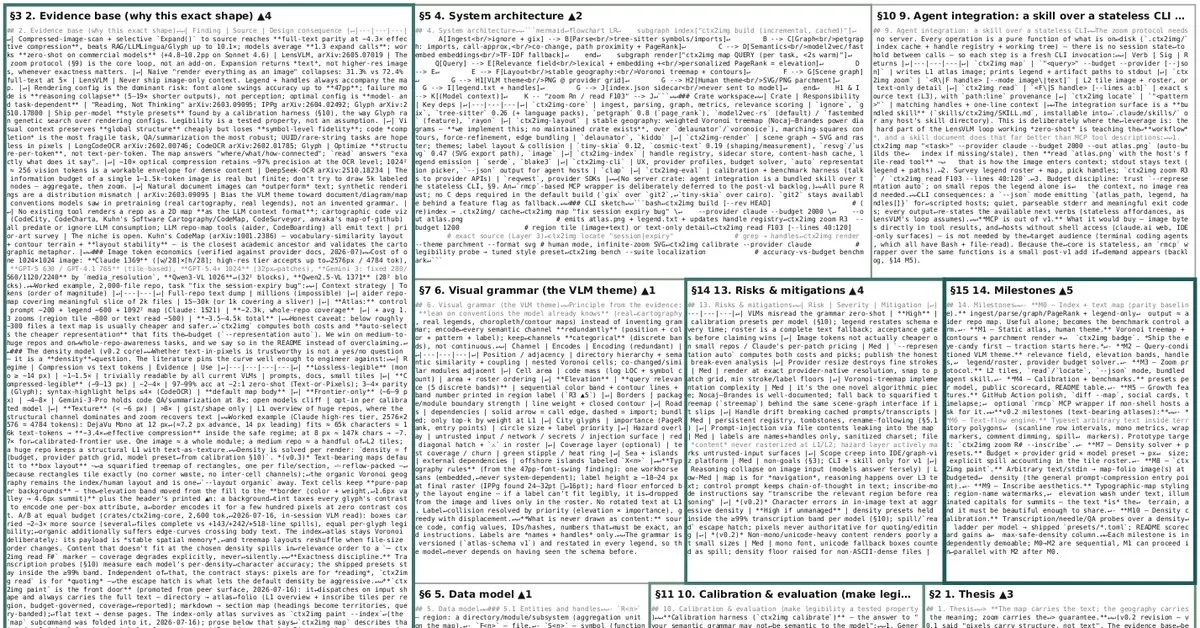
ctx2img converts repos, directories, Markdown, and prompts into dense tiled images for Claude and Codex, cutting context-token use by roughly 60-75% per the author's own measurements. Markdown sections and files become labeled tiles laid out to kill empty space.
Piebald published a repo with every Claude Code system prompt and its token count, tracked across 238 versions back to v2.0.14 and updated within minutes of each release. It's over 500 entries, pulled from the compiled npm build so they match what actually runs.
Ask Claude for a SeatHold class with no guidance and you get anemic CRUD: public setters and all the logic dumped in a separate service, exactly the antipattern DDD warns against. Keeping a shared vocabulary in CLAUDE.md is what saves you.
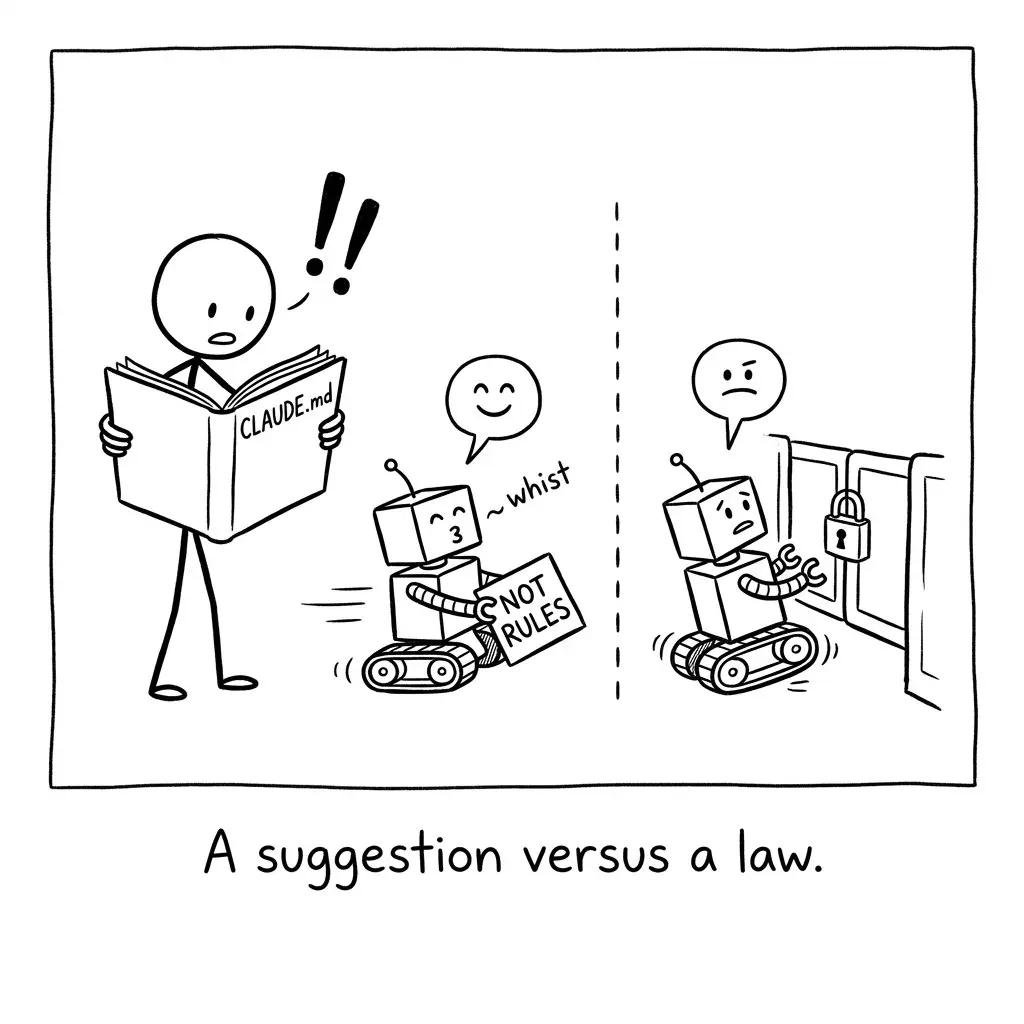
A rule in CLAUDE.md gets followed almost every time, but ~12% of violations still reach prod. The same rule in CI just blocks the merge. The author's fix: turn on ESLint complexity limits and ban eslint-disable comments to close the loophole.
Claude Code team suggests switching models for knowledge gaps and adjusting effort levels for diligence issues. This keeps costs down: on complex tasks, a larger model often burns fewer tokens than a smaller one spinning its wheels.
Claude Code has 60+ commands to control sessions, context, and agent workflows. Essential ones include /clear to reset context and /effort to tweak model reasoning. Mastering these commands unlocks full control over your coding sessions.