
hardware-infra
PAIR routes subagent work to idle Macs and PCs
Promtime
 hardware-infra
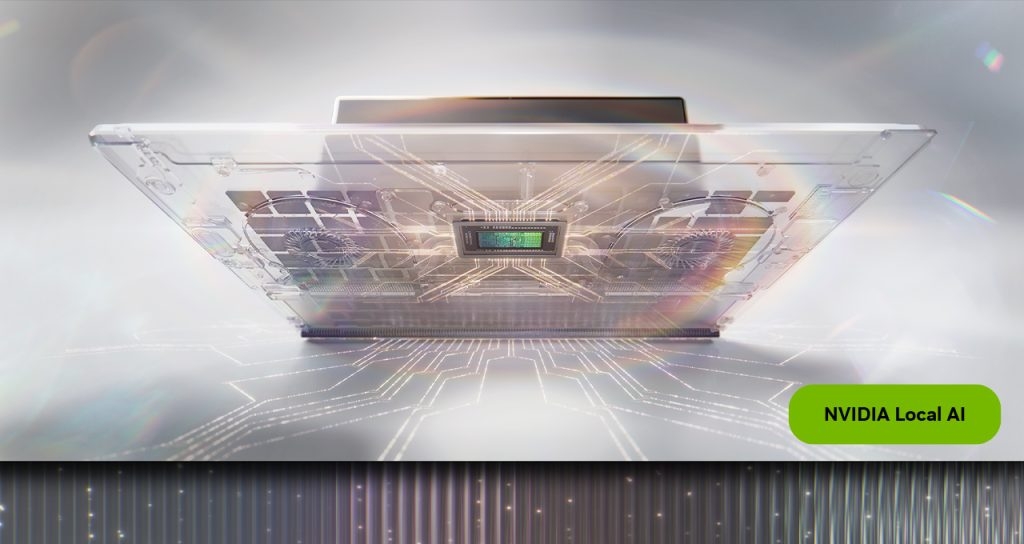
Nvidia released the Personal AI Router (PAIR) on Thursday, an open source beta that routes an agent's subagent requests to idle Macs and PCs on the same home network and, in the company's own test, sped up a five-subagent workflow by about 1.6x.
Nvidia positions PAIR as a virtual inference router rather than a new inference engine, and it targets agents such as NemoClaw, OpenClaw and Hermes, where a lead agent splits a task across subagents that run in parallel. The launch, reported by The New Stack, follows Nvidia's acquisition of Hugging Face and a longer push around open models and local inference.
At a glance
- PAIR is not an inference engine: it discovers machines over mDNS, then routes each request to a single node already running Ollama or LM Studio with the exact model installed.
- Supported hardware starts at GeForce RTX 20 series GPUs, Macs with M4 silicon or newer, and the DGX Spark, with RTX Spark PCs and laptops due later this year.
- Nvidia states that PAIR does not merge GPUs or pool VRAM and cannot split one inference request across machines, and it stops a local engine when someone reclaims that GPU.
Few homes hold two RTX 5090 machines, so the realistic configuration looks more like a Mac Studio, a couple of Mac minis and a gaming PC, and Nvidia's published figures cover only the RTX 5090 pair. The design reads as an attempt to make local agent workflows usable on hardware people already own, which fits the wider Nvidia push toward open models and local inference more than it fits any single GPU sale.
The router picks one node over mDNS and leaves Ollama or LM Studio to run the model
Once installed on each machine, PAIR discovers other systems on the local network using mDNS and checks whether they can serve a request. It routes only to a node with the required engine enabled and the exact requested model available, and installing the same model on several machines widens the pool for concurrent requests. Nvidia describes the handoff this way:
Agents can send a request through the familiar local interface it expects. PAIR receives the request through its proxy, identifies its engine and model requirements, and selects one eligible node. That node executes the request from start to finish and sends the response back through PAIR. The agent continues to see one connection while PAIR handles placement behind it.
Two RTX 5090 PCs running Qwen3.6 35B A3B gave a 1.6x speedup with five subagents
In Nvidia's example, two PCs with RTX 5090 GPUs and 32 GB of RAM ran the Qwen3.6 35B A3B model and sped up a five-subagent workflow by about 1.6x. According to The New Stack, those cards currently sell for around $5,000 despite a $2,000 initial MSRP.
PAIR does not pool hardware. Nvidia stresses that it does not merge GPUs or combine VRAM into a single accelerator and cannot spread one inference request across machines, so every request finishes on the node that received it. The router also tracks availability and stops the local inference engine when a user returns to work or gaming and reclaims the GPU.
Supported machines start at GeForce RTX 20 series GPUs and M4 Macs
PAIR supports Windows, macOS and Linux machines with compatible GPUs. Nvidia gives the baseline as GeForce RTX 20 series cards and newer, a Mac with M4 silicon or newer, or a DGX Spark, with RTX Spark PCs and laptops joining the list once they ship later this year. Apple silicon qualifies even though those machines carry no Nvidia GPU.
Macs have become a common base for running local models and agents such as OpenClaw. Setup can run through PAIR itself: the software installs Ollama or LM Studio on paired machines and starts model downloads on them, covering systems that have the hardware but no local inference stack yet.
What the beta install requires
PAIR is available now as a beta. Getting a network running means installing it on every machine that should participate, letting it discover and pair those systems, and making sure Ollama or LM Studio and the required models are in place on each one. Nvidia has not said when a stable release will follow.
Comments
No comments yet. Be the first.
Join the conversation
Sign in with Google to leave a comment. Your name and avatar come from your Google profile, and the comment appears after moderation.
We only use your name and avatar from Google. We never store your email address.