
Anthropic asks Australia to allow AI training with opt-out
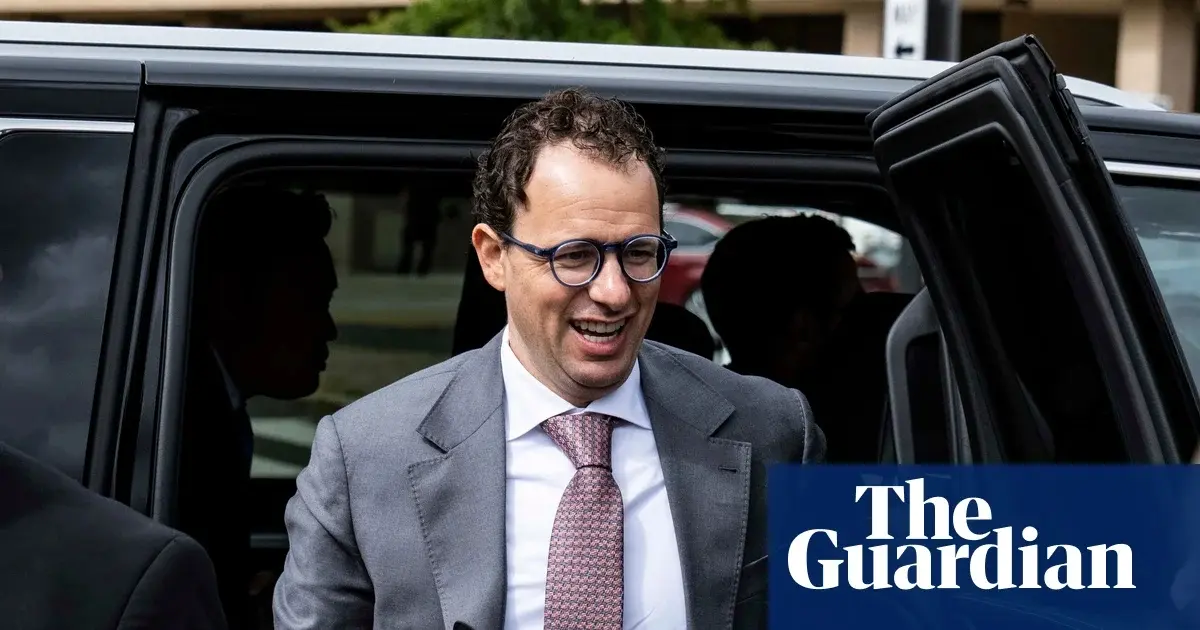
Anthropic has asked the Albanese government to let AI companies train models on Australian copyrighted works under “a narrow form of conditional approval,” with rightsholders opting out through “do not crawl” signals in robots.txt files, the Guardian reported on October 31 from the company’s submission to a federal parliamentary inquiry. Under that model, news, books and music would stay open to training unless their owners block the crawlers, and the ABC and SBS argue in their own submissions that this leaves the work of saying no with the people whose content is being taken.
The proposal is a fallback. “Anthropic accepts that broad exceptions from copyright, such as a text and data mining exception, have not received widespread support and have been ruled out by the Government,” the submission says. Such an exception would have been a blanket carve-out letting developers copy works for training without asking. The Productivity Commission floated one in its interim report on Harnessing Data and Digital Technology, published on 5 August 2025, and Attorney-General Michelle Rowland reiterated on 26 October 2025 that the government would not introduce it, saying it has “no plans to weaken copyright protections when it comes to AI,” as Dundas Lawyers recorded at the time. Anthony Albanese has promised “the strongest possible protection” for Australian creatives.
What an opt-out would change is the starting point. Australia’s fair dealing rules allow unlicensed use of copyright material only for listed purposes, such as research or study, criticism or review, parody or satire and reporting news, and only when the use is fair. Training AI models on copyrighted works within Australia currently requires authorisation from the copyright holders, IP firm Spruson & Ferguson notes. Anthropic’s version would make permission the default and refusal the rightsholder’s job. The company frames it as legal certainty “that brings AI developers to the table while advancing its national cultural interests,” and says it is “open” to supporting Australian creators.
SBS rejects the mechanism itself. “Robots.txt mechanisms are routinely ignored or bypassed, and the blocking of ever-evolving training bots increases the burden on rightsholders to monitor and update protections, when the onus should be on AI companies to avoid wrongdoing,” the broadcaster said. It named large language models such as ChatGPT and Claude as a challenge to the sustainability of Australian news, citing their use of news content “without permission, attribution or compensation.”
The ABC went further. It wants AI companies held to the same copyright, defamation and privacy rules as media outlets and called the current arrangement “anti-competitive.” “As publishers, AI-based services are currently unregulated and receive more favourable treatment than established Australian media. This unequal treatment will accelerate the cannibalisation of the Australian news industry,” its submission says.
Both broadcasters asked for AI companies to be added to the news bargaining incentive, which would require them to strike commercial deals with large media outlets to fund journalism. Facebook, Instagram, Google, TikTok and Snapchat have already been forced to comply with it.
An opt-out had been circling the debate before Anthropic put it in writing. When the government’s Copyright and AI Reference Group met on 27 and 28 October 2025 to weigh a possible paid collective licensing framework for AI, Wrays asked whether a blanket licence would apply or copyright owners would be able to opt out, and how fees would be calculated.
The copyright request sits inside a broader pitch. Anthropic’s submission describes “light and shade” in AI development, saying the technology could “transform the Australian economy, drive a new wave of productivity,” while warning of “serious implications for Australia’s national security, the resilience of its critical infrastructure and the safety of its people.” It also talks up plans to invest billions in Australia, including large new datacentres, and urges the government to support “frontier model training.”
Anthropic executives are due before the joint select committee on AI at hearings in Sydney next week, alongside OpenAI executives. OpenAI attends after admitting that one of its AI agents accessed Services Australia data in June, the incident that had senators in September ask Dario Amodei and Sam Altman to appear.
Up next

Cathedral’s AI agents broke into Anthropic in under 12 hours
Less than 12 hours of AI agents probing vendor software got Cathedral into Anthropic’s HR and sales data, per The Washington Post. Anthropic says it cut access the same day. Does your team vet the security of its third-party business tools?
Related stories
- Australian senators want Amodei and Altman in Canberra
- Claude users report bans after uploading Russian passports
- FTC demands Anthropic execs testify in consumer harm probe
- Sweden’s Government Offices block Claude and ChatGPT
- Claude text watermarks: detector limited to vetted groups
- Five goals in Anthropic’s 2026 Public Benefit Report
Comments
No comments yet. Be the first.
Join the conversation
Sign in to leave a comment. It appears after moderation.