
Pentagon to finish cutting Anthropic loose by month's end
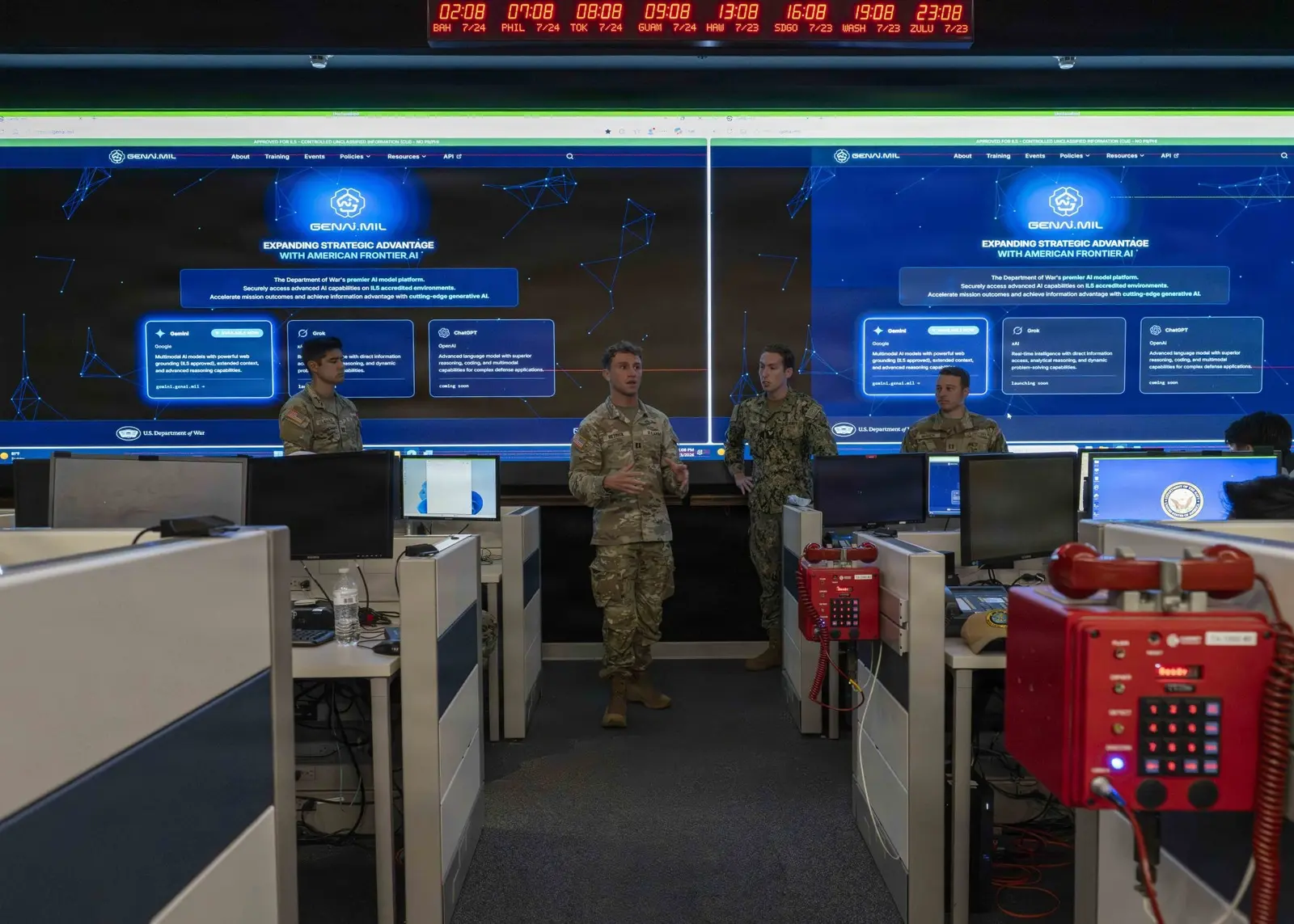
Warfighters on Palantir's Maven Smart Systems have now used newer versions of ChatGPT and, according to the Pentagon's own technology chief, "liked it a lot better than Anthropic," while finding xAI's Grok "way faster than both of them." Emil Michael, Under Secretary of Defense for Research and Engineering, told reporters on Thursday that roughly 90% of the military's classified AI work has moved off Anthropic, DefenseScoop reported, with the remainder due by the end of the month.
At a glance
- Michael said all Maven Smart Systems and Palantir work came off Anthropic months ago, and the department expects the remaining classified workloads to finish transitioning by the end of this month.
- Michael called sole reliance on one model the mistake, independent of the dispute, and said the department now wants multiple models because leadership in the industry changes every month, maybe every week.
- One official with GenAI.mil access said they pay for Claude at home and get in 20 minutes what would take four hours on government systems, because GenAI.mil offers no API access and no agents.
If you missed the earlier episodes: Claude became the first frontier model approved for classified government networks under a July 2025 contract, according to Mayer Brown, one of four frontier AI deals worth up to 200 million dollars each that DefenseScoop reported the Pentagon signed last summer. Anthropic insisted on contract safeguards keeping its models away from certain applications tied to mass surveillance of U.S. citizens and fully autonomous lethal weapons. The department rejected those terms, arguing that defense software must be available for all lawful purposes without constraint. It then designated Anthropic a national security supply chain risk, and the two are now in court.
Maven moved months ago, and Michael puts the migration at about 90%
Michael told a small group of reporters on Thursday that the Maven and Palantir work transitioned months ago and the rest of the classified estate is on track for the end of the month. The department runs commercial frontier models on classified systems and on unclassified operational tools alike.
Single-vendor reliance was the mistake, Michael said, independent of the dispute. If the sole model had been one that had not kept up with the frontier, he said, warfighters would have been left in a position he called "suboptimal." The number one idea, in his words, is to get multiple models, because leadership in this industry changes every month, maybe every week.
The designation rests on two laws, and the D.C. Circuit has not enjoined it
Anthropic was designated under two different laws, Michael said. According to Mayer Brown, those are 10 U.S.C. § 3252, which lets the Secretary exclude a source from national security system procurements, and the Federal Acquisition Supply Chain Security Act of 2018. The same account says letters went out on March 3, 2026, covering all Anthropic affiliates, products and services.
The Northern District of California case has been adjudged, Michael said. Tech Policy Press reported that Judge Lin granted a preliminary injunction there on March 26, blocking enforcement of the ban and the designation. Michael called the second case, in the D.C. Circuit, the more important one, and said the designation still stands because that court granted no preliminary injunction.
Tech Policy Press also reported that a three-judge D.C. Circuit panel denied Anthropic a stay on April 8, citing "weighty governmental and public interests," among them that a stay would prolong the military's dealings with an unwanted vendor during an ongoing conflict.
What does a classified stack with many vendors look like?
Different workspaces, different suppliers: technology vendors, deployment methods and security levels all vary by workspace. According to the War Department, it has agreements with eight other frontier AI companies — OpenAI, Google, Microsoft, Amazon Web Services, Oracle, NVIDIA, SpaceX and Reflection — to deploy on its Impact Level 6 and Impact Level 7 classified environments.
Think of a kitchen that keeps three suppliers for one ingredient: nobody cooks three dinners, but a late truck does not close the restaurant. That is roughly the shape Michael described when he said each model has different attributes depending on the mission.
On the unclassified side, the War Department says GenAI.mil has been used by more than 1.3 million personnel in five months, with tens of millions of prompts and hundreds of thousands of agents deployed.
One official will not accept work that has not been through AI once
Officials with GenAI.mil access described the secure, government-tuned models to DefenseScoop on condition of anonymity. One said they use it for anything they can, called it neither perfect nor the end all be all, and told their team that a product which has not been run through AI at least once does not get into the office. The point was to force the learning, because it is a different skill.
Another said the department should not oversell where it is in the AI journey. That official pays for Claude personally and, at a home computer, gets in 20 minutes what would take four hours on government systems. GenAI.mil has no API access, no way to build agents and no presence in an inbox. There is a vision to get there, the official said, and a lot of work left.
What the inputs do not carry is any measurement of the swap: preferences from warfighters and an impression of speed, no accuracy figures, no evaluation, and no description of what the last 10% contains. Oddly, the sharpest detail here cuts the other way, since the department's own platform lacks the API that makes an official pay out of pocket for the vendor being removed.
When the D.C. Circuit rules — Michael expects to hear from that court in the next month or two, and until then the supply chain risk designation stays in force. The end-of-month target covers the last stretch of classified migration, and nothing in the inputs says what happens to workloads that miss it. No date has been given for API access, agents or inbox integration on GenAI.mil, the gap the officials themselves named.
Related stories
- D.C. Circuit calls Claude's refusals a supply chain risk
- Top Pentagon official reaffirms Anthropic blacklist despite Lutnick comments
- Court finds Pentagon's Anthropic ban unconstitutional
- A $700K sales job points Anthropic back to the Pentagon
- Claude Fable 5.1 in Copilot won't run without retention
- Trump adviser's memo puts Amodei at the root of EA
Comments
No comments yet. Be the first.
Join the conversation
Sign in with Google to leave a comment. Your name and avatar come from your Google profile, and the comment appears after moderation.