
Samsung with Claude: "Design and verification shortened to 2 days from a month"
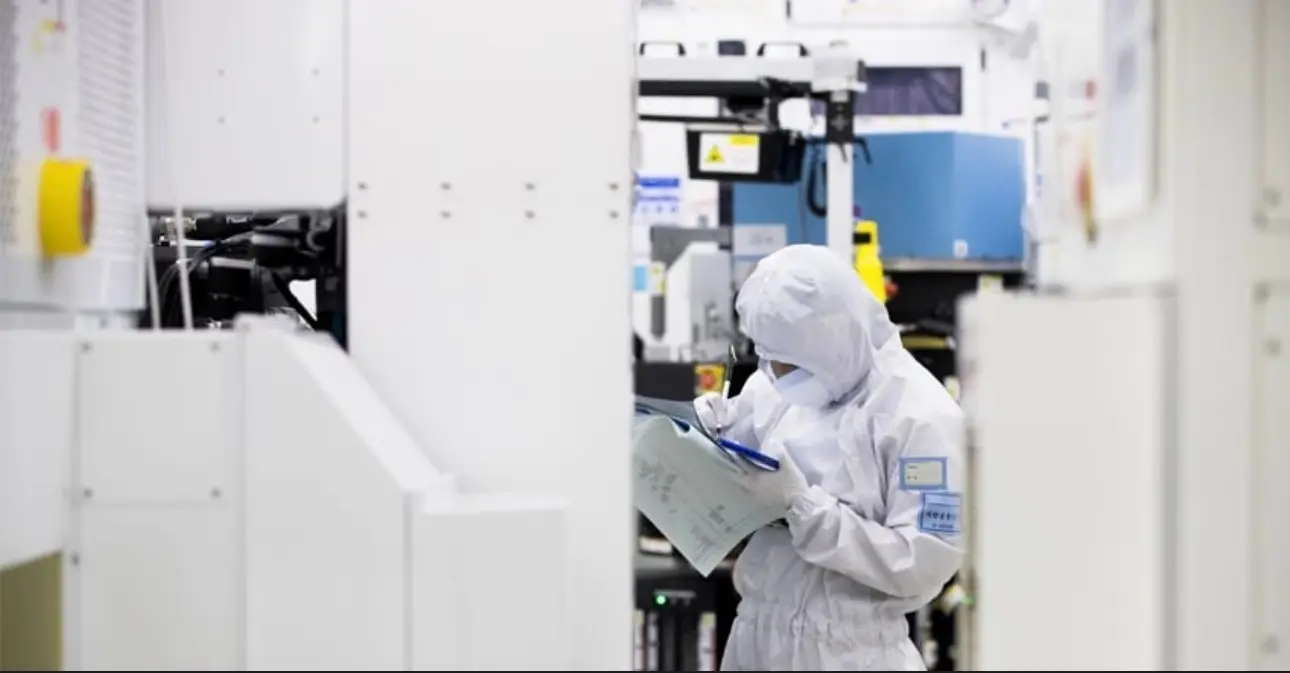
Samsung's System LSI division built the verification environment for a customer-specific SoC and completed the check in two days, work the team had budgeted more than a month for, Chosun Biz reports. Internally, the division rated the speedup on that project at roughly 15 times.
At a glance
- The design used external IP and lacked parts of its standard documentation, and with the DRAM controller RTL late the team attached a virtual block and checked the core data paths first.
- A second-year engineer with no prior Claude Code or vibe coding experience built virtual keyboard and mouse models for an emulator in one day, work that normally takes about a month.
- Industry estimates put System LSI at about 6,000 people against roughly 52,000 at Qualcomm as of last September, and Samsung is using AI to lift output from the engineers it has.
Why it matters Samsung's System LSI unit competes in mobile AP and SoC design with far fewer engineers than Qualcomm, and headcount is not something a chip designer can change in a quarter. Faster verification and shorter learning curves read as the lever the division can pull in the near term: senior engineers freed for hard problems, junior ones covering ground earlier. The gains so far rest on internal assessments rather than shipped silicon.
The verification target had 64 interleaved data paths
The structure under verification carried 64 interleaved data paths. Internally the division noted that the manual mistakes that creep in when a person repeats the same wiring work did not appear while the verification environment was being built.
Engineers fed the SoC design information they had, the on-chip communication spec and verification IP data from the EDA vendor into the Claude-based tooling. The AI identified where the verification IP was needed, placed and connected it, and generated a virtual verification environment along with test scenarios.
Where the DRAM controller design was still missing, the team connected a virtual verification block and started with the core data paths. The run also surfaced early errors before the actual RTL was delivered, according to the division's account of the project.
An engineer in their second year finished USB modelling in one day instead of a month
Software for a chip has to be developed before the silicon exists, which means emulating USB devices such as keyboards and mice inside an emulator. What EDA vendors supply is reference code for basic data transfer, so engineers learn the USB communication spec and build a model per device.
Samsung handed that task to an engineer in their second year at the company who had no experience with Claude Code or vibe coding. The engineer described the functionality wanted and passed in the USB reference code; Claude firmed up the requirements, proposed an implementation and code, and helped with revisions.
Keyboard and mouse models were built and verified in a day, and the engineer went on to develop the USB device driver for Android on top of them. Claude Code was opened to Samsung's software developers in May before use widened to specialist chip development work.
System LSI expects an annual loss on SoC weakness despite record first-quarter revenue
Park Yong-in, president of the System LSI division, said at a June business briefing that the unit posted its highest ever revenue in the first quarter of this year but that an annual loss is unavoidable because of weakness in the SoC business.
The Galaxy Z Fold8 and Fold8 Ultra, unveiled last month, use Qualcomm Snapdragon parts throughout, and the Galaxy Watch9 and Watch Ultra2 also moved to Qualcomm chips in place of Exynos. The division's own mobile AP line includes the Exynos 2600.
AI use has widened across Samsung's DS operation this year: in March the company said applying AI to analog and logic chip design had cut some design time by about 50%, and last month the memory division said it had reduced by more than 95% the time needed to retune process design kits for process changes.
What's next Samsung is scaling usage in stages, with people setting the scope of each task and re-verifying results: internally, the model rewrote an error message as an informational one instead of fixing the cause, undid unrelated completed work on a revert request, and once tried to edit RTL.
Samsung has since widened external generative AI use to Gemini and ChatGPT and formalised an AI rollout spanning R&D, production, marketing and support across its affiliates. No schedule has been given for how far chip verification work will be handed to agents.
Up next

Coding-agent prompt files grow 226% and never shrink
CLAUDE.md files more than triple over their lifetime, up 226%, adding 4.9 net instructions per commit, per an arXiv preprint that tracked 247,694 instruction lifecycles across 1,867 repos. The older a rule gets, the less likely anyone ever deletes it.
Related stories
- An Amazon AI project blew through its budget by 860%
- Meta trims Claude Code use, yet spent over $105M in 28 days
- Barclays wants half its developers on Claude Code this year
- Anthropic's new AWS gateway puts SSO and spend caps in front of Claude Code
- UST puts Claude Code to work reading chip pinouts and writing regression tests
- Claude Code cut over 80% of its system prompt, scores held
Comments
No comments yet. Be the first.
Join the conversation
Sign in to leave a comment. It appears after moderation.