
OSS Scanner sends maintainers 77 critical findings
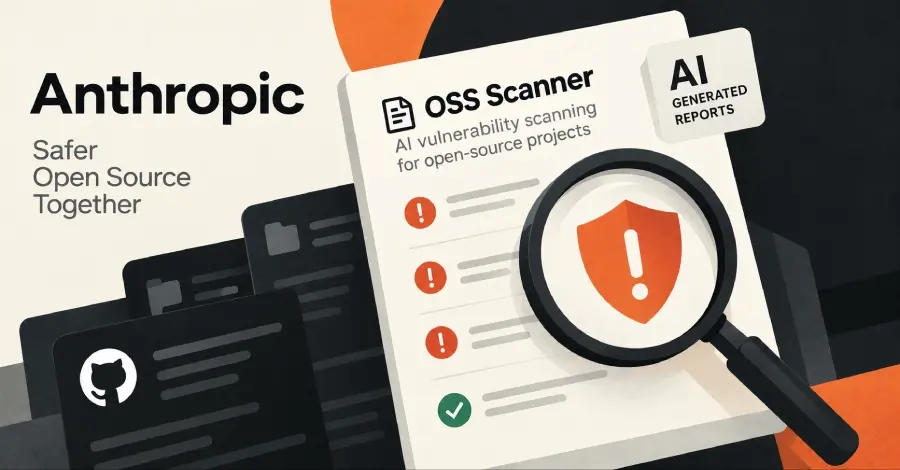
Anthropic has sent nearly 5,000 vulnerability reports to open-source maintainers without checking them first. Each batch went out because the maintainers asked for everything the models had found, reviewed or not. OSS Scanner turns that arrangement into a service. It gives critical open-source projects free, periodic scans from the company’s strongest models, Claude Mythos among them, and sends the results without any human review, as Anthropic’s launch post explains.
The first scans have reported 77 critical and 803 high findings to maintainers, Anthropic said on X on October 19. The models assign those severity ratings themselves, and more projects are still being scanned. In the same thread, @thepunit shared an update that includes a curl fix and what the team learned in the first week. The scanner has its own page at red.anthropic.com.
Why skip the human check?
Over the past six months Anthropic ran its latest models against some of the world’s most important software projects and turned up over 29,000 candidate vulnerabilities. Its staff manually reviewed and triaged about 6,000 of them. The company says it remains “bottlenecked on our human capacity to validate these findings.”
The work began with Project Glasswing, which Anthropic announced on April 7 with partners including Amazon Web Services, Apple, Google, Microsoft and the Linux Foundation. Glasswing runs on Claude Mythos Preview, an unreleased frontier model. As of May 22, Anthropic had disclosed 1,596 findings to maintainers across 281 projects, and only 97 of those were confirmed patched, the Cloud Security Alliance reported. The CSA argued that the bottleneck had moved from finding bugs to fixing them, because maintainers, many of them volunteers, work at human speed.
Anthropic bases its case for speed on a benchmark figure. On CyberGym, an academic vulnerability-finding benchmark, LLMs found under 20% of vulnerabilities at the start of last year and over 85% this year. Over the same period, the company says, maintainers went from getting “mostly slop” from LLMs to getting high-quality bug reports. Exploits can now be built in minutes, so Anthropic argues that projects which find and fix flaws faster are better placed against attackers hunting for the same weaknesses.
The human-verified route stays in place. Anthropic will keep sending reviewed reports through its coordinated vulnerability disclosure (CVD) process, especially to projects that lack the staff to triage reports themselves. OSS Scanner is an optional fast track for maintainers who want findings as soon as they exist.
What lands in the inbox
Every report includes a self-contained reproducer, an explanation of the vulnerability and, when one is available, a candidate patch. Where possible, the explanation also includes a bisection, a search through the project’s history for the commit that introduced the bug. The output is fully model-generated. Anthropic says this allows faster and more frequent scans but means some reports may be incorrect or invalid.
Anthropic says it took inspiration from Google’s OSS-Fuzz, which scans open-source software with fuzzers. It also keeps the scanner separate from Claude Security, its general-access product for scanning and patching code. Claude Security is aimed at enterprises defending their own systems, while OSS Scanner audits open-source projects at no cost.
Before the launch, Anthropic spent several weeks testing the pipeline with dozens of open-source projects. Those early disclosures held hundreds of bug reports, including several vulnerabilities that Anthropic chained into unauthenticated remote code execution exploits against the affected projects.
What maintainers saw
To check an early version, Anthropic had the expert penetration testers who review its CVD findings go through 97 critical and high-severity findings from the scanner, spread across 48 projects. Of those, 85 (88%) met the bar for the CVD process. Of the other 12, 11 were real bugs that duplicated known issues or other findings from the same scan, and one was invalid. Since then, maintainers who received the findings have seldom said a high or critical one was invalid. Some have said the severity ratings can be inflated, or that the scanner misread the project’s threat model.
wolfSSL’s Todd Ouska gave a count from his project: “of the 74 reports we received, all but two were valid, and five became CVEs.” He added that with patches attached, the reports “slotted right into our existing process to verify and fix issues. We’d love more.”
For PostgreSQL, Noah Misch said “an unusually high fraction of OSS Scanner’s findings uncovered PostgreSQL defects.” He said several came with fixes the team could use nearly as-is, and that fast-track access let it address the newest issues before they reached a GA release.
Anton Arapov of the OpenSSL Corporation compared the reports with what came before Glasswing. He said early AI reports from about 18 months ago “were appalling,” while the reports from Anthropic, raw model output included, “were as good and sometimes better than what we get from people.” A report with a real exploit attached, he said, is “basically job done for an engineer as you can verify it right away.”
Eddie Kohler of HotCRP said the reports showed “a strong understanding of HotCRP’s complex permission model and good bug prioritization.” Daniel Stenberg said the scanner found multiple issues in curl worth addressing, “including one of the worst curl vulnerabilities reported in the last few years.”
Who can apply
Eligibility follows criteria similar to those OSS-Fuzz uses. A project should have a “critical impact on infrastructure and user security,” and Anthropic will decide case by case. The service is free.
Anthropic points two other groups to separate programs. Qualifying security professionals can use the Cyber Verification Program, which offers advanced cyber capabilities and fewer blocking classifiers. Anthropic expanded it on October 6 to three access tiers, each with access to Claude Opus 5.5, Claude Sonnet 5.5 and Claude Mythos 5.1. Claude for OSS gives free Claude Max 20x subscriptions to help fix vulnerabilities and improve open-source projects.
To enroll in OSS Scanner, a core maintainer opens a PR against Anthropic’s GitHub repo using the standard project template. The extended FAQ has further guidance.
Related stories
Comments
No comments yet. Be the first.
Join the conversation
Sign in to leave a comment. It appears after moderation.