
claude-code
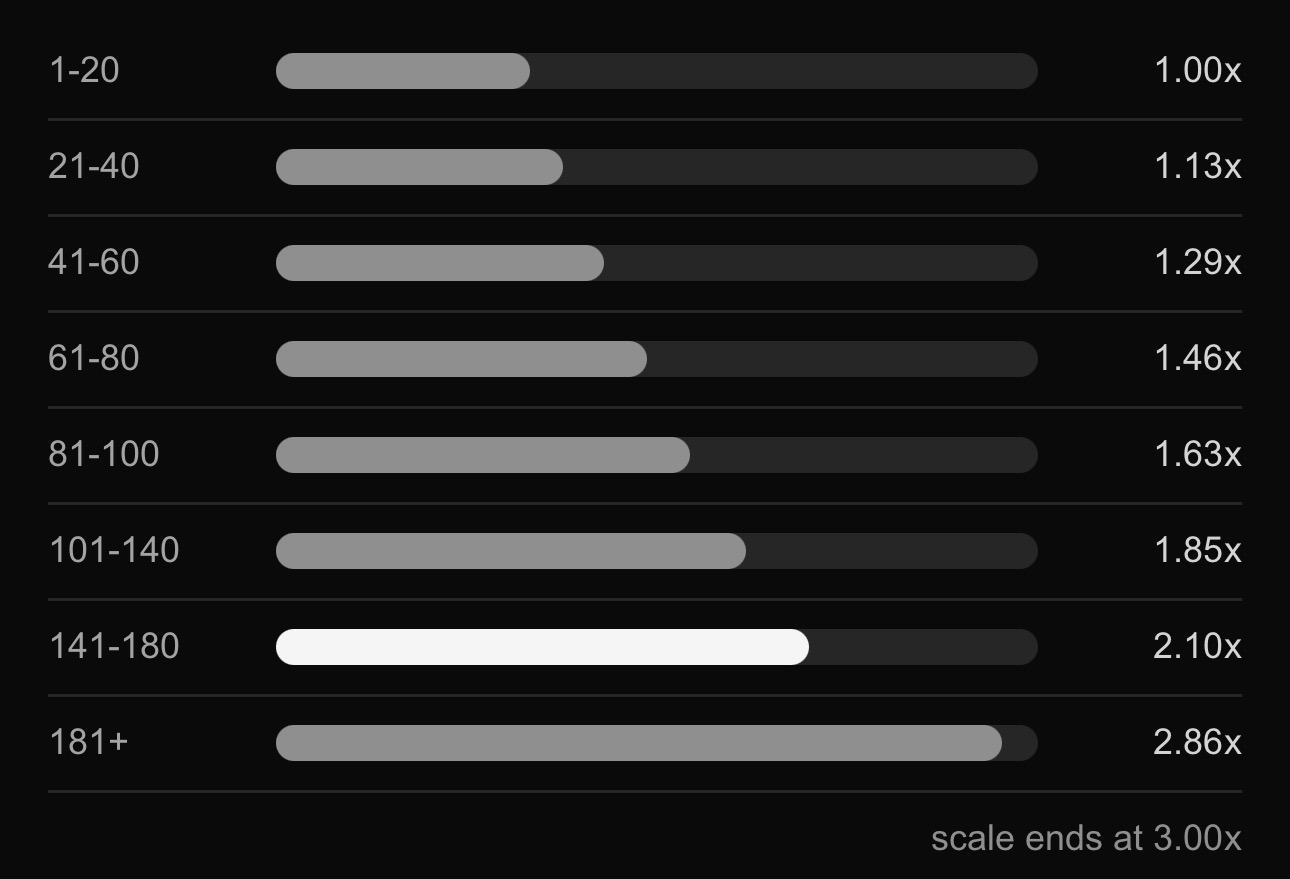
A turn at 141 costs 2.1x a turn at 20 in Claude Code
Claude News
 claude-code
A Show HN write-up puts a number on session drift in Claude Code: across 144 sessions and 14,640 turns, a turn past 141 cost 2.1x what a turn cost in the same session's first twenty. The measurements were posted on Ycombinator by the author of the public task-tracking project my-status.app, who counted the turns with a script written for the purpose.
At a glance
- The author points at the standing context that gets re-read on every turn, 114,133 tokens on the hub seat and 108,213 tokens on a spoke, paid again each time a turn runs.
- The working routine changed after the count: the author now runs one thinking session alongside short task sessions, aiming to spread work across a plan whose Opus allowance was going half unused.
- The aging-curve analysis itself carries receipts: 2.6 person hours and $8.23 in tokens at list rates, after a first run overcounted 28.1M tokens as 46.6M until the script bug was found.
For anyone working inside a fixed plan allowance, the finding reads as an argument against the long-lived session as a default habit. If per-turn cost climbs with session length while the standing context is re-read on every turn, the cheapest fix is administrative rather than technical: close the seat and open a new one. The figures come from one project's own logs, so the shape of the curve is likely specific to how that project loads its context.
A turn past 141 costs 2.1x a turn from the same session's first twenty
The count covers 144 sessions and 14,640 turns, gathered four days after an Aug 26 exchange in which the author asked Claude what else could be measured from the session records. The model listed six candidates, among them the session aging curve, the scaffolding trend, the review share of the wall clock, before/after receipts on process changes, model economics and a crash watchdog reading both records.
The curve is published on the project's stats page. The worst offenders in the dataset were the author's own batch sessions, and batching was dropped once the figures came in, with the counting script released publicly on GitHub under the lordbron/mystatus-samples repository.
The standing context re-read on every turn runs 114,133 tokens on the hub seat
The follow-up counting covers the standing context that is re-read on every turn: 114,133 tokens on the hub seat and 108,213 tokens on a spoke seat. Measured separately, the cost of the project's own rules crept across three seats, from 87,999 tokens to 92,619 and then 93,809.
The share of wall clock time taken by human review came out at 67%, published under the review section of the same stats page. The review share was one of the six measurements Claude proposed in the Aug 26 exchange, and it sits alongside a wider set of counters the author calls a bit overboard.
The aging curve cost 2.6 person hours and $8.23 in tokens at list rates
Each feature in the project now ships with a cost record, published on a dedicated receipts page. The aging-curve analysis is priced there at 2.6 person hours and $8.23 in tokens at list rates, the write-up's worked example of what a measured process change costs to produce.
The first run of the counting script was wrong: it reported 46.6M tokens where the true figure was 28.1M, and the gap exposed a bug in the script itself. The author has since invited others to run the same public script against their own sessions.
What the aging curve leaves unmeasured
The write-up gives no cause for the drift beyond the standing context re-read on each turn, and no threshold at which a fresh seat becomes cheaper than the one in use. The project itself remains public task tracking, with entries ranging from a 20 mile run to which app versions are supported, and the stated experiment behind it is whether a human and Claude can split work by what each does better.
Comments
No comments yet. Be the first.
Join the conversation
Sign in with Google to leave a comment. Your name and avatar come from your Google profile, and the comment appears after moderation.
We only use your name and avatar from Google. We never store your email address.