
Analysis of Claude Fable 5’s training: Why the model relies on memorized patterns
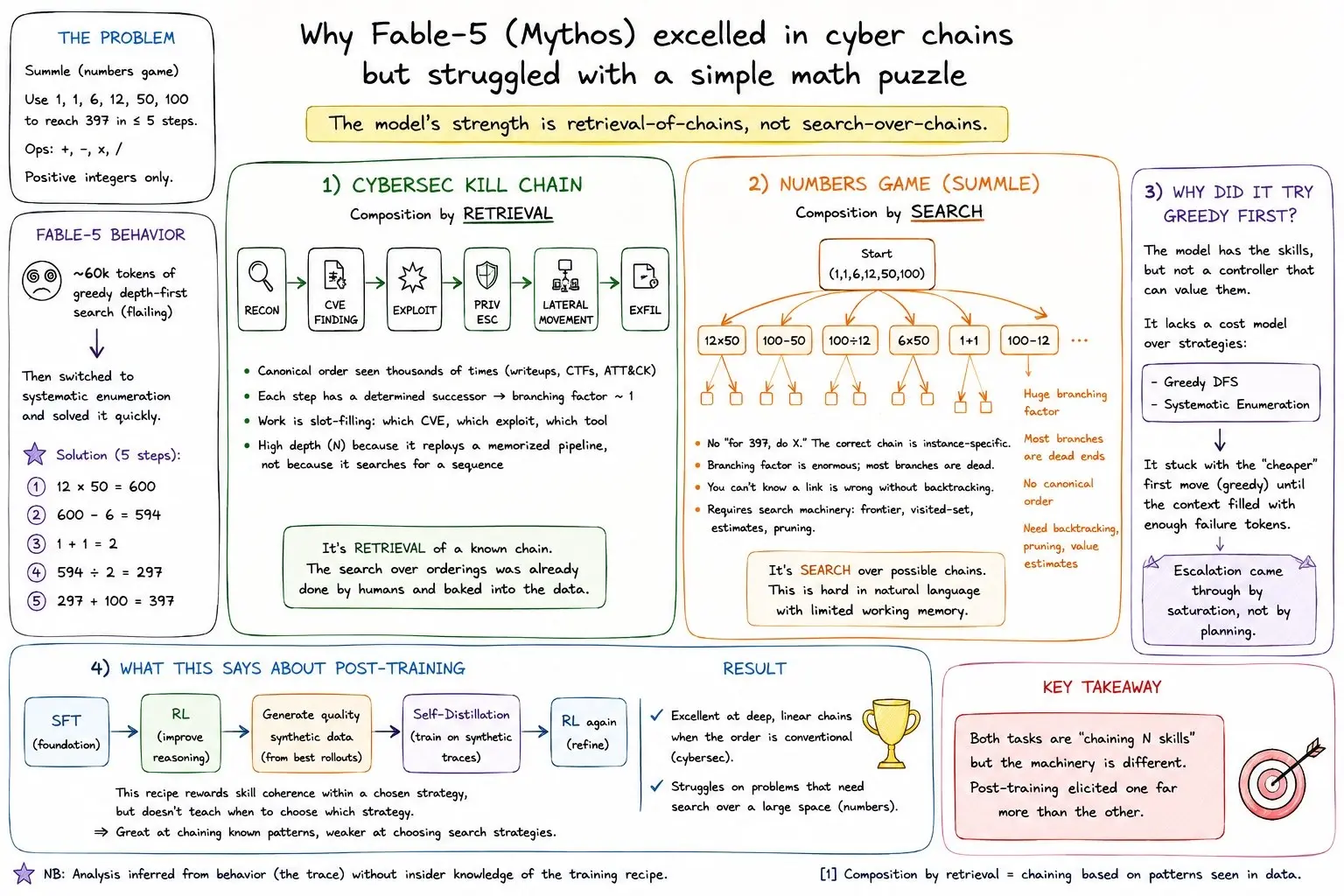
Technical analysis reveals that Claude Fable 5 relies on memorized action sequences rather than deductive search. In an experiment with the math game Summle, the model spent 60,000 tokens exploring options before switching to a systematic solution method. This suggests that Fable 5 was trained through distillation of successful paths, not through developing a general search algorithm.
This approach makes the model effective in tasks with predictable structure, such as code generation, where canonical sequences exist. However, in tasks requiring novel solutions, the model shows brittleness, attempting to apply learned patterns where they don’t fit.
Up next

Anthropic faces lawsuit over subscription limits
A class-action lawsuit targets Anthropic over allegedly misleading subscription limits on Max 5x and Max 20x plans. The plaintiff claims real usage capabilities fell short of advertised amounts. This follows Anthropic’s recent introduction of separate credit limits for agents, which consume resources much faster than regular chats.
Related stories
- Anthropic releases Claude Fable 5 and Mythos 5 models
- Anthropic releases Claude Fable 5
- Claude memory: say what it’s for, let dreaming fix notes
- Tübingen researchers want AI to propose many models
- Claude Fable 5 tripled Opus 4.6’s EVE Online trading gains
- Scientists use Claude least where they say it matters most
Comments
No comments yet. Be the first.
Join the conversation
Sign in to leave a comment. It appears after moderation.