
Claude's cipher project writes off the gold bar codes
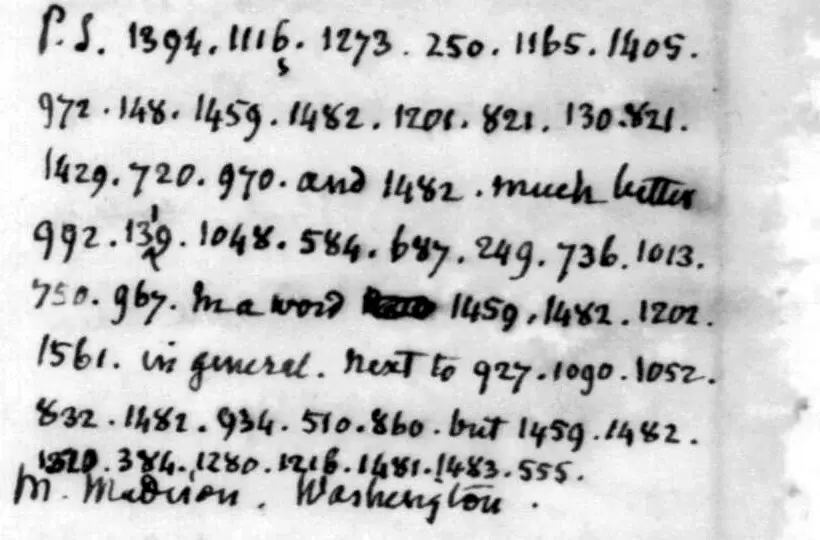
Twenty-one of the twenty-six letters stamped on seven Chinese gold bars appear exactly ten times each. A cipher project on Github that works through unsolved codes with Claude says that is why nobody has ever read them: the strings are not an encryption at all.
At a glance
- A project that ranks unsolved ciphers by odds and effort has closed the Chinese gold bar cryptograms without reading a word of them, by showing the letter counts cannot come from a cipher.
- The 263 letters run across sixteen strings; chi-squared against a uniform distribution comes out at 1.25 where chance predicts 25, and none of 200,000 simulated random strings landed this flat.
- The bars stay on the project's target list anyway, at low odds: the Chinese inscriptions are a separate problem, the photographs are poor and the provenance disputed.
The IACR published the strings in 1996, and Elonka Dunin's list of famous unsolved codes has carried them ever since. The bars are said to have been issued in Shanghai in 1933 and to certify a deposit of $300,000,000; according to the IACR's page they went to a General Wang and weigh 1.8 kilograms in all. The claim on that deposit is disputed.
Twenty-one of twenty-six letters appear exactly ten times
The stamped strings run to 263 letters across sixteen blocks, and the alphabet in them comes out almost level. The project measures that with a chi-squared test against a uniform distribution, the standard way of asking how far a set of counts sits from the counts you would have expected.
The number it returns is 1.25, where chance alone predicts around 25. The likelihood of a random string landing this flat is put at roughly one in a trillion, and of 200,000 simulated strings, zero were this uniform. The cryptograms have sat on the published unsolved lists for thirty years without anyone noticing that.
Why can no cipher come out this flat?
Because the two classical families both carry the plaintext's lumpiness with them. Substitution swaps every letter for a fixed symbol, so the lump sitting on E in English moves onto whichever symbol stands for E. Transposition shuffles positions and leaves the counts untouched: shuffling a deck changes the order of the cards, not which cards are in it.
A one-time pad does randomise the output properly, but random is not flat. Draw 263 letters at random and you get bumps, which is what the 200,000 simulations show. Flatness of this kind takes a person with a list, counting out ten of each letter and arranging them to look like cryptography.
The gold bars rank seventh on a list ordered by odds against effort
The ranking puts cheap decisive tests above expensive long shots: a coin-flip that resolves in ten minutes sits above a one-in-four that costs a day. At number one is the ADFGVX residue of 1918, attempted in September 2026, where a working decoder was built and three of the fourteen keys whose substitution squares the source PDF had mangled into en-dashes were repaired.
Page 100 of that material was reproduced from scratch and yields 122 letters where the reading needs 124; searching every two-placeholder insertion returns the published plaintext at score 140.7, where nothing else clears 7. The gold bars sit seventh, at low odds and medium effort.
A September 2026 pass through Klaus Schmeh's Top 50 found nine of the fifty solved or explained since posting without the list saying so, and one entry that turns out to be an April Fools' joke.
The count settles the Latin letters and nothing else. The IACR page also describes pictures, Chinese writing and a script its own compiler could not recognise, and a flat alphabet says nothing about those; the bars keep their place on the worklist for that material, with short inscriptions and poor photographs. In our view the sharper finding is the catalogue one: nine of fifty entries answered in print, still listed as open.
What a copy order from Edinburgh settles
Several of the highest-value items need no new idea, only access. The key for Charles II's 1650 letters to the Duke of Hamilton is catalogued open at the National Records of Scotland as GD406/1/2197, and a copy order should settle four letters at once. The Royalist intercepts in BL Add MS 72438 wait on British Library images, offline since the cyber-attack, or a DECODE account.
Related stories
Comments
No comments yet. Be the first.
Join the conversation
Sign in with Google to leave a comment. Your name and avatar come from your Google profile, and the comment appears after moderation.