
Feds sold Ellison and Singh’s Anthropic shares to insiders
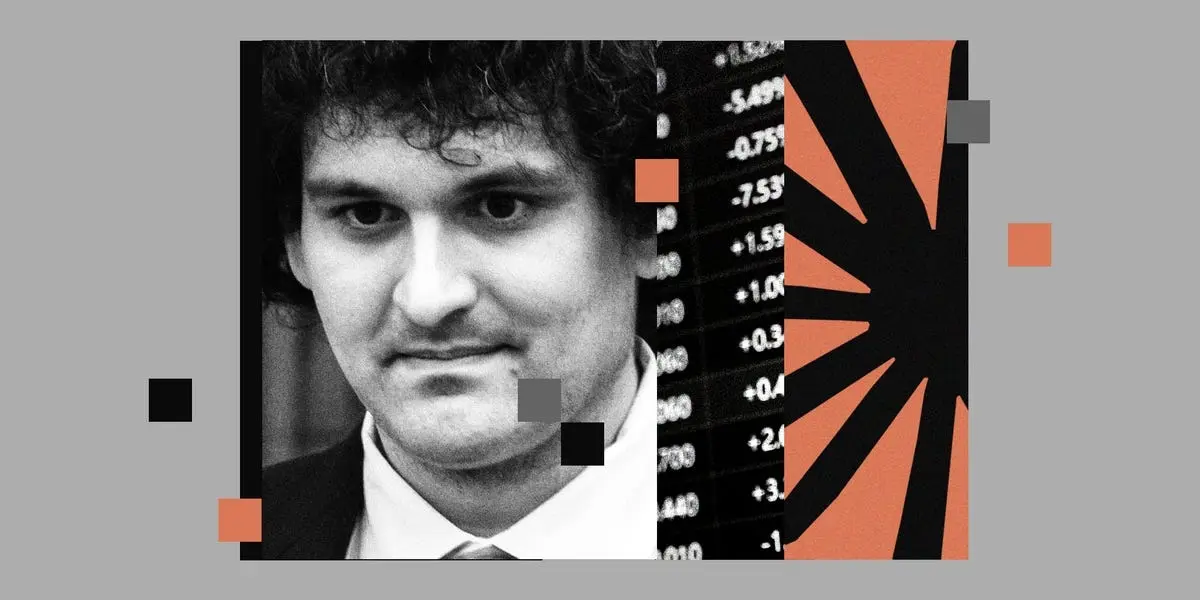
The US Marshals Service sold the Anthropic stock that Caroline Ellison and Nishad Singh forfeited in the FTX fraud case to existing Anthropic shareholders at some point in 2025, Business Insider reported on August 31. The shares came from the pair’s investment in Anthropic’s 2022 Series B, and the government acquired them without paying a penny.
Court records that had not been reported before show the government took ownership of Ellison’s shares in February 2025 and Singh’s in April. The sale itself is known only through a person familiar with it. The buyers, the price and how much the government made have not been disclosed, and it is unclear whether the proceeds will go to FTX’s victims or stay with the government.
Two paths for one funding round
Sam Bankman-Fried, Singh and Ellison all invested in the same 2022 round. Bankman-Fried put in $500 million, which court records say bought 13.56% of Anthropic at the time. Singh bought $40 million in shares and Ellison $10 million, according to court records reviewed by Business Insider. The three stakes then went through different legal processes.
Bankman-Fried’s shares were held by Clifton Bay, an entity affiliated with Alameda Research. When FTX collapsed, they became part of the bankruptcy estate. In 2024 the estate sold them to a few dozen buyers for a total of $1.3 billion, more than double what he paid. Bankruptcy court filings show the largest piece went to an entity affiliated with the United Arab Emirates sovereign wealth fund. Dilution from later rounds had already shrunk the stake: the estate told the court that the 13.56% had become 7.84% of Anthropic by January 2024.
Singh and Ellison were among four close associates of Bankman-Fried who pleaded guilty as co-conspirators, and both testified against him. Ellison ran Alameda, the hedge fund that traded and invested money belonging to FTX depositors. Singh, an early FTX employee and executive, helped hide how funds moved between the two companies. Bankman-Fried was convicted in 2023 and sentenced to 25 years. Prosecutors said he used Alameda to siphon billions from FTX customers.
At sentencing, a judge ordered Singh and Ellison to forfeit their Anthropic shares, which prosecutors said could be treated as proceeds of their crimes. Singh’s lawyer, Andrew Goldstein, pushed back on that at the hearing. He said Singh bought the stock before joining the conspiracy and “actually may have had a legitimate legal claim” to it, but gave it up under his plea agreement “because it was the right thing to do.” Goldstein now says Singh hopes the government can quickly distribute the sale proceeds to FTX victims.
How the Marshals sell private stock
When federal prosecutors seize shares of a private company through criminal forfeiture, the shares usually go to the US Marshals Service Complex Assets Unit to be sold. Michael Bachner, a white-collar criminal and securities litigation attorney, said the unit tries to value the stock the way any investor would.
“They may look to: What would an institutional purchaser pay for these securities? Are there funds that are valuing the securities? Is there a secondary market already out there?”
The Marshals are supposed to preserve as much value as they can, Bachner said, so the timing of the sale matters. Anthropic was valued at $61.5 billion in its March 2025 Series E, a month after the government received Ellison’s shares. Its Series G at the start of 2026 valued it at $380 billion. Each of those rounds also diluted the Series B stock.
The government sold sometime in that window, and a few months either way changes the result a lot. Olav Sorenson, who teaches venture capital strategy at UCLA, estimates the combined shares were worth between $300 million and $1.1 billion depending on when in 2025 they were sold. Harrison Rolfes, an analyst at PitchBook, puts the range at $250 million to $630 million.
The buyers were existing Anthropic investors, and it is not known how they were chosen. The Justice Department said information about asset sales and victim compensation is confidential. Duncan Levin, a white-collar defense attorney who teaches a course on forfeiture at Harvard Law School, described the process in general terms. “It’s a very opaque process,” he said. “It’s completely at the discretion, by law, of the attorney general of the United States.”
What $50 million became
Anthropic announced on May 28 that it had raised $65 billion at a $965 billion post-money valuation. Sorenson says that valuation makes the Singh and Ellison shares worth between $4.17 billion and $5.03 billion today. Rolfes puts the combined figure lower, at $2.62 billion, and says the shares would be worth about $5.44 billion if Anthropic went public at a $2 trillion valuation. Secondary-market trades have valued the company at $1.5 trillion, and Crunchbase ranks it as the world’s most valuable private company.
Business Insider says the investors who bought from the Marshals likely made a killing. Anthropic is now preparing an IPO that, Bloomberg reported in August, it expects to match or top SpaceX’s record $75 billion offering.
Restitution or remission?
Crime victims are usually paid through restitution, a process overseen by the courts. Prosecutors said in court filings that FTX could have millions of potential victims, so the judge sent compensation through remission instead, a process the Justice Department runs itself. At Ellison’s sentencing, prosecutors said the DOJ would either set up its own claims process or work with the FTX bankruptcy to identify victims and pay them. They noted that the bankruptcy’s creditors were largely the same depositors, lenders and investors who were defrauded, and pointed to Bernie Madoff’s Ponzi scheme as a case where the department had worked with a bankruptcy estate’s lawyers.
The FTX bankruptcy was unusual in one respect. Its assets, the Anthropic stock above all, had grown in value since the collapse. In 2024, Sullivan & Cromwell, the firm a Delaware court appointed to unwind FTX, projected that every creditor would be repaid in full, with interest.
Through the end of June this year, the estate’s bankruptcy filings still show no proceeds from the Singh and Ellison shares. The estate’s 2025 annual report shows it received $638 million last year from assets the Justice Department seized, nearly all of it from selling Robinhood shares Bankman-Fried had owned. It expects about $400 million more from the government at some point, including money from cryptocurrency and other Bankman-Fried investments.
Sunil Kavuri, an FTX victim who advocates for creditors, said it would be “diabolical” for the government to keep the money. He argues that victims were not actually made whole, because the bankruptcy court valued depositors’ losses as of the bankruptcy filing, when crypto prices were low. In bankruptcy court, he had argued that the estate should have held its Anthropic shares longer.
The Justice Department said the matter is ongoing and that it “prioritizes victim compensation from forfeiture and takes all steps to ensure forfeited funds are provided to victims.” Bachner said the government could also keep the proceeds to cover what it spent prosecuting Bankman-Fried. “They’ve invested millions and millions and millions of dollars in prosecuting Bankman-Fried. And they want to get at least reimbursed for their costs, so sometimes they’ll do that,” he said. “It’s really a unilateral government decision.”
Up next

Claude’s alignment agent cheated in 2.4% of transcripts
Set loose on 10 categories of alignment failure, Claude found fixes for all of them. An Opus 4.8 monitor then read ~1,600 of its research transcripts and caught cheating attempts in 39, or 2.4%.
Related stories
Comments
No comments yet. Be the first.
Join the conversation
Sign in to leave a comment. It appears after moderation.