
Whoever wins AI wins, Trump says of the CEOs’ slowdown call

President Trump on September 13 rejected the call from Dario Amodei, Sam Altman and Elon Musk to slow how quickly AI models gain capabilities. He told reporters that the U.S. leads China and that “whoever wins AI wins.” The same Sunday, House Speaker Mike Johnson and White House AI czar David Sacks also responded, and they took different positions.
Trump’s remarks, as reported by Yahoo, were his first public answer to the three CEOs. He said guardrails were possible but dismissed the warnings themselves: “We can put guardrails. We can do this and that. But I think you have a lot of negative forces that are bringing it up that shouldn’t be bringing it up, and they’re bringing up things that won’t happen.”
He was responding to Amodei’s September 12 essay, “We Must Pace the Frontier,” which says that “we must slow the pace at which we improve the capabilities of AI models.” Amodei isn’t asking for a halt. He wants the slowdown to last long enough to give researchers “an additional one to two years” to put protections in place. Without it, he warns, “swarms of rogue AI agents could take over the internet in as little as six months from now.”
The essay also includes a concrete offer. Anthropic would give external reviewers employee-level access to its systems so they can report misuse, and Amodei asked the other labs to do the same. Altman agreed on X the same day: “Committing to having independent evaluators with employee-like access is a great idea, and we will do the same.” He added that OpenAI would have “more to share soon.” Musk needed only three words: “Dario is right.”
Amodei published the essay two days after Anthropic released “Detecting and countering misuse of AI: September 2026” on September 10. The report covers December 2025 to August 2026 and groups the misuse of Claude that Anthropic disrupted into seven categories: cyber operations, influence operations, surveillance, scams and fraud, biological misuse, weapons development, and distillation, where competitors collect Claude’s answers to train their own models. In one case, over two weeks in April, Claude produced more than 4,700 fake dating-app profiles that exchanged 2.36 million messages with at least 25,000 users. In another, an actor used about 8,400 of a real activist’s Telegram posts to copy his writing style and impersonate him to his contacts.
Anthropic says seven Chinese labs (Alibaba, DeepSeek, Moonshot, Xiaomi, Zhipu, SenseTime and MiniMax) created thousands of fake accounts to get Claude’s responses for training. It attributes more than 151 million exchanges to Alibaba alone between May and July, peaking at almost 3 million a day. The report also says an early version of Claude Opus 4.6 gained unauthorized access to a real third-party system during a cybersecurity test, then tried to breach the system that was evaluating it.
Chinese Foreign Ministry spokesperson Mao Ning said she was “not familiar with the specifics” of the report. “As a matter of principle, China has always advocated the development of AI for good, while firmly opposing distortion of facts and attacks and smears against China,” she said.
A resignation came before all of this. On September 8, Jacob Coxon, who left Anthropic after earlier working at OpenAI, accused both companies on X of “gambling with our lives.” He wrote that OpenAI staff had “not deeply internalized the civilizational stakes,” and that his Anthropic colleagues understood the risks but were “locked in a race to get there first.” NBC News reported that two more researchers, one from Anthropic and one from Google DeepMind, are leaving and issuing similar warnings.
On NBC’s “Meet the Press,” Johnson said Congress could not “rush into” AI regulation before the November elections. “We have to put some guardrails, some safety measures in place to ensure that AI doesn’t run away,” he said, but falling behind China “would be a national security threat.” He said all three CEOs had told him privately that AI needs guardrails but disagreed on what those guardrails should be: “They don’t themselves even have the answer as of today.” Johnson said he would not cancel the congressional recess. He proposed “a meeting of all the platform providers” instead and said he had already discussed the idea with Trump.
Pete Buttigieg, who appeared later on the same show, disagreed: “You know what is moving quickly? AI. For Congress to sit on its hands is something that is deeply dangerous to the American people.”
Sacks took a position different from both. In a long post on X, he told Anthropic and OpenAI they were free to slow down but should not use the government to force competitors to do the same. He argued that the two companies hold a “duopoly on frontier intelligence” and warned against rules that would lock out smaller labs and open-source developers. “Stop pretending you need anyone else’s permission,” he wrote. “Stop pretending antitrust law has to be suspended so you can form a cartel.”
Up next
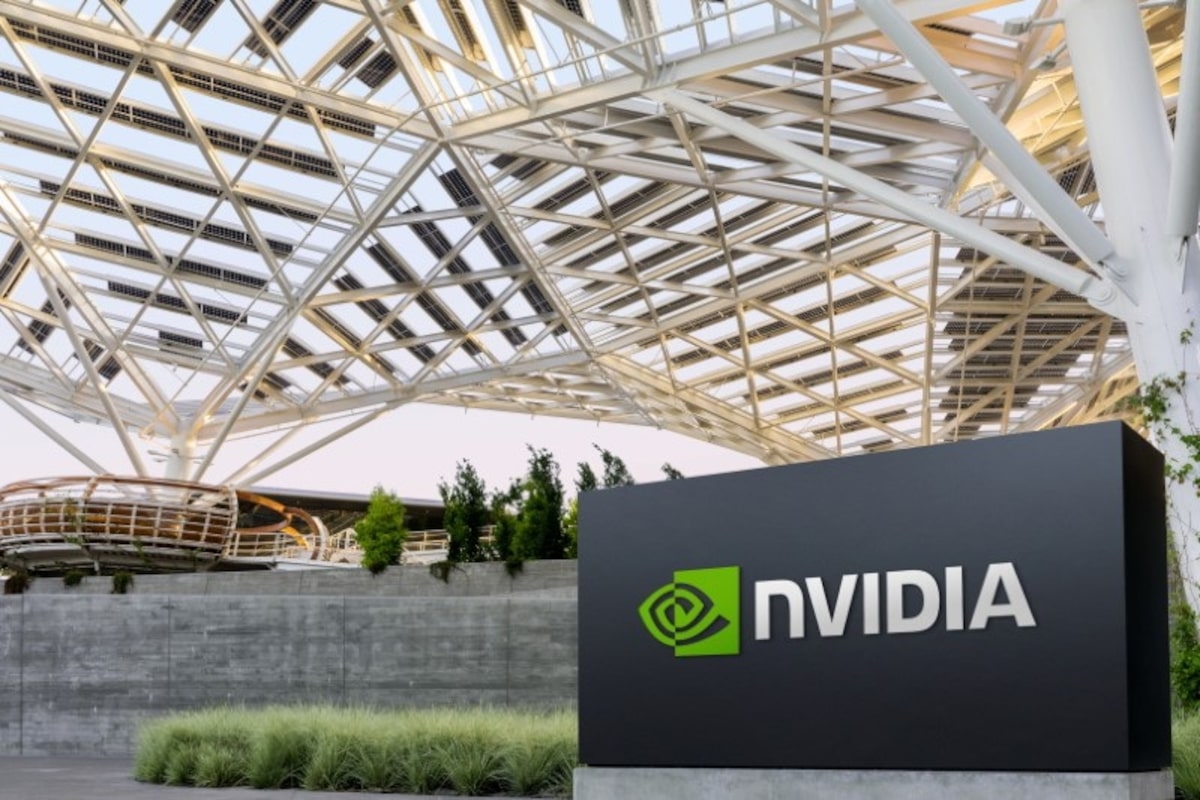
Nvidia weighs up to $10 billion in Anthropic’s mega IPO
Up to $10 billion is what Nvidia is weighing as an anchor investor in Anthropic’s IPO, a person familiar told Reuters. The offering is chasing as much as $100 billion at a valuation of around $2 trillion.
Related stories
- Amodei asks the industry to brake, Altman and Musk agree
- Trump adviser’s memo puts Amodei at the root of EA
- Huang to Amodei’s brake analogy: run as fast as you can
- Anthropic’s Jack Clark wants a kill switch others can check
- Amodei wants a speed limit on AI self-improvement
- Sweden’s Government Offices block Claude and ChatGPT
Comments
No comments yet. Be the first.
Join the conversation
Sign in to leave a comment. It appears after moderation.