
Paid subscribers sue Anthropic over slowing AI down
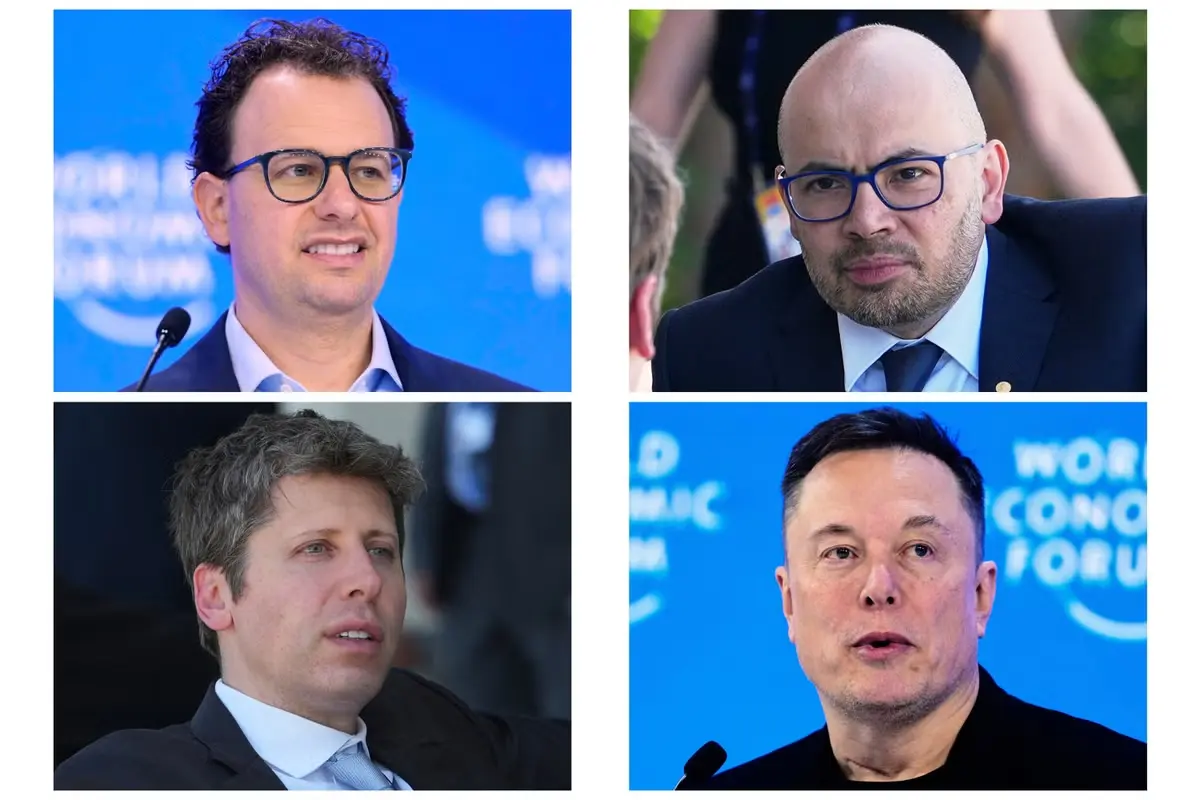
Three of Dario Amodei's biggest rivals agreed with him in public within hours, and that chorus of agreement is now the central exhibit in an antitrust complaint. Four people who pay for ChatGPT, Claude, Grok or Gemini sued Anthropic, OpenAI, SpaceXAI and Google on Friday in the U.S. District Court for the Northern District of California, as Politico reported.
At a glance
- The filing asks the court to certify a nationwide class of everyone on a paid plan for those four services, arguing that a coordinated slowdown gives subscribers less than competition would.
- All of the alleged evidence is public: Amodei's September 12 essay calling for industry-wide coordination to "pace the frontier", plus same-day agreement from Elon Musk, Sam Altman and Demis Hassabis.
- Amodei had asked Washington for a narrow antitrust waiver covering safety conversations, and Sen. Josh Hawley rejected that idea at a Senate hearing on Tuesday, before the suit landed.
If you missed the earlier rounds, the pacing argument did not start with that essay. According to ComputingForGeeks, a July 2026 statement at pacingthefrontier.com, signed by 1,386 employees of frontier AI companies, asked the US government to support an international effort to deliberately pace automated AI development; the signatories included Jared Kaplan and Jack Clark, Jakub Pachocki and Mark Chen, Shane Legg, Ilya Sutskever and Amodei himself. The same outlet reports that OpenAI and Anthropic endorsed the statement as companies in late July.
Four subscribers want to speak for everyone on a paid plan
The named plaintiffs are Florida attorneys Charles Buist and Nick Spetsas, attorney Cheyenne Hunt, and California resident Christine Bullock. Each pays for at least one of the four services, and their lawyers are bringing the case on behalf of a proposed nationwide class of other paid subscribers.
The economic claim is simple. An agreement among the chief rivals in AI that their progress "should be slower than competition would otherwise produce has an anticompetitive effect on consumers", the plaintiffs argue, because a subscription buys less capability than it otherwise would.
Lead attorney Nick Rowley frames it as a question of who writes the rules. Safeguards for what he calls extinction-level risk should be set transparently by government, with accountability to the public, he said, rather than by "private self-serving agreements between the world's most powerful 'for profit' technology companies".
The alleged conspiracy fits inside a single day, September 12
That is the date of Amodei's essay, which called for "industry-wide coordination" to "pace the frontier" as the risks from more capable models grow. In the wording carried by the complaint, he wrote that "we must slow the space in which we improve the capabilities of AI models".
Within hours, Musk posted that "Dario is right". Altman said he agreed. Hassabis called the proposal "the right path forward", according to the complaint. Those three replies, plus the essay, are what the plaintiffs point to as the meeting of minds between competitors.
Amodei anticipated the legal problem in the essay itself. He wrote that it would help for the US government to mediate cross-lab discussions "or at least enable" them, and that Washington would not need to take part so long as it issued a narrow waiver for certain kinds of safety conversations.
What turns three public replies into a Sherman Act claim?
Section 1 of the Sherman Act, the law behind the suit, bars agreements that unreasonably restrain trade and is enforced by the Department of Justice, according to the Thomson Reuters Law Blog. Private plaintiffs can sue under it too, which is what happened here.
The same source describes two tests courts apply. Some agreements are illegal per se, with no excuse accepted: price fixing, bid rigging, market division, joint boycotts. Everything else goes through a rule of reason, where the competitive harm is weighed against pro-competitive justifications.
Think of a street of restaurants agreeing to close at nine. The hour itself may be sensible, and each owner could pick it alone; what antitrust law scrutinises is the agreeing. That distinction is why Anthropic itself separated the two ideas in an August 31, 2026 post, cited by ComputingForGeeks: pacing inside one company means choosing safety over speed, while pacing across the field needs competitors and governments.
Hawley had already said "absolutely no way" to a waiver
The waiver idea reached Congress before it reached a courtroom. At a Senate hearing on Tuesday with FBI Director Kash Patel, Hawley said there is no world in which he would consent to giving the most powerful companies in history, a group of three or four, antitrust exemptions so they could collude.
Altman had staked out a different position. OpenAI welcomes a "federal framework that sets consistent safety requirements", he said on social media, but added that "we do not believe we need to wait for an anti-trust exemption or legislation to begin the work of providing this confidence".
What the inputs do not give us is the shape of the demand: no damages figure, no hearing date, and no allegation of any private contact beyond posts anyone can read. In our view that is the thin joint in the case, since the theory has to treat a slower model as a shortchanged subscription while nothing in the filing says prices for ChatGPT, Claude, Grok or Gemini moved.
What the Northern District rules first
Two things have to happen before any of this becomes a fight about AI policy. The court has to decide whether four subscribers can stand in for a nationwide class, and it has to decide whether public agreement with an essay can be pleaded as an agreement between competitors. No schedule for either has been given. Separately, Amodei's proposed cross-lab safety conversations still have no legal cover, and Hawley has said he will not provide one.
Related stories
- Amodei asks the industry to brake, Altman and Musk agree
- Amodei wants a speed limit on AI self-improvement
- D.C. Circuit calls Claude's refusals a supply chain risk
- Authors and publishers clash over $1.5B Anthropic deal
- Top Pentagon official reaffirms Anthropic blacklist despite Lutnick comments
- Anthropic's piracy chats enter music copyright case
Comments
No comments yet. Be the first.
Join the conversation
Sign in with Google to leave a comment. Your name and avatar come from your Google profile, and the comment appears after moderation.