
Anthropic’s six-step playbook for migrating code with Claude Code

On Anthropic’s blog, an author named Jarred broke down how to port large codebases through Claude Code as a six-step loop: build a judge that grades source and target code on equal footing, then define translation rules, a dependency map, a gap inventory, and a stress test across multiple files.
Parallel agents handle the bulk of the translation on an implement, verify, fix cycle. Smaller models like Claude Sonnet do the translating while larger ones stay on adversarial review. The compiler, test suite, and line-by-line diff act as the mechanical arbiter.
Jarred has already shipped a Bun-to-Rust migration to production. Memory leaks are gone: across a 2,000-build test, usage dropped from 6,745 MB to 609, the binary shrank 19% on Linux and Windows, and speed rose 2 to 5%. Roughly 4% of the Rust code still sits in unsafe blocks.
Up next
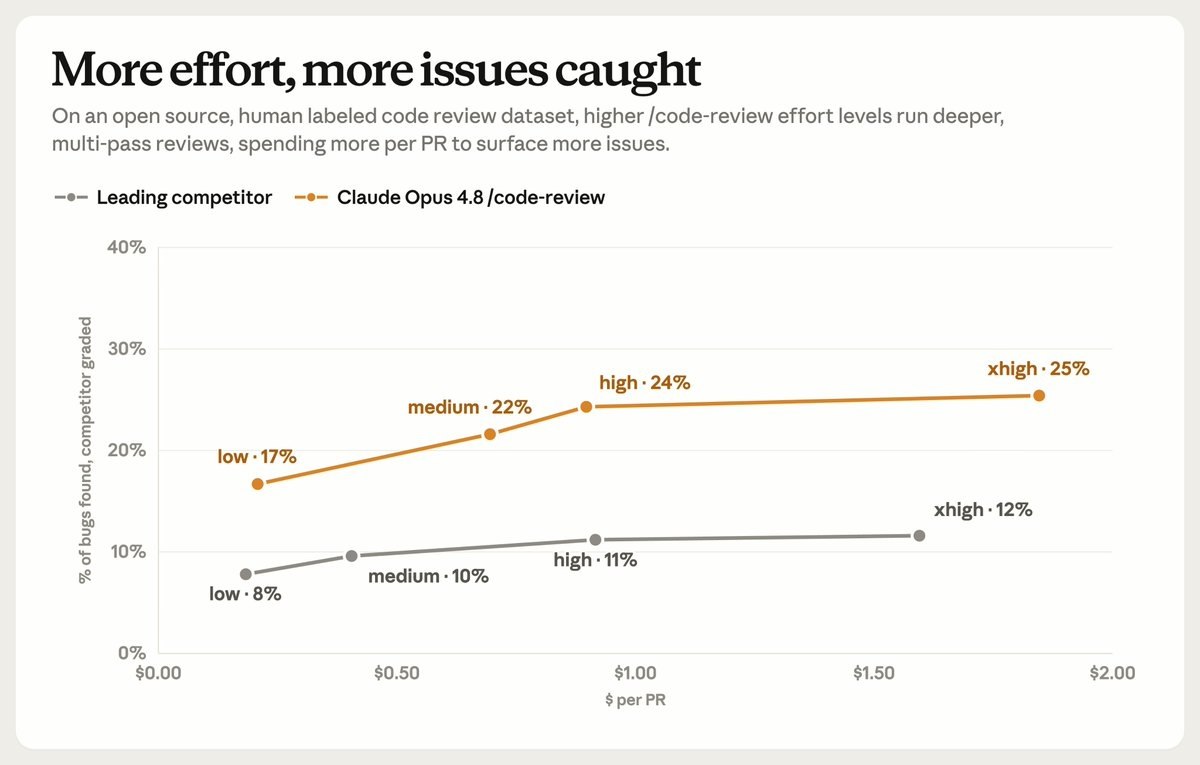
Claude Code’s /code-review now has effort levels
Claude Code’s /code-review adds effort levels. Ultra spins up a set of reviewer agents that independently reproduce every finding: same coverage of serious issues as high, far fewer false positives. Anthropic runs it on every PR.
Related stories
- Webify: an open source MCP server for web search in Claude Code
- Claude Code’s mobile apps get three updates
- Claude Code team hands most code reading to Claude
- Claude went from bug hunt to abuse report on New Year’s Eve
- Bun’s half-million lines of Zig became Rust in eleven days
- A Claude session has been rewriting an app in Swift for over two weeks
Comments
No comments yet. Be the first.
Join the conversation
Sign in to leave a comment. It appears after moderation.