
Claude Code makes Fable 5.2 default at $8/$40 per Mtok

Claude Code 2.1.321, published on November 9, makes Claude Fable 5.2 (claude-fable-5-2) the default Fable model, with 1M context at $8/$40 per million tokens against $10/$50 for Fable 5.1. If your team signs in to MCP servers over OAuth, install it: the release fixes a case where a server’s redirect sent secrets such as refresh tokens to another host.
The new default also reaches existing setups, according to the release notes on GitHub. Saved Fable 5.1 picks move to fable at once on Pro and Max plans, and on Team and Enterprise plans once the organization allows it. To go back, run /model claude-fable-5-1. Anthropic’s model docs now mark Fable 5.1 as Legacy and advise considering a move to Fable 5.2.
What the new default costs
Every line of the price falls by a fifth. Input drops from $10 to $8 and output from $50 to $40 per million tokens, and cache reads go from $0.25 to $0.20. Fable 5.1 had launched at those higher rates on September 1, with the same 1M context window and 128K maximum output.
Anthropic’s announcement says Fable 5.2 generates output up to 30% faster than Fable 5.1. It also offers an optional fast mode that speeds up token generation by up to 2.5 times, priced at $16 per million input tokens and $80 per million output tokens. In Claude Code, the fast mode labels in /fast, /config and /model now name your current model when it supports fast mode. And when fast serving is rate-limited, overloaded or failing, the client now tries standard speed on the same model first; before, it could lose replies, switch models or retry for minutes.
On Enterprise seats whose plan includes Fable, the “Draws from usage credits” note no longer appears after a switch to Fable.
Permission gaps closed
The OAuth redirect is one of several fixes where Claude Code acted without the check you would expect:
- a read-only Bash command could run outside the sandbox without a permission prompt;
- Bash permission checks could judge a file write from the wrong folder and skip the prompt;
- deny rules and protected-file prompts did not apply to the file that a
cpormvinto a directory writes, andcpandmvcalled by path, such as/bin/cp, now get the same path checks; - Bash commands could run in the wrong folder when Claude sent several at once and an earlier one changed folders.
The account email check that 2.1.317 introduced as a prompt before web or shell tool calls sent your address to the network works differently now. It refuses, without asking, only a shell command that holds your email and names a User-Agent, so other commands and scheduled runs no longer stop at its prompt.
The remaining several dozen fixes cover Remote Control, cloud sessions, hooks, screen reader mode and Windows startup, and they are listed in the full notes.
For admins and scripts
Mods that Claude writes now turn on without asking in auto and bypass modes, even with managed allowUnsandboxedCommands: false or allowManagedDomainsOnly, and they no longer load in dontAsk mode. Their own tool calls ($.tool.call, $.mcp.call) raise no permission prompt, even under your own ask rules or in dontAsk and -p runs. Deny rules and organization policy still apply to them. Headless sessions also reload mods in .claude/skills when their files change; CLAUDE_CODE_PLUGIN_DIR_WATCH=0 turns that off.
claude remote-control takes --settings <file> and applies that file to every session it starts. If the file changes, no new session starts until you restart claude remote-control. Remote Control sessions also keep the folder they were started in, and a connected client can no longer move one elsewhere.
Scripts that check exit codes get one change: on Linux, claude -p used to exit 0 silently when a full NFS export or a used-up NFS quota lost transcript lines. It now prints an error and, in text and json output, exits 1.
On the Claude apps gateway, managed MCP servers under policy_mode: layered now add up over every matching policy, match: {} included, so a gateway already on that mode serves more servers after the upgrade. Bedrock, Vertex and Foundry upstreams now ignore the ANTHROPIC_*_BASE_URL variables in the gateway’s environment. If your gateway reached another endpoint through them, set base_url on the upstream.
Up next
Benchmarksanalysis
Opus 5.5 beats GPT-6 Astra on data-analysis repeatability
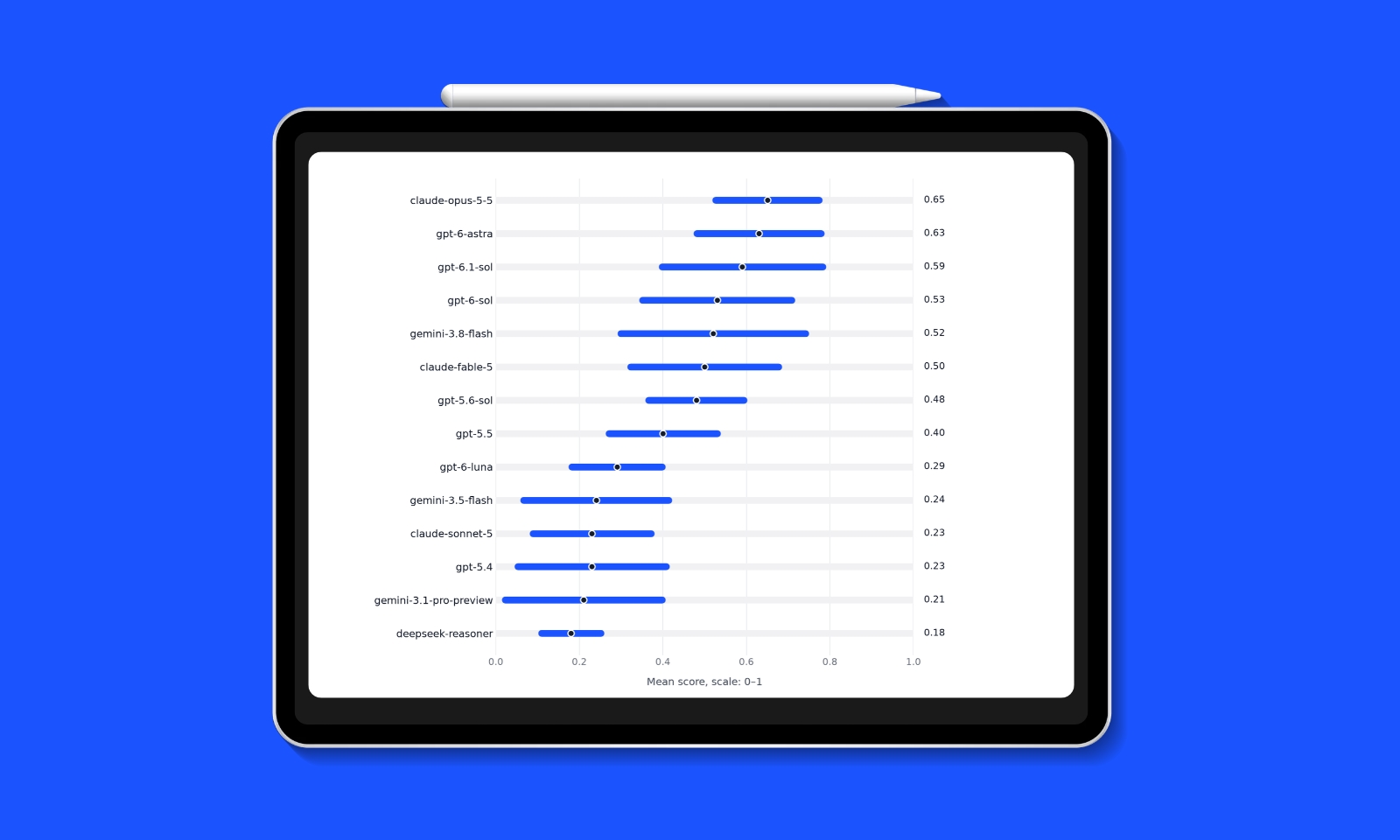
Opus 5.5 and GPT-6 Astra score 0.65 and 0.63 on deepsense.ai’s data-analysis benchmark, but once the benchmark penalizes run-to-run swings, Astra drops to 0.55 against 0.62. Do you rerun the same analysis prompt to check the answer holds, or trust one run?
Related stories
- Fable 5.1 becomes the default model in Claude Code 2.1.257
- Claude Fable 5.2 draws its sprites in raw JavaScript
- Apiiro finds Claude Code secrets in 1,122 GitHub files
- Email leak stopgap in Claude Code checks only shell calls
- Claude Code agent sat on a Pentagon network for two months
- Claude Code 2.1.317: email check, SDK hook block, cost API
Comments
No comments yet. Be the first.
Join the conversation
Sign in to leave a comment. It appears after moderation.