
Claude Fable 5.2 draws its sprites in raw JavaScript
Fable 5.2 gave every animal in the scene its own snack, and nobody asked it to. That detail comes from X user Chetaslua, one of a few people whose weekend outputs, as Testingcatalog reports, look like they came from an unreleased Claude model.
At a glance
- Chetaslua posted a ship shooter with a video demo on September 18 and an animal scene plus a walking Claude mascot on September 20, all said to come from Fable 5.2.
- None of the clips used image files, plugins or third-party tools: the model emitted raw JavaScript in a single pass and drew every sprite, animation and cursor-tracking movement in code.
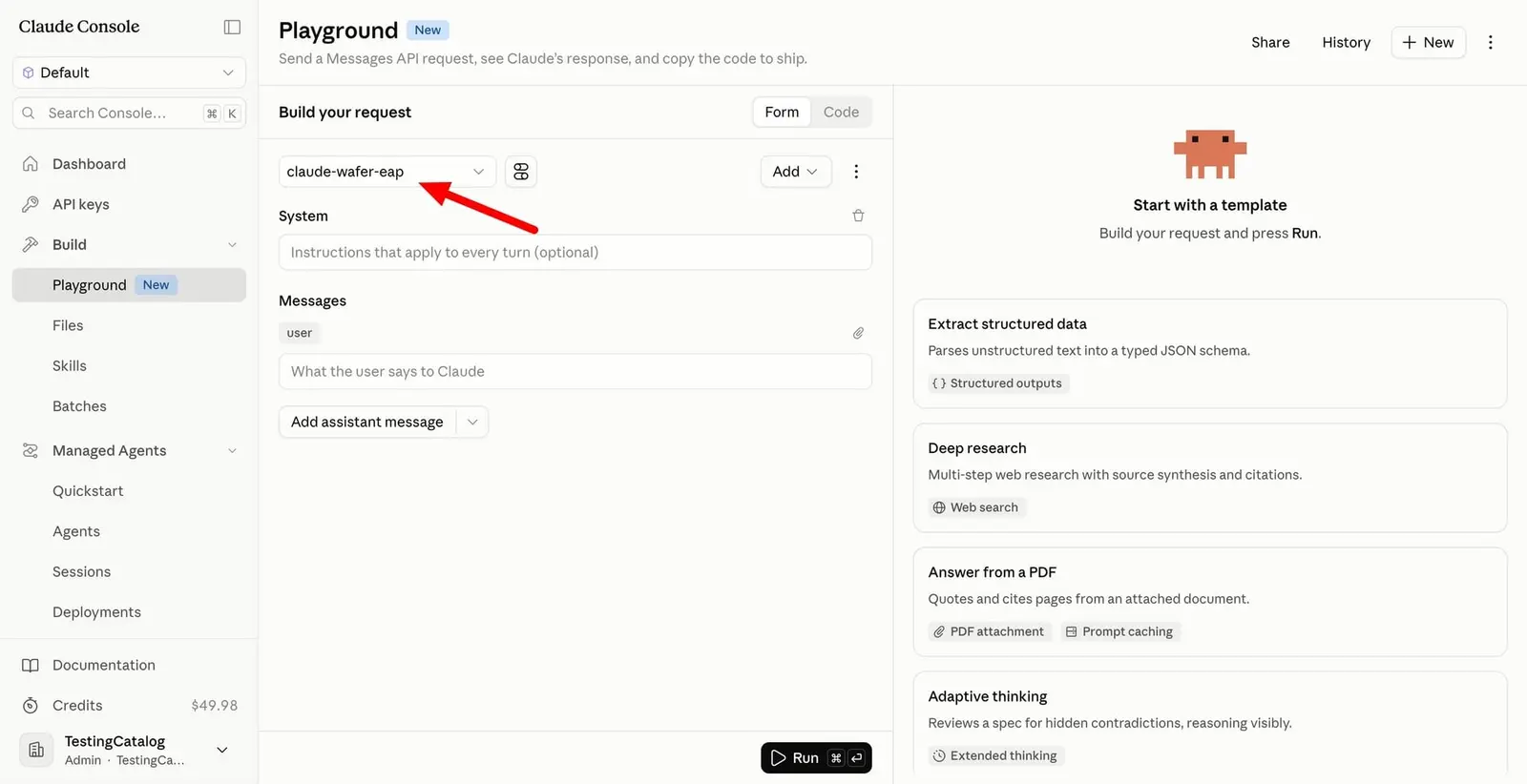
- On the other track, X user lyra says Anthropic is stealth testing Opus 5.5 as claude-wafer-eap, dated for Tuesday, with thinking always adaptive and forced tool use retired.
If you have not been following the Fable line, it launched on June 9, 2026, according to Codersera, as Anthropic's tier for demanding reasoning and long-horizon agentic work, sitting above the Opus family rather than inside it. The rollout was rough. Anthropic pulled Fable 5 and Mythos 5 offline on June 12 and restored access only on July 1. Fable 5.1 shipped on September 1, a few weeks before these outputs appeared.
Fable 5.2 made the game and the video in one pass
Chetaslua posted the first example on September 18: a ship shooter plus a video demo of it, with a note that the prompt was routed from Fable 5.1. Two days later came what he called the animal edition, described in his post as "pure JS thats it one shot", with the per-animal snacks he never specified.
Both clips show interactive canvas scenes where small animated characters track the mouse cursor across the screen with very smooth movement. A third shows a custom Claude mascot that walks around a small virtual world and moves to whatever spot you click. No assets, no MCP, no inspiration, fully coded in JS, Chetaslua wrote.
All signs point to Anthropic quietly routing certain prompts through the web interface, and this lands while other changes roll out there, including the merging of Cowork and chat into a single experience for paid subscribers.
JAZII says Fable 5.2 held its own against GPT-6 Astra
Tester JAZII ran the same complex prompts at high reasoning effort and compared the results with first outputs from GPT-6 Astra. The results came out entirely different, JAZII said, calling the new Fable a huge step up from the current one and good enough to hold its own against Astra. He also read the stealth testing as a sign that a release is not close.
For the generation that ships today, according to AI Discoveries, Anthropic's own table put Fable 5.1 at 52.6% on Terminal-Bench-Science 0.1 against 24.7% for Fable 5, 29.0% for Opus 5 and 22.4% for GPT-5.6 Sol, with a standard error of roughly 3.5–4.5 percentage points per model.
On Terminal-Bench 4.0, the agentic coding test, the same AI Discoveries table shows 55.8% for Fable 5.1, against 42.0% for Fable 5 and 52.3% for Opus 5 in Anthropic's reported results. All of those figures come from Anthropic's own runs in Anthropic's own setup.
Opus 5.5 is reportedly dated for Tuesday
lyra says Anthropic is stealth testing claude-opus-5-5 under the codename claude-wafer-eap. Per the same posts, Anthropic attached an "imminent" note, partners got access for only 24 hours, and the build is dated for Tuesday, though it could land on Monday. Either way, this week.
Two behaviour changes come with it, per lyra: thinking is always adaptive, with no off mode, and forced tool use is retired. The Fable line already behaves that way on the API side, per Anthropic's Claude Platform docs: adaptive thinking is on by default, developers set an effort parameter instead of switching thinking off, and forced tool use, meaning tool_choice set to "any" or naming a specific tool, returns a 400 invalid_request_error on Fable 5.1.
On pricing, Fable 5.1 kept Fable 5's $10 per million input tokens and $50 per million output tokens and cut cache reads from $1.00 to $0.25 per million, which Anthropic estimates lowers typical workload costs by about 25% and highly agentic workloads by up to approximately 45%.
Why does one-shot raw JavaScript matter?
Because there is nowhere to hide. When a model can pull in sprite sheets, a library or an MCP server, much of what you see was made by someone else. Here the shapes, the animation loop and the easing that glides a mascot to your click are drawing commands in one file you can read top to bottom. It is a recipe that starts by making the ingredients.
A single pass still has a ceiling. Fable models run a 1M-token context window, default and maximum, at standard per-token pricing across the whole window, with 128k max output tokens, and the tokenizer produces roughly 30% more tokens than models older than Opus 4.7 for the same text.
None of this is announced. The version numbers, the codename and the Tuesday date come from two X accounts, and lyra's post points to Opus 5.5 pricing whose numbers we do not have. In our view the odd part is that the two Opus 5.5 changes on that list, adaptive thinking and retired forced tool use, are already how Fable behaves in Anthropic's docs.
Tuesday, or maybe Monday
No release date has been announced for either model, and whether Fable 5.2 gets switched on for everyone or keeps running quietly behind the web interface is unknown. The only dated checkpoint on the table is lyra's, and it points at this week for Opus 5.5. Until then, the practical situation for you is unchanged: if you are building something in Claude, you may hit the newer model by accident. Versioning and timelines move.
Related stories
- Opus 5.5 matches Fable 5.1 on most work for less money
- Cache reads get 75% cheaper on Claude Fable 5.1
- Opus 5.5 takes the default seat in Claude Code
- Anthropic tests a possible Fable 5.1 rollout
- Claude's iOS app is reportedly close to a Liquid Glass revamp
- Claude Marketplace opens its shelf to outside builders
Comments
No comments yet. Be the first.
Join the conversation
Sign in with Google to leave a comment. Your name and avatar come from your Google profile, and the comment appears after moderation.