
Claude does nine loops, one past the N=4 physics record
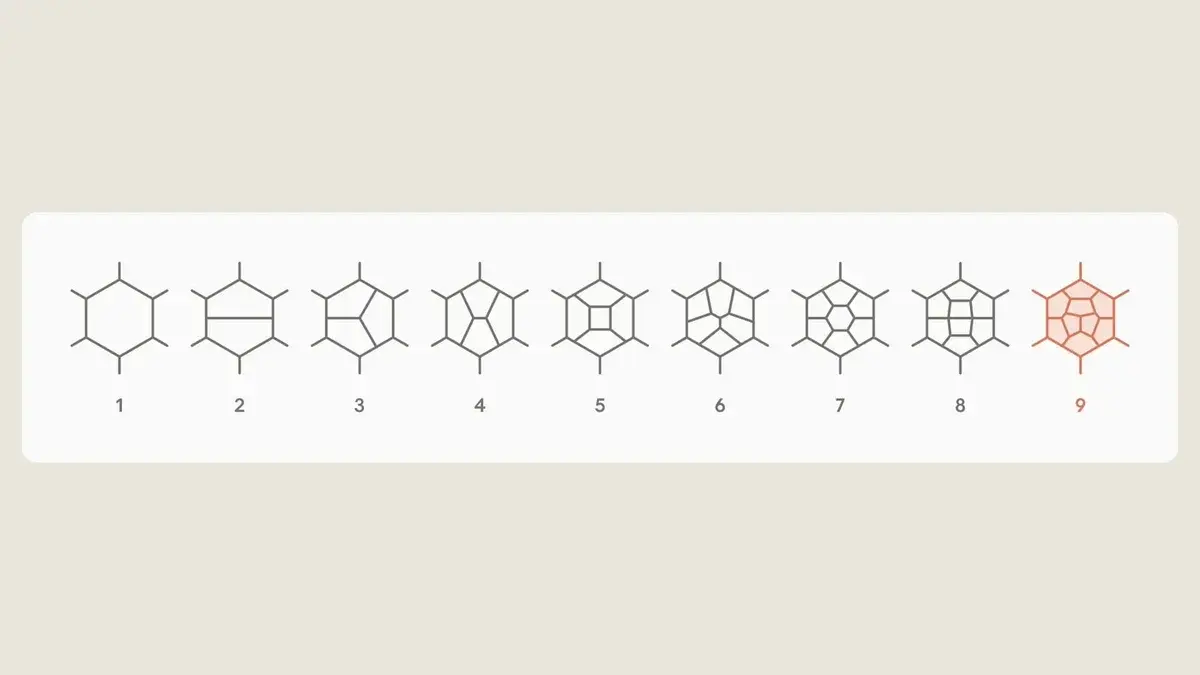
Claude has pushed a scattering-amplitude calculation to nine loops, one past the record SLAC’s Lance Dixon and collaborators set in a simplified model physicists use as a testing ground, and Dixon verified the result independently, Anthropic said on X on September 25. That check is of the answer itself; the single prompt, the days Claude ran largely unsupervised in Claude Science and the total cost of a few thousand dollars rest on Anthropic’s word.
Scattering amplitudes are the formulas theorists use to predict how particles behave. They are built from layers of ever finer corrections called loops, and each extra loop buys precision at an exponentially higher computing cost, which is why most calculations stop at two or three. Both the eight-loop record and Claude’s nine are for the six-particle amplitude in planar N=4 super-Yang-Mills.
Physicist and science writer Matt von Hippel set the target on August 7, asking on his 4gravitons blog whether an AI could get past eight loops in this model on the compute budget an academic could reasonably access. Claude got there with methods Dixon and his colleagues had already developed. In a guest post on Anthropic’s blog, von Hippel wrote that he chose a computational test on purpose: he wanted to see whether an artificial researcher using the same computers as academics could solve a problem that seemed out of reach for lack of computers and time.
N=4 super-Yang-Mills is not used to explain anything in the real world, von Hippel wrote: four supersymmetric partners for every particle make it very unrealistic, and amplitude specialists hone their techniques on it because that balance between particles makes it paradoxically easier to calculate with.
The calculations use a technique called a bootstrap: researchers start from roughly what the answer should look like, keep every possibility in computer files written in a specialized alphabet and cross possibilities out using predictions from other techniques, rules the answer must obey and links to related problems, aiming for exactly one survivor with checks left over, a method von Hippel found “bizarrely well-suited for use of AI”.
Up next
Claude Code gets a wrap-up budget at the 5-hour limit, Video
“Instead of cutting off mid-edit”: Claude Code will try to wrap up when you hit the 5-hour limit mid-task, using a small allowance taken from your weekly limit. On Pro plans, that works once a week.
Related stories
- Tübingen researchers want AI to propose many models
- Claude helped a physicist draft 36 manuscripts in 18 fields
- 13 million lines of Lean back Claude’s Fermat proof
- Lamzouri publishes a simpler proof of Claude’s Theorem
- Claude memory: say what it’s for, let dreaming fix notes
- Claude Fable 5 tripled Opus 4.6’s EVE Online trading gains
Comments
No comments yet. Be the first.
Join the conversation
Sign in to leave a comment. It appears after moderation.