
Opus 5.5 cut cache reads from $0.50 to $0.20 per MTok
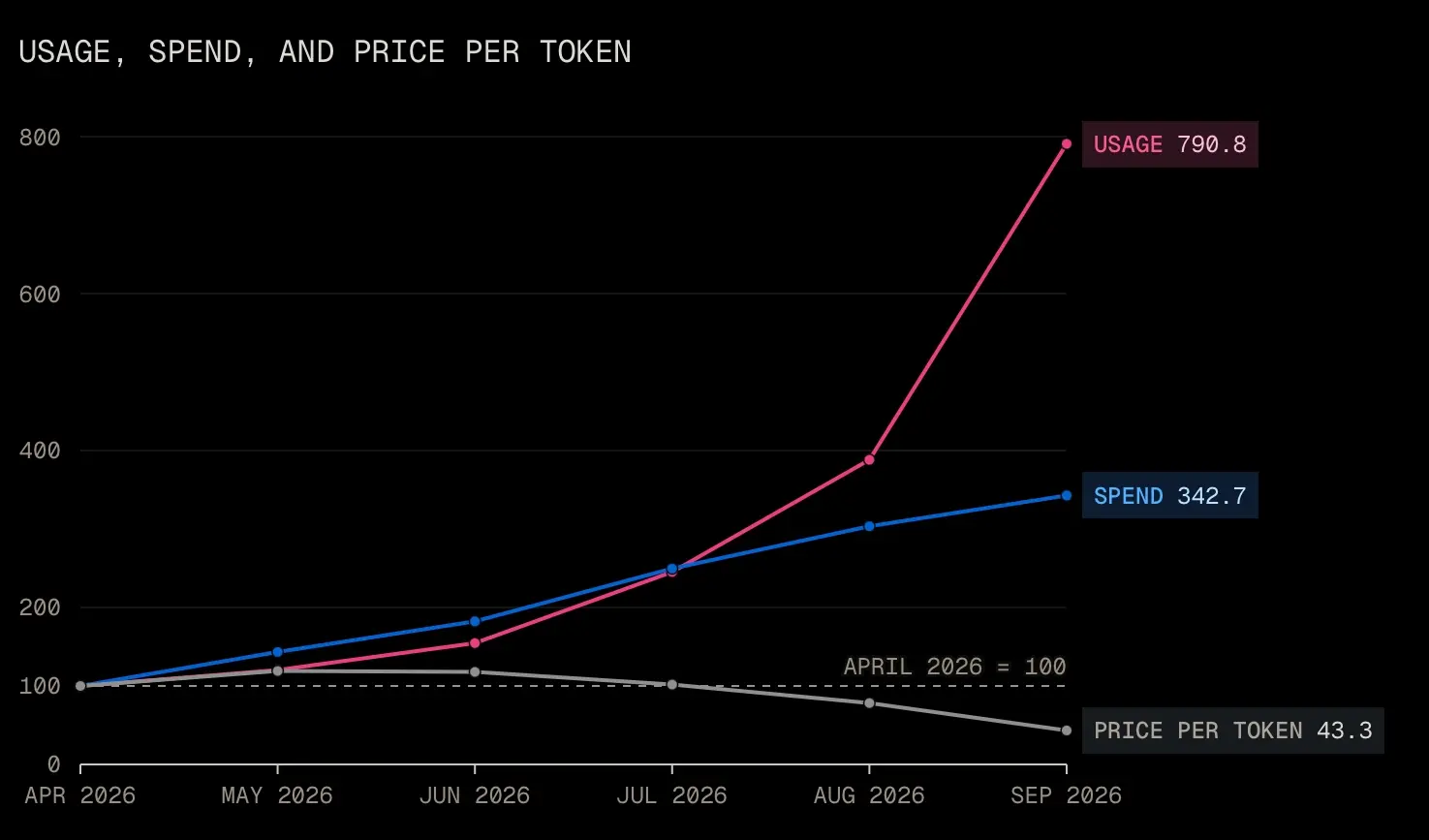
OpenAI and Anthropic have cut prices across their model lineups since June. The cuts range from 80% off GPT-5.6 Luna to Opus 5.5, whose cache reads dropped from $0.50 to $0.20 per million tokens, according to a timeline Minimaxir published on October 25. If your team runs coding agents on the API, check the cache-read rate (what you pay each time the model re-reads context stored from earlier turns) before the headline input and output prices. The author puts cache reads at 96-99% of an agent’s token expenditure, though our recomputation finds his savings estimates hold only if that share is counted in dollars.
Anthropic gave its own reason for Opus 5.5, released September 22 at $4 input and $20 output per million tokens, down from Opus 5’s $5 and $25: “Opus 5.5 requires less compute to serve than Opus 5, and its pricing reflects that.” On the same day OpenAI released GPT-6 Sol at $2 / $10 / $0.20 (input / output / cache read) and GPT-6 Luna at $0.10 / $0.50 / $0.01. The author calls GPT-6 Sol “a dud performancewise.” A week later came GPT-6.1 Sol at $2 / $10 / $0.10, which he found comparable to the $10 / $50 GPT-6 Astra in his own use. He says the cuts also apply to Codex and Claude Code subscriptions.
Why cache reads decide the bill
Each turn of an agent session re-sends the whole conversation so far. The provider serves most of it from cache, with hit rates of 90-100% depending on its infrastructure, the author says. So Fable 5.1, released September 1, is a deeper cut than its list price suggests: it kept Fable 5’s $10 / $50 but brought cache reads down from $1 to $0.25.
The ratio of cache price to input price now differs from model to model within each lab. Anthropic’s pricing docs list 10% for Opus 5, Sonnet 5 and Fable 5, 5% for Opus 5.5 and Sonnet 5.5, and 2.5% for Fable 5.1. At OpenAI, GPT-6.1 Sol is at 5% and GPT-6 Astra at 10%. The timeline leaves out Sonnet 5.5, which kept Sonnet 5’s $2 / $10 and halved the cache read to $0.10. OpenRouter listed it on September 28, a day before GPT-6.1 Sol, so going by listing dates, both of Anthropic’s agentic tiers reached 5% before Sol did.
Promos and plan allowances
GPT-5.6 Sol keeps the discounted $4 / $20 / $0.40 that OpenAI announced on August 21. Its pricing page says the promotional price is available “at least through November 21, 2026”. That still sits above GPT-6.1 Sol on all three lines.
Subscriptions are where the author expects the squeeze to come first: if capital gets tight, he suspects plan allowances will be cut before base model prices. His example is OpenAI, which on September 29 halved the allowance on Codex’s $200 tier, by his account, “to reflect our increasingly efficient models”. We could check that only through Developers Digest, which quotes OpenAI’s help article. By that account the lower allowance applies to new Pro 200 subscriptions, existing subscribers keep the old one until October 29, and a $500 tier launched the same day. The “half” comes from the Codex lead saying usage would “net out at half the dollar in API spend”.
Is DeepSeek still the floor?
DeepSeek charges $0.15 / $0.60 / $0.003 for V4.1 Flash 1017 only at off-peak times. From 01:00 to 04:00 and from 06:00 to 10:00 UTC on weekdays, excluding Chinese public holidays, the price doubles to $0.30 / $1.20 / $0.006. That peak and off-peak scheme took effect at 16:00 UTC on August 16. An agent running through European or US working hours pays the peak rate for part of its day. Even so, a cache read costs 2% of the input price, lower than any OpenAI or Anthropic ratio listed above.
OpenRouter now lists 29 providers for the model, up from 13 for the original V4 Flash in May, and a request can ask OpenRouter to route to the lowest price. The author’s main explanation for the price cuts rests on this pool. Switching models takes a toggle, hosts have little reason to keep serving a model at a loss, and he expects “the true cost of a token” to settle near marginal cost.
The next test is Moonshot AI’s Kimi K3.1 Pro, priced at $2 / $10 / $0.20. The author cites a score of 55 against Opus 5.5’s 58, and Moonshot says the full weights will be released by November 4. Its cache read matches Opus 5.5’s only in dollars: at 10% of input, the ratio is double. OpenRouter currently lists one provider for it, Moonshot itself, against 21 for Kimi K3. The author expects most K3 hosts to serve the new model at a similar price once the weights are out.
Our analysis
What we checked
On October 26 we pulled current prices from the Anthropic, OpenAI, DeepSeek and Moonshot pricing pages and from the OpenRouter API. We then rebuilt the author’s savings math with a per-task cost model.
The prices in the timeline match those pages, and the count of 29 hosts for DeepSeek V4.1 Flash is right. The savings ranges are shakier. The author never says whether 96-99% means the cache’s share of tokens or of dollars, and his figures for Fable 5.1 and Opus 5.5 only come out under the dollars reading. If your bill looks more like the token reading, expect smaller savings on the Anthropic models. GPT-6.1 Sol’s “cumulatively 75%” holds under either reading.
| Switch | Author’s saving | 96-99% of dollars | 96-99% of tokens |
|---|---|---|---|
| Fable 5 → Fable 5.1 | 70-75% | 72.0-74.2% | 21.4-57.6% |
| Opus 5 → Opus 5.5 | 40-60% | 58.4-59.6% | 31.4-50.7% |
| Sonnet 5 → Sonnet 5.5 | none given | - | 14.3-38.4% |
| GPT-5.6 Sol (launch price) → GPT-6.1 Sol | 75% | 67.8-76.3% | 67.8-76.3% |
- Under the token reading we assumed 0.5-2% of tokens are output, the rest are fresh input and the cache hit rate is 90-100%. Measured from GPT-5.6 Sol’s promo price, the GPT-6.1 Sol saving is 57-69%.
- The author writes that GPT-6.1 Sol matches “Anthropic’s 5%-of-input cache read cost”. That holds only for Opus 5.5 and Sonnet 5.5.
- We assumed a uniform 90% cache-hit rate when computing effective input cost. On that basis, DeepInfra’s two cheapest fp8 endpoints for V4.1 Flash 1017 come out 44% and 30% below DeepSeek, and Cloudflare 28% below. The author’s chart put Cloudflare and DeepInfra within 10%. We also found that 17 of the 34 endpoints cost more than DeepSeek, nine of them exactly double. His chart used per-provider hit rates from the OpenRouter website, which the public API does not expose. Ours is a single pull under a stated assumption, and prices may have moved in the two days between his pull and ours.
Up next
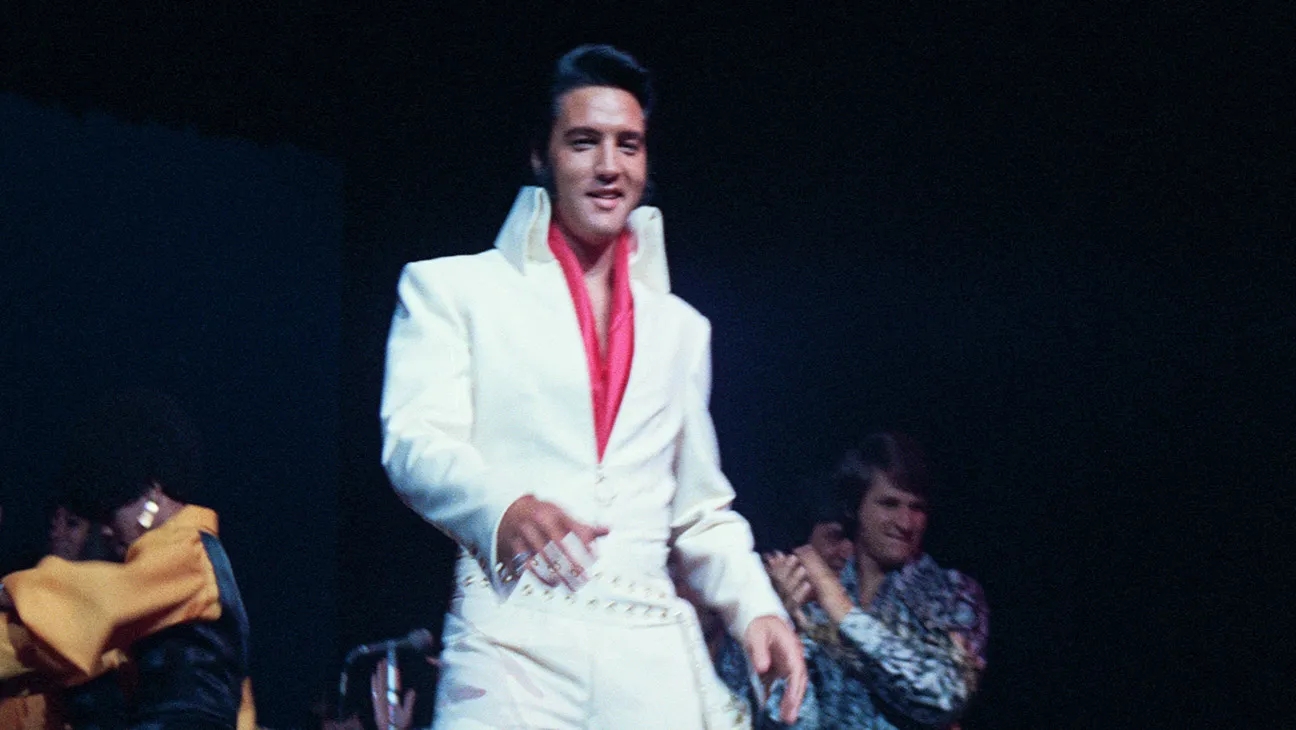
Elvis Presley rights holders sue Anthropic over 274 songs
274 Elvis Presley songs sit at the center of a new copyright suit against Anthropic, per Billboard, and the plaintiffs want $150,000 for each one, per Rolling Stone. Do you check Claude’s creative output for lifted lyrics before using it, yes or no?
Related stories
- Sonnet 5.5 edges past Opus 5.5 on Terminal-Bench 4.0
- Opus 5.5 costs less and answers old agent code with 400s
- Opus 5 tops Fable 5 on OSWorld 2.0 at a third of the price
- Claude costs more in India than in the US
- Reddit user says Max 20x and 5x share one monthly cap
- Sweden’s Government Offices block Claude and ChatGPT
Comments
No comments yet. Be the first.
Join the conversation
Sign in to leave a comment. It appears after moderation.